
Interior Design Career Opportunities in 2026: High-Growth Paths, Global Demand, and Future-Ready Skills
Interior Design Careers 2026 is no longer limited to decorating spaces or selecting furniture. It has evolved into a strategic, technology-driven, and sustainability-focused profession that shapes how people live, work, and experience environments. As we move toward 2026, rapid urbanization, smart infrastructure development, and digital transformation are reshaping the scope of this profession. Businesses, homeowners, hospitality brands, healthcare institutions, and co-working operators are investing heavily in well-designed spaces.
Because of these shifts, interior design career opportunities in 2026 are expanding at an unprecedented rate. Professionals are now expected to blend creativity with technical expertise, business awareness, and sustainability knowledge. Moreover, digital tools such as 3D visualization, virtual reality, and Building Information Modeling (BIM) are redefining workflows. Consequently, the industry demands skilled designers who can adapt quickly and think strategically.
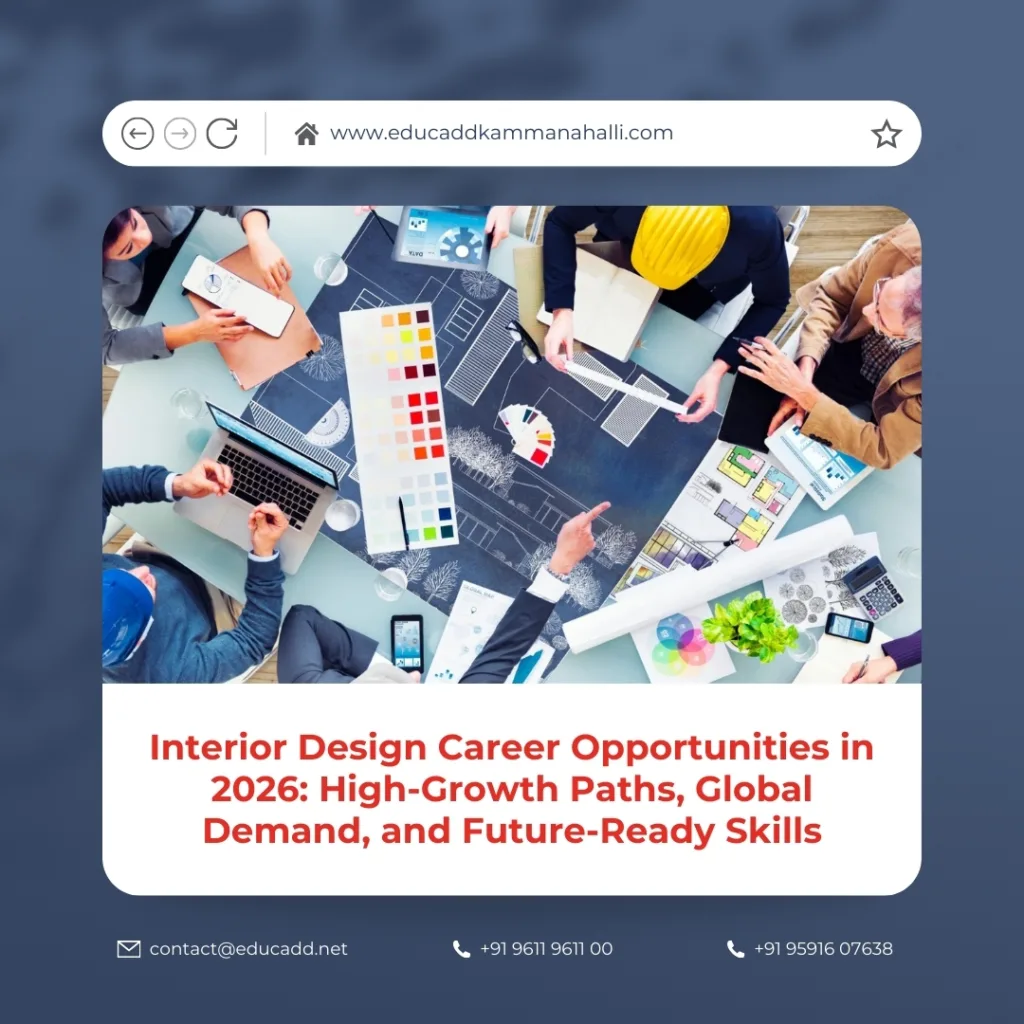
Interior Design Careers 2026
This blog explores interior design career opportunities in 2026 in depth. It highlights emerging roles, global demand, required skills, salary trends, and long-term growth prospects. If you are considering entering the field or upgrading your expertise, this comprehensive guide will help you understand where the industry is heading and how to position yourself for success.
1. The Expanding Scope of Interior Design in 2026
Interior Design Careers 2026 are expanding across multiple industries. Previously, the profession was largely associated with residential projects. However, the scope now includes corporate offices, retail chains, healthcare facilities, educational institutions, hospitality spaces, and even digital environments.
As businesses compete to enhance customer experiences, interior design has become a strategic investment. For instance, retail stores rely on layout psychology to improve sales. Similarly, corporate offices focus on productivity-driven layouts that encourage collaboration. Therefore, designers who understand human behavior, spatial planning, and branding are in high demand.
Furthermore, rapid urban development has increased the need for efficient space utilization. Compact living solutions are becoming popular in metropolitan cities. Designers who specialize in modular concepts and multifunctional layouts are gaining recognition.
In addition, sustainability regulations are influencing construction decisions. Governments encourage green building standards, which increases demand for eco-conscious designers. As a result, interior design career opportunities in 2026 extend far beyond aesthetics. They now combine innovation, environmental responsibility, and business strategy.
2. Residential Interior Design: Premium and Smart Living
Residential design remains one of the strongest segments within interior design career opportunities in 2026. However, the approach has evolved significantly. Today’s homeowners demand smart homes, energy-efficient layouts, and personalized themes that reflect their lifestyles.
Smart lighting, automated climate control, and voice-enabled systems are becoming standard features. Consequently, designers must collaborate with technology specialists to integrate digital systems seamlessly. This integration creates new job opportunities in smart home consultation.
Moreover, luxury residential projects are increasing in urban regions. High-net-worth individuals seek bespoke interiors that combine comfort with exclusivity. Designers who understand premium materials, global trends, and customization techniques are especially valued.
At the same time, mid-range housing markets are growing rapidly. Young professionals invest in modern interiors that maximize space and functionality. Therefore, residential interior design continues to generate steady income and long-term career stability.
3. Commercial and Corporate Design Opportunities
Commercial projects are shaping some of the most lucrative interior design career opportunities in 2026. Organizations prioritize employee well-being and productivity. As a result, office interiors are designed to encourage collaboration, creativity, and flexibility.
Hybrid work culture has influenced workspace design. Companies now adopt flexible seating, breakout zones, and multifunctional meeting spaces. Designers must analyze workflow patterns before finalizing layouts. This analytical approach enhances the strategic importance of interior designers.
Retail brands also depend heavily on spatial storytelling. Store layouts influence buying behavior. Therefore, designers who understand consumer psychology are highly sought after. Visual merchandising and experiential design have become specialized career paths.
Furthermore, co-working spaces are expanding globally. These environments require adaptable layouts that cater to freelancers, startups, and enterprises. Designers who specialize in collaborative ecosystems are seeing increased demand. Clearly, commercial design remains a cornerstone of interior design career opportunities in 2026.
4. Hospitality and Experiential Design
The hospitality industry continues to grow steadily. Hotels, resorts, cafes, and restaurants invest significantly in immersive experiences. As competition intensifies, ambience becomes a key differentiator.
Interior Design Careers 2026 include hospitality specialists who craft memorable guest journeys. Designers focus on lighting, textures, color psychology, and thematic storytelling. Each design element contributes to emotional engagement.
Boutique hotels and themed cafes are especially popular among younger consumers. Social media visibility influences design decisions. Consequently, designers who create Instagram-worthy interiors gain strong market value.
Moreover, wellness tourism is expanding. Resorts integrate biophilic design principles to connect guests with nature. Designers skilled in sustainable materials and natural aesthetics find exciting prospects in this niche.
5. Sustainable and Green Design Careers
Sustainability is no longer optional. It is becoming a standard expectation. Interior design career opportunities in 2026 strongly emphasize eco-friendly practices.
Designers now select recycled materials, low-VOC paints, and energy-efficient lighting systems. They also prioritize indoor air quality and natural ventilation. Governments and developers increasingly support green certifications. Therefore, professionals with sustainability expertise gain a competitive advantage.
In addition, clients prefer long-term cost savings through energy-efficient interiors. Designers who can demonstrate measurable environmental impact are more likely to secure large projects. As environmental awareness grows, green design careers will continue to expand rapidly.
6. Technology-Driven Design Roles
Technology is reshaping interior design career opportunities in 2026. Software tools such as 3D rendering platforms, virtual walkthrough systems, and BIM enable designers to present immersive proposals.
Virtual reality allows clients to experience spaces before construction begins. This approach reduces errors and enhances satisfaction. Designers who master visualization software improve both efficiency and credibility.
Artificial intelligence also influences space planning. AI-driven tools analyze layout efficiency and suggest improvements. Consequently, tech-savvy designers gain higher earning potential.
Moreover, remote collaboration tools enable global project execution. Designers can work with international clients without relocating. Therefore, technology expands geographic career possibilities significantly.
7. Specialized Career Paths in 2026
Interior design career opportunities in 2026 include highly specialized roles. For example, healthcare interior designers focus on patient-centric layouts. These spaces require careful attention to hygiene, safety, and psychological comfort.
Similarly, educational space designers create environments that enhance learning outcomes. Flexible classrooms and collaborative zones are becoming common.
Set design for film, television, and digital content is another growing field. Designers who combine creativity with storytelling thrive in entertainment industries.
Additionally, exhibition and event space designers craft temporary yet impactful environments. Brands rely on these professionals for product launches and trade shows.
8. Freelancing and Entrepreneurship
Many professionals prefer independent practice. Interior design career opportunities in 2026 strongly support freelancing and entrepreneurship.
Digital marketing platforms allow designers to showcase portfolios globally. Social media presence generates client inquiries and brand credibility. Therefore, personal branding plays a vital role in career growth.
Moreover, starting a design studio offers higher income potential. Although initial investment is required, successful studios often secure recurring contracts. Entrepreneurs who build strong vendor networks and client relationships achieve sustainable growth.
Freelancing also offers flexibility. Designers can choose niche projects and control workloads. Consequently, self-employment remains an attractive option for creative professionals.
9. Global Demand and International Opportunities
Globalization has expanded interior design career opportunities in 2026 beyond local markets. Rapid urban development in Asia, the Middle East, and Africa fuels demand for skilled designers.
Luxury hospitality projects in Gulf countries require experienced professionals. Similarly, urban housing growth in emerging economies creates residential opportunities.
International certifications enhance credibility. Designers with cross-cultural awareness succeed in multinational projects. Therefore, global mobility significantly boosts career prospects.
Remote project management further enables cross-border collaboration. Designers can consult for overseas clients without physical relocation. This flexibility broadens earning potential considerably.
10. Salary Trends and Income Potential
Income potential within interior design career opportunities in 2026 varies based on expertise, specialization, and geography. Entry-level designers earn competitive starting salaries. However, experienced professionals command significantly higher compensation.
Specialists in sustainable design, smart home integration, and luxury projects often earn premium rates. Additionally, freelancers can scale earnings by managing multiple projects simultaneously.
Corporate designers in multinational firms receive stable salaries with additional benefits. Meanwhile, entrepreneurs may generate higher profits depending on market positioning.
Overall, financial growth aligns closely with skill development and professional reputation.
11. Skills Required to Succeed in 2026
To excel in interior design career opportunities in 2026, professionals must cultivate both creative and technical skills. Spatial planning, color theory, and material knowledge remain foundational.
However, digital proficiency is equally essential. Designers must master visualization software and project management tools. Communication skills also play a crucial role. Clients expect clear explanations and transparent budgeting.
Furthermore, time management and negotiation abilities strengthen professional relationships. Continuous learning ensures relevance in a rapidly evolving industry.
12. Education and Certification Pathways
Formal education strengthens credibility. Degree and diploma programs provide structured knowledge.
Additionally, short-term certifications in BIM, sustainable design, and smart technology enhance employability. Practical training through internships builds confidence and industry exposure.
Online learning platforms make skill enhancement accessible. Designers who invest in continuous education remain competitive in interior design career opportunities in 2026.
13. Challenges and How to Overcome Them
Despite growth, challenges exist. Intense competition requires differentiation. Designers must develop unique portfolios to stand out.
Budget constraints sometimes limit creative freedom. However, innovative material selection can balance aesthetics and cost.
Client expectations may shift during projects. Clear communication reduces misunderstandings. Therefore, adaptability remains essential for long-term success.
14. Future Outlook Beyond 2026
The future appears promising. As cities expand and lifestyles evolve, demand for thoughtful interiors will continue rising. Smart cities, sustainable living, and wellness-focused spaces will dominate upcoming trends.
Interior design career opportunities in 2026 mark the beginning of a technology-integrated era. Designers who embrace innovation and sustainability will lead the industry forward.
Conclusion
Interior Design Careers 2026 is entering a transformative phase. The profession now combines creativity, technology, sustainability, and strategic thinking. Interior design career opportunities in 2026 are diverse, dynamic, and globally accessible. From residential and commercial projects to hospitality, healthcare, and smart homes, the industry offers multiple pathways for growth.
Moreover, digital tools and sustainable practices are redefining professional standards. Designers who upgrade their skills and adapt to emerging trends will secure rewarding careers. Whether you choose freelancing, corporate employment, or entrepreneurship, the possibilities are expansive.
Ultimately, 2026 represents a milestone year for interior design professionals. Those who prepare today will shape the spaces of tomorrow and build fulfilling, future-ready careers.

