
Transform Your Creativity into a Career: Discover the Best Interior Design Course Near You with Certification
Interior design is no longer just about decorating spaces. It has evolved into a powerful profession that blends creativity, functionality, and technology. Today, people seek well-designed homes, offices, and commercial spaces that reflect both style and purpose. As a result, the demand for skilled interior designers continues to grow rapidly across industries. If you have a passion for aesthetics, colors, layouts, and innovation, enrolling in an Interior Design Course Certification can be the first step toward a rewarding career.
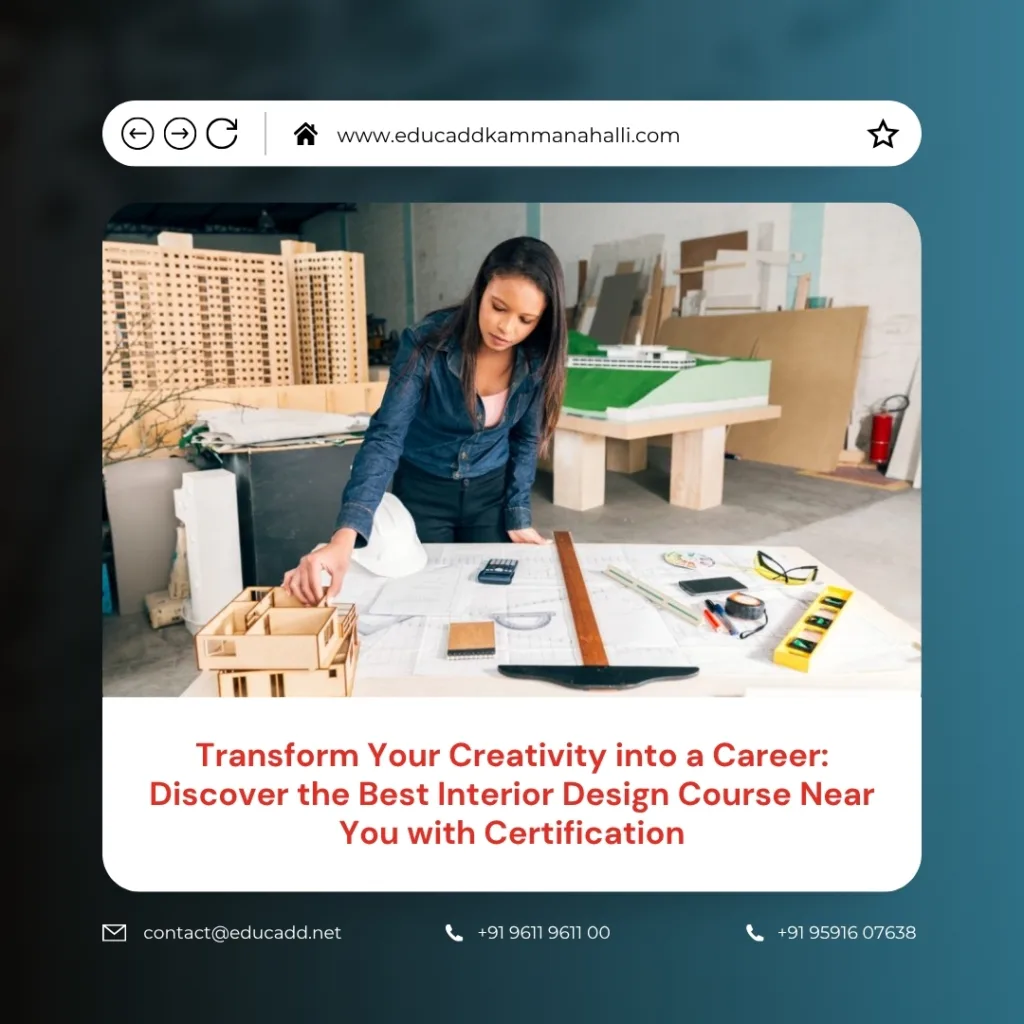
Interior Design Course Certification
Choosing the right course is crucial because it shapes your skills, confidence, and career opportunities. A well-structured program not only teaches design principles but also prepares you for real-world challenges. Moreover, certification adds credibility to your profile and helps you stand out in a competitive market. In this blog, you will explore everything you need to know about selecting the right interior design course, its benefits, career opportunities, and how it can transform your future.
1. Understanding Interior Design as a Career
Interior design is a dynamic profession that focuses on improving the functionality and aesthetics of indoor spaces. Designers work on residential, commercial, and industrial projects. They carefully plan layouts, select materials, and create visually appealing environments.
This career requires a mix of creativity and technical knowledge. Designers must understand space planning, lighting, furniture design, and color theory. Additionally, they must communicate effectively with clients and contractors. Therefore, enrolling in a structured course helps build these essential skills.
2. Why Choose an Interior Design Course Near You
Choosing a nearby course offers several advantages. First, it provides convenience and flexibility. You can attend classes regularly without long commutes. Second, local institutes often have better knowledge of regional design trends and market demands.
Moreover, nearby institutes allow better networking opportunities. You can connect with local professionals, attend workshops, and gain exposure to real projects. These factors play a vital role in building a successful career in interior design.
3. Importance of Interior Design Course Certification
Certification adds significant value to your career. It validates your skills and knowledge in front of employers and clients. Many companies prefer certified professionals because they demonstrate commitment and expertise.
Furthermore, certification increases your chances of getting better job opportunities. It also helps if you plan to start your own design business. Clients trust certified designers more, which leads to more projects and higher earnings.
4. Key Skills You Will Learn in an Interior Design Course
An interior design course covers a wide range of skills. These skills are essential for creating functional and beautiful spaces. You will learn both theoretical concepts and practical applications.
Some of the key skills include:
- Space planning and layout design
- Color theory and material selection
Additionally, you will gain knowledge of design software, which plays a crucial role in modern interior design projects.
5. Course Curriculum: What to Expect
The curriculum of an interior design course is designed to provide comprehensive knowledge. It usually includes both classroom learning and practical sessions. Students work on real projects to gain hands-on experience.
You will study subjects like design principles, furniture design, lighting techniques, and building materials. Many courses also include software training such as AutoCAD, SketchUp, and 3D visualization tools. This combination ensures that you are industry-ready.
6. Duration and Flexibility of Courses
Interior design courses come in different durations. Some are short-term certification programs, while others are diploma or advanced courses. You can choose based on your career goals and availability.
Many institutes offer flexible timings, including weekend and online classes. This flexibility allows students and working professionals to learn without affecting their daily routines. Therefore, it becomes easier to upgrade your skills while managing other responsibilities.
7. Practical Exposure and Real-World Projects
Practical experience is a key part of interior design education. Courses often include site visits, workshops, and live projects. These activities help students understand real-world challenges.
Working on actual projects improves problem-solving skills. It also builds confidence in handling client requirements. As a result, students become better prepared for professional roles after completing the course.
8. Career Opportunities After Certification
Completing an interior design course opens up various career opportunities. You can work in different sectors depending on your interests and skills.
Some popular career options include:
- Residential interior designer
- Commercial space designer
You can also explore roles in furniture design, set design, and visual merchandising. With experience, many designers start their own firms and achieve great success.
9. Freelancing and Entrepreneurship Opportunities
Interior design offers excellent freelancing opportunities. Many designers prefer working independently. This allows them to choose projects and manage their schedules.
Starting your own design business is another great option. With the right skills and certification, you can build a strong client base. Over time, your brand can grow, leading to higher income and recognition in the industry.
10. Role of Technology in Modern Interior Design
Technology has transformed the interior design industry. Designers now use advanced tools to create accurate and detailed designs. Software like AutoCAD and 3D modeling tools help visualize concepts before execution.
Learning these tools during your course gives you a competitive edge. Clients prefer designers who can present realistic designs. Therefore, technical skills are just as important as creativity in today’s design world.
11. Choosing the Right Institute Near You
Selecting the right institute is a crucial step. You should consider factors like faculty experience, course curriculum, and placement support. A good institute provides both theoretical knowledge and practical exposure.
Additionally, check reviews and testimonials from previous students. Visiting the institute and interacting with faculty can also help you make an informed decision. Choosing the right place can significantly impact your learning experience and career growth.
12. Cost and Return on Investment
The cost of an interior design course varies depending on the institute and course type. While some programs may seem expensive, they often provide excellent value in terms of skills and career opportunities.
Investing in a quality course can lead to better job prospects and higher income. Over time, the return on investment becomes evident as you grow in your career. Therefore, it is important to focus on quality rather than just cost.
13. Industry Demand and Future Growth
The demand for interior designers is increasing rapidly. Urbanization and changing lifestyles have created a need for well-designed spaces. Both residential and commercial sectors require skilled designers.
This trend is expected to continue in the future. As a result, interior design remains a stable and promising career option. By enrolling in a certified course, you position yourself for long-term success in this growing industry.
14. Tips for Success in Interior Design
Success in interior design requires dedication and continuous learning. You must stay updated with the latest trends and technologies. Networking with professionals also helps in gaining new opportunities.
Building a strong portfolio is equally important. It showcases your skills and creativity to potential clients and employers. Consistent effort and passion can help you achieve great success in this field.
Conclusion
Choosing an Interior Design Course Certification is a smart step toward building a creative and rewarding career. It equips you with essential skills, practical knowledge, and industry exposure. Moreover, certification enhances your credibility and opens doors to various opportunities.
Whether you aim to work with top design firms, start your own business, or freelance, the right course can set the foundation for your success. With growing demand and endless possibilities, interior design offers a fulfilling career path for those who are passionate about transforming spaces. By taking the first step today, you can turn your creativity into a profession and shape a bright future in the world of design.

