
Design Your Dream Career: Interior Design Course with Placement That Guarantees Success
An Interior Design Course Placement offers a structured pathway into the industry. It not only equips students with creative and technical skills but also provides the much-needed industry exposure. Moreover, placement support ensures that learners can transition smoothly from education to employment. As a result, such programs are becoming increasingly popular among aspiring designers. In this blog, you will explore everything you need to know about interior design courses with placement, including benefits, curriculum, career opportunities, and how to choose the right program.
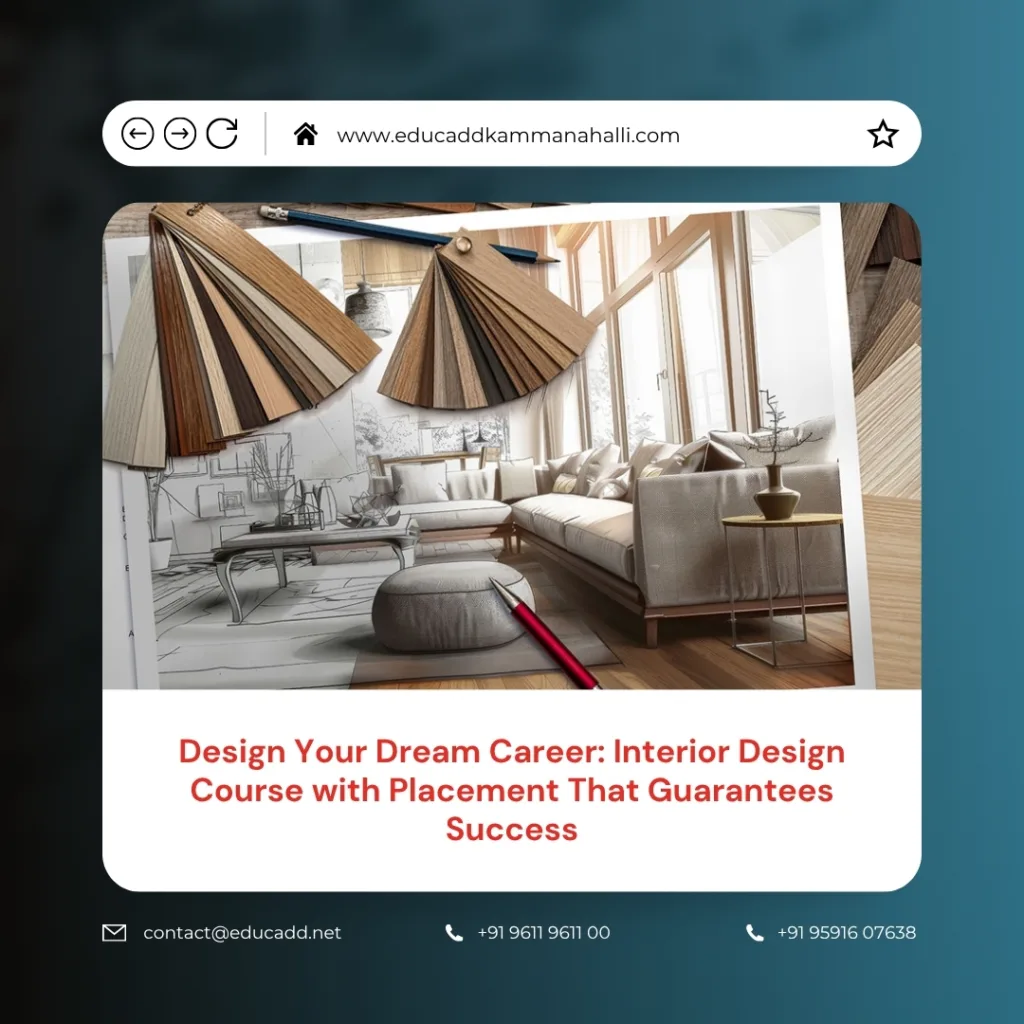
Interior Design Course Placement
Interior design is no longer just about decorating spaces; it has evolved into a dynamic profession that blends creativity, functionality, and technology. As urban living continues to expand and people become more conscious about aesthetics, the demand for skilled interior designers is rising steadily. From residential spaces to commercial hubs, every environment now requires thoughtful design that enhances both usability and visual appeal. This shift has made professional training essential for anyone who wants to build a successful career in this field.
1. What is an Interior Design Course with Placement?
An interior design course with placement is a professional training program designed to prepare students for real-world design careers. Unlike traditional courses, these programs focus on both skill development and job readiness. They are structured in a way that combines classroom learning with practical experience.
Students are taught essential design principles, space planning, material selection, and visualization techniques. At the same time, placement assistance ensures that they receive opportunities to work with reputed firms after completing the course. This dual approach helps learners gain confidence and industry exposure early in their careers.
Furthermore, these courses are often aligned with industry standards. Therefore, students learn tools and techniques that are currently in demand. This makes them more employable and competitive in the job market.
2. Why Choose an Interior Design Course with Placement?
Choosing a course with placement support can significantly impact your career trajectory. While many courses offer knowledge, not all provide opportunities to apply that knowledge in real-world settings. Placement programs bridge this gap effectively.
Firstly, they reduce the stress of job searching after course completion. Secondly, they connect students with industry professionals and organizations. This exposure helps learners understand workplace expectations and industry trends.
Additionally, these courses often include portfolio development and interview preparation. As a result, students are better prepared to showcase their skills and secure desirable roles.
3. Key Skills You Will Learn
Interior design courses focus on building a strong foundation of both creative and technical skills. These skills are essential for designing functional and aesthetically pleasing spaces.
You will learn design concepts such as balance, harmony, contrast, and proportion. Moreover, technical skills like drafting, 3D modeling, and software usage are also covered. Communication skills are equally emphasized, as designers need to present their ideas clearly to clients.
Over time, students develop a unique design style. At the same time, they learn to adapt to different client requirements. This balance of creativity and adaptability is crucial for long-term success.
4. Course Curriculum Overview
The curriculum of an interior design course is carefully structured to cover all aspects of design. It usually begins with basic design principles and gradually moves towards advanced concepts.
Students are introduced to topics like color theory, furniture design, lighting, and materials. Later, they work on real-life projects that simulate industry scenarios. This hands-on approach enhances learning and builds confidence.
In addition, software training is included in most programs. Tools like AutoCAD, SketchUp, and 3ds Max are commonly taught. These tools help students create professional designs and presentations.
5. Importance of Practical Training
Practical training plays a vital role in interior design education. While theoretical knowledge is important, real-world application is what truly prepares students for the industry.
During the course, students often work on live projects or internships. This exposure helps them understand client requirements, budgets, and timelines. As a result, they develop problem-solving skills and learn to handle challenges effectively.
Moreover, practical training allows students to build a strong portfolio. This portfolio becomes a key factor during job placements, as employers look for hands-on experience.
6. Placement Opportunities and Career Support
Placement support is one of the biggest advantages of these courses. Institutes often have tie-ups with design firms, architects, and construction companies. This network helps students secure job opportunities easily.
Career support services may include resume building, mock interviews, and job referrals. These services prepare students for the hiring process and increase their chances of success.
- Assistance with resume and portfolio creation
- Access to job openings through industry connections
As a result, students can confidently step into the professional world without uncertainty.
7. Career Opportunities After Course Completion
An interior design course opens doors to a wide range of career opportunities. Graduates can work in various sectors, including residential, commercial, and hospitality design.
Some popular job roles include interior designer, space planner, design consultant, and visual merchandiser. Additionally, students can also explore freelance opportunities or start their own design firm.
The demand for interior designers is growing rapidly. Therefore, skilled professionals can expect steady career growth and attractive salaries.
8. Benefits of Learning Interior Design Today
The interior design industry is evolving with new trends and technologies. Learning this skill today offers numerous advantages for aspiring professionals.
Firstly, it allows you to express creativity while solving practical problems. Secondly, it provides flexibility in terms of work options. Designers can work full-time, freelance, or even remotely.
- Opportunity to work on diverse projects
- Potential to build a personal brand in design
Moreover, the industry offers global opportunities, making it an exciting career choice.
9. How to Choose the Right Course
Selecting the right interior design course is crucial for your success. With many options available, it is important to evaluate each program carefully.
Consider factors such as course duration, curriculum, faculty, and placement support. Additionally, check whether the institute offers practical training and industry exposure.
It is also helpful to read reviews and speak with alumni. This will give you a better understanding of the course quality and outcomes.
10. Role of Technology in Interior Design
Technology has transformed the way interior designers work. Today, digital tools are an integral part of the design process.
Software applications allow designers to create realistic 3D models and visualizations. This helps clients understand the design before execution. As a result, communication becomes more effective.
Furthermore, technology improves efficiency and accuracy. Designers can experiment with different layouts and materials quickly. This enhances creativity and productivity.
11. Importance of Portfolio Development
A strong portfolio is essential for any interior designer. It showcases your skills, creativity, and experience to potential employers.
During the course, students are encouraged to work on multiple projects. These projects are compiled into a professional portfolio. This portfolio plays a key role during placements.
Moreover, a well-designed portfolio reflects your unique style. It helps you stand out in a competitive job market.
12. Industry Trends You Should Know
Staying updated with industry trends is important for long-term success. Interior design is constantly evolving, with new styles and concepts emerging regularly.
Sustainable design is gaining popularity, as people become more environmentally conscious. Smart homes and technology integration are also trending.
Additionally, minimalistic and functional designs are in high demand. Understanding these trends helps designers create relevant and modern spaces.
13. Challenges in Interior Design and How to Overcome Them
Like any profession, interior design comes with its own set of challenges. Designers often face tight deadlines, budget constraints, and client expectations.
However, these challenges can be managed with proper planning and communication. Time management skills are essential for handling multiple projects.
Moreover, continuous learning helps designers stay updated. This allows them to adapt to changes and overcome obstacles effectively.
14. Future Scope of Interior Design Careers
The future of interior design looks promising. With increasing urbanization and changing lifestyles, the demand for professional designers is expected to grow.
New opportunities are emerging in areas like sustainable design, virtual design, and smart interiors. These fields offer exciting prospects for young professionals.
Additionally, globalization has opened doors to international projects. Designers can now work with clients from different parts of the world.
Conclusion
An Interior Design Course Placement is more than just an educational program; it is a gateway to a fulfilling and creative career. By combining skill development with job opportunities, these courses provide a strong foundation for success. Students not only learn design concepts but also gain practical experience that prepares them for real-world challenges.
As the demand for interior designers continues to rise, enrolling in a course with placement support can give you a significant advantage. It ensures that you are not only trained but also guided towards the right career path. With dedication, creativity, and the right training, you can build a successful future in the ever-evolving world of interior design.

