
Job-Oriented Electrical Design Course: Build Practical Skills for a Successful Engineering Career
The electrical industry continues to evolve with modern technology, automation, renewable energy, and smart infrastructure. As a result, companies now seek professionals who possess practical knowledge instead of only theoretical understanding. A Job Oriented Electrical Design Course bridges this gap by preparing students with industry-relevant skills, software expertise, and real-world project experience. Whether you are a fresh engineering graduate, diploma holder, or working professional, this specialized training helps you become job-ready from day one. Moreover, the course focuses on practical applications that employers value the most. With increasing demand for skilled electrical designers in construction, manufacturing, power generation, and infrastructure sectors, choosing the right training program can become the turning point in your professional journey.
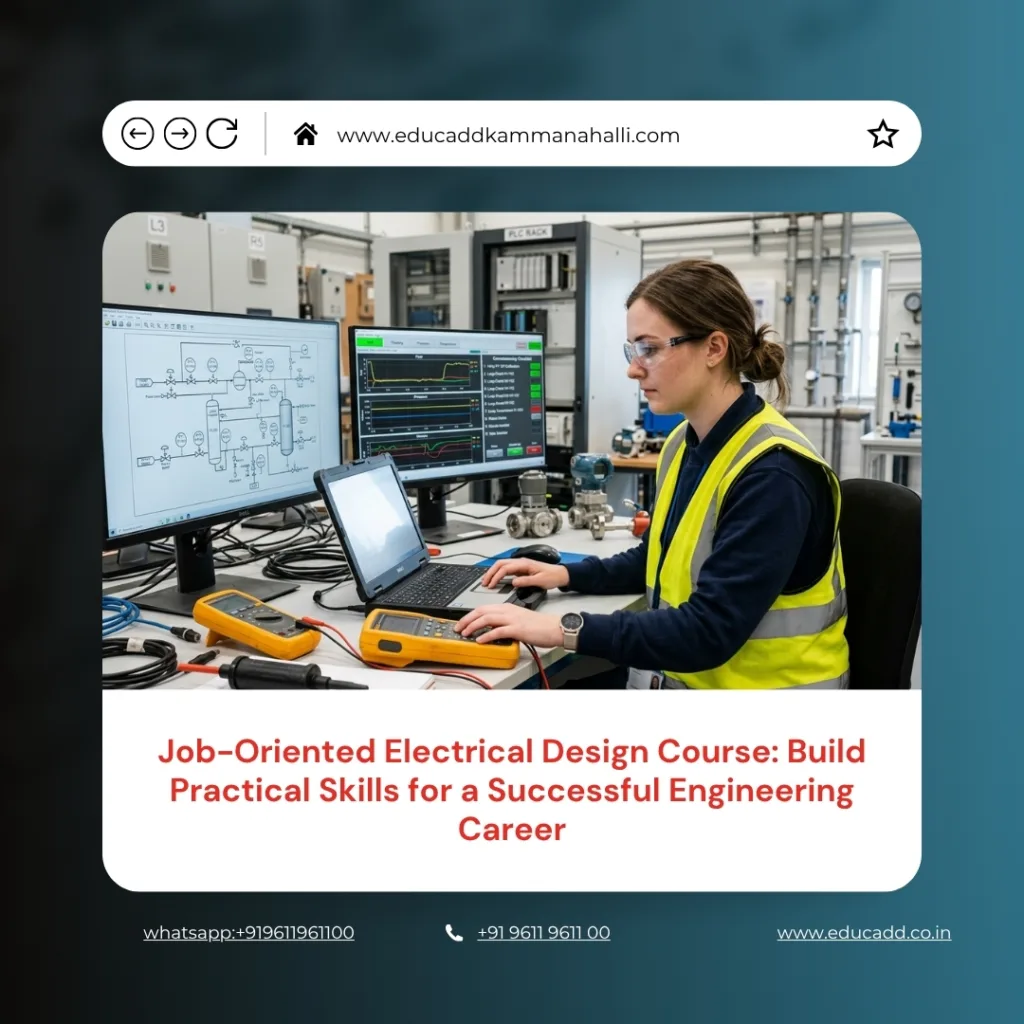
Job Oriented Electrical Design
Why a Job-Oriented Electrical Design Course Matters Today
A Job Oriented Electrical Design Course is designed to prepare learners for real workplace challenges. Unlike traditional academic programs, this course focuses on practical design methods, electrical drafting standards, industrial safety, and engineering software. Students learn how electrical systems function in residential, commercial, and industrial projects.
Furthermore, industries expect engineers to understand electrical layouts, cable sizing, load calculations, panel design, and equipment selection before joining projects. Therefore, employers prefer candidates who already possess these practical skills. This training significantly reduces the learning curve and increases employability.
Understanding the Scope of Electrical Design Engineering
Electrical design engineering plays a vital role in every infrastructure project. From office buildings and hospitals to factories and smart cities, every project requires reliable electrical systems. Designers ensure that electrical installations remain safe, efficient, and compliant with industry regulations.
Additionally, electrical designers prepare technical drawings, power distribution layouts, lighting systems, earthing plans, and cable routing diagrams. Their work supports engineers, contractors, architects, and project managers throughout the construction lifecycle. Consequently, skilled electrical designers enjoy excellent career opportunities across multiple industries.
Essential Skills You Learn During the Course
A professional Job Oriented Electrical Design Course develops technical knowledge along with practical engineering skills. Students gain confidence through live projects, assignments, and software-based learning.
Some major skills include:
- Electrical load calculation and power distribution
- Lighting design and illumination planning
- Cable sizing and voltage drop calculations
- Earthing and lightning protection design
- Electrical panel design and schematic preparation
These competencies help learners become productive immediately after joining an organization.
Industry Software Covered in Electrical Design Training
Modern electrical engineering relies heavily on professional software. Therefore, software training becomes one of the strongest features of a Job Oriented Electrical Design Course.
Students typically learn industry-standard tools such as AutoCAD Electrical, ETAP, Dialux EVO, EPLAN, Revit MEP, and MS Excel for engineering calculations. These applications simplify electrical drafting, simulation, documentation, and project coordination.
Moreover, software proficiency improves productivity while minimizing design errors. Employers always prefer candidates who can independently work with these engineering applications.
Practical Learning Makes You Job Ready
Practical exposure distinguishes a skilled engineer from an average graduate. Therefore, quality training institutes emphasize hands-on learning throughout the program.
Students work on electrical layouts, commercial building projects, industrial distribution systems, lighting calculations, and control panel designs. They also solve practical engineering problems under expert guidance.
Besides classroom learning, project-based assignments improve analytical thinking, technical accuracy, and confidence. As a result, students understand industry workflows before entering professional environments.
Career Opportunities After Completing the Course
The demand for trained electrical designers continues to increase across various sectors. Infrastructure development, renewable energy projects, manufacturing industries, and commercial construction all require skilled professionals.
Graduates of a Job Oriented Electrical Design Course can apply for several roles, including:
- Electrical Design Engineer
- Electrical CAD Engineer
- MEP Electrical Engineer
- Project Engineer
- Electrical Draftsman
Furthermore, experienced professionals can progress into senior design, project management, consultancy, and engineering leadership positions.
Importance of Electrical Standards and Safety
Electrical safety remains one of the most important aspects of engineering design. Every designer must understand national and international electrical standards before creating system layouts.
During the course, students learn about electrical codes, protection systems, fault calculations, circuit breaker selection, grounding methods, and safety practices. This knowledge ensures reliable and compliant electrical installations.
Moreover, understanding standards helps engineers reduce risks, improve system performance, and maintain long-term operational safety.
How Live Projects Improve Technical Confidence
Learning becomes more meaningful when students work on real engineering projects. Live projects expose learners to practical design challenges that resemble actual workplace conditions.
Students prepare lighting layouts, cable schedules, power distribution diagrams, single-line diagrams, panel schedules, and BOQ documentation. They also coordinate with architectural and mechanical drawings.
Consequently, this project-based experience strengthens technical confidence while improving decision-making skills under realistic project requirements.
Growing Demand for Electrical Design Professionals
The engineering industry continues expanding through smart buildings, renewable energy systems, electric vehicle infrastructure, and industrial automation. These developments have increased demand for skilled electrical designers.
Organizations require professionals who understand both engineering concepts and design software. Consequently, candidates with practical training enjoy stronger employment opportunities than those with only academic qualifications.
Additionally, electrical design professionals can work in consulting firms, EPC companies, manufacturing industries, real estate organizations, government projects, and multinational corporations.
How the Course Supports Fresh Graduates
Fresh graduates often struggle because industries expect practical experience. A Job-Oriented Electrical Design Course effectively addresses this challenge by providing industry-focused training.
Students receive exposure to real engineering documentation, project execution methods, software applications, and technical calculations. This practical foundation increases confidence during interviews and workplace assignments.
Furthermore, mock interviews, resume preparation, and placement support offered by reputed institutes further improve career prospects.
Benefits for Working Professionals
Working engineers can also benefit significantly from upgrading their technical skills. Many professionals shift from maintenance or production roles into electrical design for better career growth.
The course helps them understand advanced software, modern design practices, and industry standards. Consequently, they become eligible for higher-paying positions involving project planning and electrical engineering consultancy.
Continuous learning also improves professional credibility while opening opportunities in domestic and international projects.
Choosing the Right Training Institute
Selecting the right institute directly influences learning quality and career success. Students should evaluate several important factors before enrolling.
Look for experienced trainers, updated curriculum, practical laboratories, software training, live projects, placement assistance, flexible schedules, and recognized certification. Student reviews and successful placement records also indicate training quality.
Moreover, institutes with strong industry connections often provide better internship opportunities and employer interactions, making students more competitive in the job market.
Placement Support and Career Development
An effective Job-Oriented Electrical Design Course extends beyond technical education. Good training institutes actively prepare students for successful careers through placement assistance.
Career development activities usually include resume building, aptitude training, interview preparation, communication skills, technical assessments, and personality development sessions.
Additionally, placement teams connect students with leading engineering companies, construction firms, MEP consultants, manufacturing organizations, and infrastructure developers. This comprehensive support significantly improves employment outcomes after course completion.
Build a Future with a Job-Oriented Electrical Design Course
The engineering industry rewards professionals who combine technical knowledge with practical expertise. A Job-Oriented Electrical Design Course provides exactly this combination by developing software proficiency, engineering skills, design accuracy, and industry awareness. Students gain confidence through practical assignments, live projects, and expert guidance while learning modern electrical design practices. As industries continue investing in infrastructure, automation, renewable energy, and smart technologies, the demand for skilled electrical designers will remain strong.
Therefore, enrolling in a professional electrical design training program is a smart investment for anyone seeking long-term career growth, better job opportunities, and lasting success in the engineering field. By choosing practical learning today, you prepare yourself for a rewarding and future-ready engineering career tomorrow.
Conclusion
A Job Oriented Electrical Design Course is more than just a technical training program. It is a career-focused pathway that equips aspiring engineers with practical knowledge, industry-standard software skills, and real-world project experience. As industries continue to adopt advanced technologies and modern electrical systems, the demand for skilled electrical design professionals is growing rapidly. By gaining expertise in electrical drafting, power distribution, lighting design, panel design, and safety standards, students become well-prepared to meet industry expectations with confidence.
Moreover, hands-on training, live projects, and placement support significantly improve employability and open doors to rewarding career opportunities. Whether you are a student, a recent graduate, or a working professional looking to enhance your skills, investing in a Job-Oriented Electrical Design Course can help you build a strong foundation for long-term career success in the ever-evolving electrical engineering industry.

