
Luxury Interior Design: Creating Premium Spaces That Reflect Power, Elegance, and Timeless Living
Luxury Interior Design Spaces represents more than stylish rooms or expensive finishes. It is a philosophy that blends aesthetics, comfort, functionality, and emotional connection into one cohesive experience. In premium interiors, every element communicates intention. Every detail tells a story of refinement, balance, and individuality.
In today’s evolving lifestyle landscape, people expect more from their spaces. Homes, offices, hotels, and retail environments must reflect identity and aspiration. Luxury Interior Design answers this expectation by transforming ordinary structures into immersive environments. These spaces do not follow trends blindly. Instead, they embrace timeless design principles enhanced by innovation and craftsmanship.
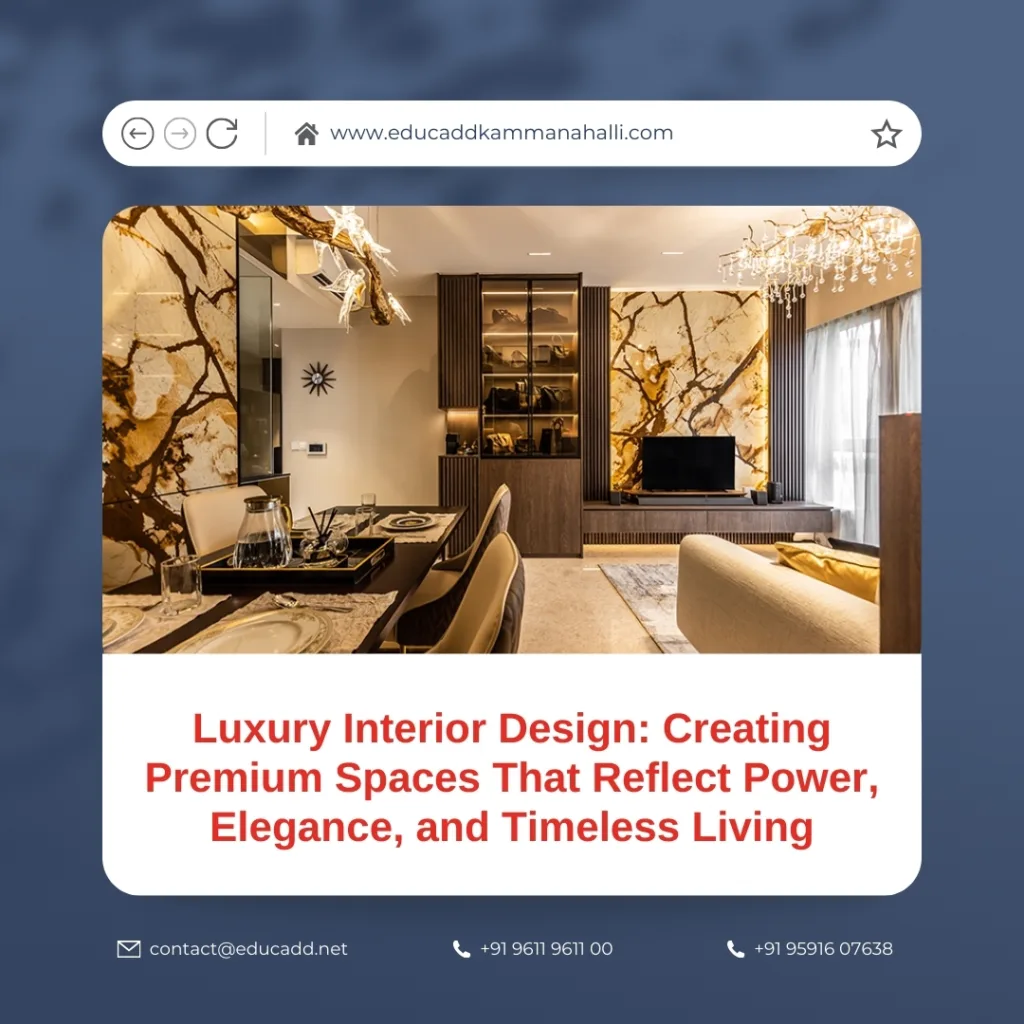
Luxury Interior Design Spaces
True luxury feels effortless. It does not overwhelm the senses. It creates harmony through proportion, material selection, lighting, and spatial flow. Luxury Interior Design focuses on how a space makes people feel. Comfort, confidence, and calm form the emotional foundation of premium interiors. This blog explores how Luxury Interior Design creates such exceptional spaces through thoughtful design strategies and meticulous execution.
1. The Philosophy and Meaning of Luxury Interior Design
Luxury Interior Design begins with a mindset rather than a material palette. Luxury does not mean excess decoration or overuse of expensive elements. Instead, it reflects restraint, clarity, and purpose. A luxurious space feels curated, not crowded.
At its core, Luxury Interior Design prioritizes quality over quantity. Designers focus on fewer elements, executed flawlessly. Every design decision must serve a functional and aesthetic purpose. This philosophy ensures that interiors remain timeless rather than trend-driven.
Moreover, Luxury Interior Design is deeply personal. What feels luxurious to one client may differ for another. Designers invest time in understanding lifestyle patterns, cultural preferences, and emotional needs. This insight allows them to create spaces that resonate on a deeper level. As a result, luxury interiors feel authentic and meaningful rather than superficial.
2. Intelligent Space Planning as the Backbone of Luxury
Space planning plays a critical role in Luxury Interior Design. Without thoughtful planning, even the most beautiful materials lose their impact. Designers begin by analyzing movement patterns, room proportions, and functional requirements.
Luxury Interior Design emphasizes spatial flow. Rooms must connect naturally while maintaining privacy and comfort. Designers use zoning techniques to define areas without creating visual barriers. Open layouts feel expansive, yet intimate through smart furniture placement and architectural elements.
Vertical space also matters. Ceiling heights, structural beams, and wall volumes influence how luxury is perceived. Luxury Interior Design often incorporates double-height spaces, floating staircases, and open atriums to enhance grandeur. Through precise planning, designers create environments that feel both powerful and welcoming.
3. Material Selection: The Language of Luxury Interiors
Materials speak louder than decoration in Luxury Interior Design. Premium interiors rely on authentic, high-quality materials that age gracefully. Natural stone, solid wood, leather, linen, metal, and glass dominate luxury spaces due to their durability and tactile richness.
Luxury Interior Design values craftsmanship. Hand-finished surfaces, custom veneers, and artisanal textures add depth and character. These materials create a sensory experience that synthetic alternatives cannot replicate.
Equally important is material balance. Designers avoid overloading spaces with multiple finishes. Instead, they curate a controlled palette where each material complements the others. This approach allows Luxury Interior Design to feel cohesive, refined, and visually calming.
4. Color Psychology and Texture Layering in Premium Spaces
Color selection influences mood, perception, and emotional response. Luxury Interior Design often begins with a neutral base to establish elegance and flexibility. Soft whites, warm beiges, greys, and earthy tones provide a timeless foundation.
Luxury Interior Design uses texture to add richness without visual noise. Textured wall finishes, layered fabrics, natural fibers, and subtle patterns create depth. These layers invite touch and enhance comfort.
Accent colors appear thoughtfully. Designers introduce them through art, cushions, rugs, or statement furniture. This controlled approach ensures longevity and adaptability. By mastering color harmony and texture layering, Luxury Interior Design achieves understated sophistication.
5. Lighting Design: Shaping Atmosphere and Emotion
Lighting is a defining element of Luxury Interior Design. It shapes how spaces are experienced throughout the day. A well-designed lighting plan enhances architecture, materials, and mood.
Luxury Interior Design follows a layered lighting approach. Ambient lighting provides overall illumination. Task lighting supports functionality. Accent lighting highlights focal points and textures. Together, these layers create depth and drama.
Statement lighting fixtures often serve as sculptural features. Chandeliers, pendants, and designer lamps add identity and visual interest. At the same time, concealed lighting maintains elegance and subtlety. Through strategic lighting, Luxury Interior Design transforms spaces into immersive environments.
6. Bespoke Furniture and Custom Craftsmanship
Customization defines exclusivity in Luxury Interior Design. Off-the-shelf furniture rarely meets the spatial and aesthetic demands of premium interiors. Designers collaborate with skilled craftsmen to create bespoke pieces tailored to each space.
Custom furniture ensures perfect proportions, superior comfort, and material consistency. Luxury Interior Design often includes made-to-measure sofas, dining tables, wardrobes, and cabinetry. These pieces integrate seamlessly with the architecture.
Bespoke detailing extends beyond furniture. Custom wall panels, unique hardware, handcrafted finishes, and personalized storage solutions elevate the design. This attention to detail distinguishes Luxury Interior Design from standard interiors and reinforces its premium identity.
7. Seamless Technology Integration in Modern Luxury
Modern Luxury Interior Design embraces technology while preserving visual elegance. Smart systems enhance convenience, comfort, and security. Automation allows users to control lighting, climate, curtains, and entertainment effortlessly.
Luxury Interior Design conceals technology within the design. Hidden wiring, integrated speakers, and minimal control interfaces maintain aesthetic purity. This discreet integration ensures that technology supports the space rather than dominating it.
Sustainability also plays an increasing role. Energy-efficient systems, smart climate control, and eco-conscious materials align luxury with responsibility. Through intelligent planning, Luxury Interior Design balances innovation with timeless appeal.
8. Art, Styling, and Finishing Touches
Styling completes the narrative of Luxury Interior Design. Art and accessories bring personality, emotion, and cultural context to a space. Designers curate pieces that resonate with the client’s identity and the design theme.
Luxury Interior Design values curation over decoration. A single statement artwork often creates stronger impact than multiple small pieces. Accessories such as sculptures, books, vases, and textiles are selected for quality and relevance.
Negative space plays an important role. Allowing elements to breathe enhances visual clarity and elegance. Through thoughtful styling, Luxury Interior Design achieves balance, sophistication, and lasting impression.
Conclusion
Luxury Interior Design Spaces is not defined by cost alone. It is defined by intention, craftsmanship, and emotional resonance. Premium interiors succeed when beauty aligns with comfort and functionality. Every decision, from layout to lighting, contributes to the overall experience.
When executed with precision, Luxury Interior Design creates spaces that inspire confidence and calm. These environments reflect lifestyle, ambition, and personal expression. They adapt to changing needs while retaining timeless appeal.
Ultimately, Luxury Interior Design transforms spaces into enduring statements of elegance. It elevates everyday living into an experience of refinement and meaning. Through thoughtful design, premium interiors become more than places to occupy. They become places to belong.

