
Learn Marketing Funnels for Lead Generation: A Practical Blueprint to Attract, Nurture, and Convert High-Quality Leads
In today’s competitive digital landscape, businesses no longer succeed by simply running ads or posting content randomly. Sustainable growth depends on a structured system that attracts the right audience, builds trust, and converts interest into action. This is where Marketing Funnels Lead Generation become essential. When designed correctly, a marketing funnel guides potential customers step by step, helping them move from awareness to decision with clarity and confidence.
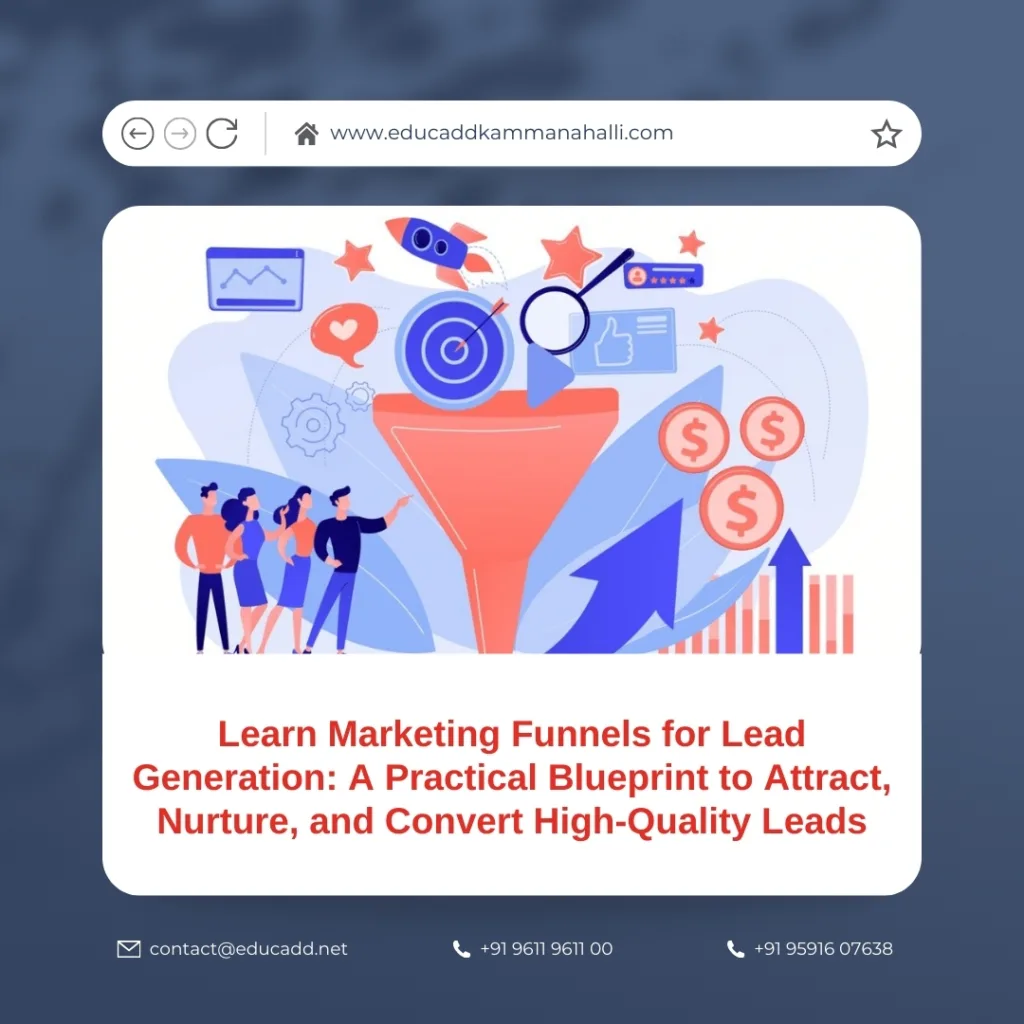
Marketing Funnels Lead Generation
This in-depth guide is created to help beginners and professionals Lead Generation in a practical, easy-to-understand manner. You will explore every stage of the funnel, understand how psychology influences buyer behavior, and discover proven strategies that consistently generate qualified leads. By the end, you will have a clear framework you can apply to any business or industry.
1. Understanding Marketing Funnels and Their Core Purpose
Marketing funnels represent the complete journey a prospect takes before becoming a lead or customer. Instead of pushing sales immediately, funnels focus on building relationships through value and relevance. When you learn marketing funnels for lead generation, you begin to see marketing as a process rather than a single action.
At the top of the funnel, people first discover your brand. In the middle, they engage and evaluate your offer. At the bottom, they take action. Each stage has a unique goal, message, and content format. A well-structured funnel ensures that no potential lead feels rushed or confused. Instead, every interaction feels purposeful and aligned with their needs. This clarity improves trust, increases conversions, and reduces wasted marketing spend.
2. Why Marketing Funnels Matter for Modern Lead Generation
Traditional lead generation relied heavily on cold outreach and generic messaging. However, modern buyers prefer to research, compare, and decide at their own pace. Marketing funnels for lead generation support this behavior by offering relevant information at the right time.
Funnels also allow businesses to segment audiences based on intent and engagement. This means you can personalize communication without overwhelming your team. As a result, leads become more qualified, sales cycles become shorter, and conversion rates improve steadily. When you learn marketing funnels for lead generation, you gain control over how prospects experience your brand, which directly impacts long-term growth.
3. The Psychology Behind Effective Marketing Funnels
Every successful funnel is built on human psychology. People make decisions emotionally first and justify them logically later. Effective marketing funnels for lead generation respect this process. They address pain points, reduce uncertainty, and reinforce confidence at each stage.
Trust plays a critical role here. Prospects need reassurance before sharing their contact details. Consistent messaging, social proof, and clear value propositions help remove hesitation. When you understand why people behave the way they do, funnel design becomes more intuitive. Learning marketing funnels means learning how to guide attention, emotion, and logic in a natural flow.
4. Top of the Funnel: Building Awareness with the Right Audience
The top of the funnel focuses on visibility and discovery. At this stage, your goal is not to sell but to attract attention. Content should educate, inspire, or solve a small problem. Blogs, social media posts, videos, and SEO-optimized pages perform exceptionally well here.
Marketing funnels for lead generation work best when awareness content targets specific problems rather than broad topics. Clear positioning helps attract people who are already searching for solutions. When you learn marketing funnels for lead generation, you realize that attracting fewer but relevant visitors always outperforms attracting large, unfocused traffic.
5. Creating High-Value Content That Drives Funnel Entry
Content acts as the gateway into your funnel. Without strong content, even the best funnel structure will fail. High-value content answers real questions and provides immediate clarity. It builds authority without appearing promotional.
Educational blogs, explainer videos, and industry guides help position your brand as a trusted resource. Strong calls to action guide readers toward the next step without pressure. As you learn marketing funnels, content strategy becomes less about volume and more about intentional messaging that supports the funnel’s objective.
6. Middle of the Funnel: Turning Visitors into Engaged Prospects
The middle of the funnel is where interest turns into engagement. Visitors now recognize their problem and actively explore solutions. Your role is to deepen the relationship. Lead magnets such as ebooks, webinars, checklists, and free tools work effectively here.
Marketing funnels depend heavily on this stage because it filters casual visitors from serious prospects. Clear landing pages, persuasive copy, and minimal distractions improve conversion rates. When you learn marketing funnels for lead generation, you understand that the middle stage builds trust and prepares prospects for decision-making.
7. Designing Lead Magnets That Actually Convert
A lead magnet must offer immediate value and clear relevance. Generic offers rarely perform well. Instead, successful marketing funnels for lead generation use lead magnets that solve a specific problem quickly.
The perceived value of the offer should feel higher than the effort required to access it. Strong headlines, benefit-driven descriptions, and visual clarity increase sign-ups. When you learn marketing funnels for lead generation, you start designing lead magnets as solutions, not just downloads.
8. Lead Nurturing: Building Relationships Through Consistent Communication
Once a prospect enters your funnel, nurturing becomes essential. Email sequences, remarketing ads, and educational content help maintain engagement. The goal is to stay relevant without becoming intrusive.
Marketing funnels rely on consistent communication that educates and reassures. Each message should move the prospect closer to clarity and confidence. When you learn marketing funnels for lead generation, you realize that nurturing often determines success more than traffic volume.
9. Bottom of the Funnel: Converting Prospects into Qualified Leads
The bottom of the funnel focuses on action. Prospects are now aware, informed, and considering options. Clear offers, demonstrations, consultations, or trials work best at this stage.
Marketing funnels must remove final objections. Transparent pricing, testimonials, and clear next steps help prospects decide faster. When you learn marketing funnels for lead generation, you understand that conversion happens when clarity outweighs doubt.
10. Using Landing Pages to Strengthen Funnel Performance
Landing pages act as conversion hubs within funnels. A strong landing page focuses on one goal and one action. Clean design, concise copy, and persuasive elements improve results significantly.
Marketing funnels benefit from landing pages that align perfectly with traffic sources. Message consistency increases trust and reduces bounce rates. Learning marketing funnels means mastering landing page structure and optimization.
11. Measuring Funnel Performance with the Right Metrics
Data allows you to improve funnels continuously. Metrics such as conversion rates, cost per lead, engagement time, and drop-off points reveal what works and what needs improvement.
Marketing funnels thrive on optimization. Small changes in headlines, visuals, or calls to action can create noticeable improvements. When you learn marketing funnels for lead generation, analytics becomes a decision-making tool rather than just reporting.
12. Common Funnel Mistakes and How to Avoid Them
Many funnels fail due to complexity or misalignment. Asking for too much information early often reduces conversions. Inconsistent messaging also creates confusion.
Successful marketing funnels remain simple, focused, and user-centric. Each stage supports the next logically. Learning marketing funnels for lead generation involves refining processes, not overcomplicating them.
13. Scaling Lead Generation with Automated Funnels
Automation allows funnels to operate consistently without constant manual effort. Email automation, CRM integration, and retargeting tools help scale results efficiently.
Marketing funnels become more powerful when automation supports personalization. Prospects receive relevant messages based on behavior and intent. When you learn marketing funnels for lead generation, automation becomes a growth multiplier rather than a replacement for strategy.
14. Aligning Sales and Marketing Through Funnel Strategy
A funnel works best when marketing and sales teams share goals and insights. Clear definitions of qualified leads reduce friction and improve closing rates.
Marketing funnels create transparency across teams. Everyone understands where prospects are and how to move them forward. Learning marketing funnels helps businesses build alignment that supports long-term success.
Conclusion
Learning Marketing Funnels Lead Generation is no longer optional for businesses that want predictable and scalable growth. Funnels provide structure, clarity, and direction to every marketing effort. They transform random tactics into a cohesive system that attracts, nurtures, and converts the right audience consistently.
By understanding each stage, applying psychology, and optimizing with data, you can build marketing funnels for lead generation that deliver lasting results. When strategy, content, and automation work together, lead generation becomes not just easier, but far more effective.

