
Master Mechanical CAD Software: Build Industry-Ready Design Skills with Expert-Led Training
Mechanical design has changed dramatically with the rise of digital engineering technologies. Today, companies expect engineers, designers, and technicians to create precise 2D drawings, intelligent 3D models, detailed assemblies, and manufacturing-ready documentation using advanced Mechanical CAD software. Whether you are a student preparing for your first engineering role or a professional looking to upgrade your technical expertise, learning from experienced trainers provides a significant advantage. Learn Mechanical CAD Software Training from Experts is more than just a course—it is the fastest route to gaining practical knowledge, solving real-world design challenges, and becoming job-ready.
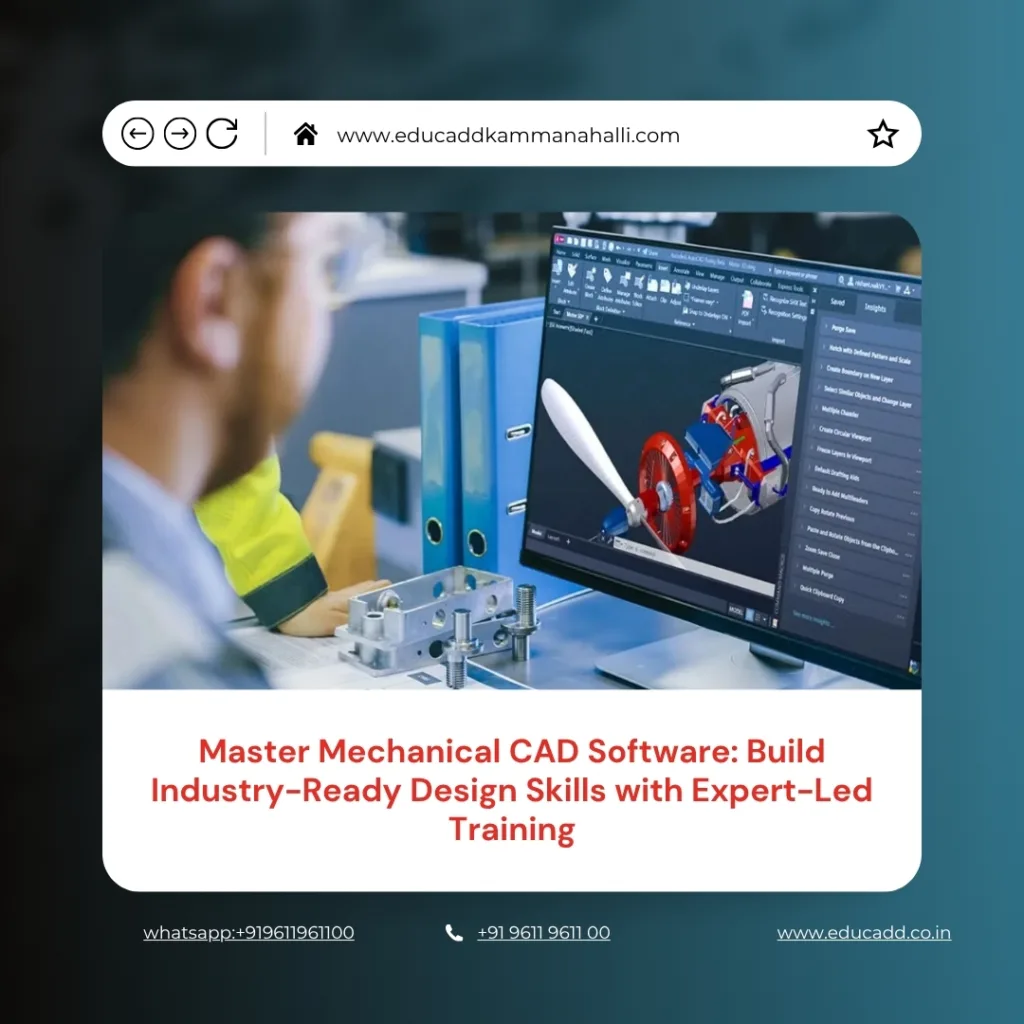
Mechanical CAD Software Training
Expert guidance helps learners understand industry workflows, improve design accuracy, and develop confidence while working on professional projects. As industries continue adopting digital design processes, mastering Mechanical CAD software opens the door to exciting career opportunities across manufacturing, automotive, aerospace, construction, and product development.
Why Learning Mechanical CAD Software Matters Today
Modern engineering organizations rely heavily on Mechanical CAD software to design products with speed, precision, and efficiency. Engineers no longer depend on traditional drafting methods because digital design tools reduce errors, improve collaboration, and accelerate product development. When you Learn Mechanical CAD Software Training from Experts, you gain practical knowledge that aligns with current industry requirements rather than simply understanding software commands. Expert instructors explain design concepts, modeling strategies, engineering standards, and production workflows through practical examples.
As a result, learners build confidence while working on real engineering designs. Furthermore, companies value candidates who can immediately contribute to ongoing projects using professional CAD applications without extensive additional training.
Expert Trainers Make Learning Faster and Smarter
One of the biggest advantages of enrolling in expert-led Mechanical CAD training is personalized guidance. Experienced trainers have worked on industrial projects and understand the practical challenges engineers face every day. Instead of memorizing tools, students learn how to apply them effectively. When you Learn Mechanical CAD Software Training from Experts, instructors demonstrate efficient modeling techniques, shortcut methods, and professional design practices that improve productivity.
They also explain common mistakes and provide solutions based on real project experience. Consequently, learners develop stronger technical skills while saving valuable learning time. Expert mentoring also encourages problem-solving abilities that remain useful throughout an engineering career.
Build Strong Fundamentals Before Moving to Advanced Design
A successful Mechanical CAD professional begins with a solid understanding of engineering fundamentals. Expert trainers focus on developing strong basics before introducing advanced modeling techniques. Students first learn sketch creation, geometric constraints, dimensions, coordinate systems, and drafting principles. After mastering these concepts, they gradually explore part modeling, assembly creation, sheet metal design, weldments, and simulation tools. This structured learning approach helps students understand the complete design workflow. Moreover, each lesson builds upon previous knowledge, making complex topics easier to understand. Therefore, learners become comfortable handling increasingly sophisticated engineering projects with greater confidence.
Gain Practical Experience Through Real Engineering Projects
Practical exposure plays a vital role in technical education because employers prefer candidates with hands-on experience. During professional training, learners work on industry-oriented assignments that simulate real manufacturing environments. When you Learn Mechanical CAD Software Training from Experts, every project strengthens your understanding of product development processes and engineering documentation.
Students usually gain experience through activities such as:
- Creating detailed machine components and complete assemblies.
- Preparing production drawings with dimensions, tolerances, and annotations.
These practical exercises improve analytical thinking, increase software proficiency, and prepare students for real workplace responsibilities. Additionally, project-based learning develops confidence that theoretical knowledge alone cannot provide.
Understand Industry Standards and Engineering Practices
Mechanical design requires more than attractive 3D models. Engineers must also follow international drafting standards, manufacturing guidelines, and quality requirements. Expert instructors explain engineering conventions that professionals use across different industries. Students learn geometric dimensioning and tolerancing, material selection, design intent, assembly relationships, and documentation standards.
As they progress, they understand how every design decision affects manufacturing, cost, and product performance. Consequently, learners produce professional engineering drawings that meet industrial expectations. These skills significantly improve employability because companies seek candidates who already understand standard engineering practices.
Improve Accuracy and Design Efficiency
Accuracy remains one of the most important qualities of successful engineering design. Even minor mistakes can delay production and increase manufacturing costs. Professional Mechanical CAD training teaches learners systematic design methods that minimize errors while improving productivity. Expert instructors introduce advanced modeling features, intelligent constraints, reusable design libraries, and automation tools that simplify repetitive tasks.
Furthermore, learners discover efficient workflows for editing complex assemblies without affecting design integrity. By following professional design practices consistently, students complete projects faster while maintaining exceptional quality standards. This combination of speed and accuracy makes trained professionals highly valuable in competitive engineering industries.
Explore Multiple Career Opportunities
Mechanical CAD skills create opportunities across numerous engineering sectors because digital design has become essential in modern manufacturing. Professionals with advanced CAD knowledge work in automotive companies, aerospace organizations, industrial equipment manufacturing, robotics, consumer product design, construction engineering, and energy industries. When you Learn Mechanical CAD Software Training from Experts, your technical capabilities become relevant to multiple career paths instead of a single specialization.
Popular career opportunities include:
- Mechanical Design Engineer
- CAD Engineer
- Product Design Engineer
- Design Draftsman
- Tool Design Engineer
- Manufacturing Design Specialist
Since industries continue expanding their digital engineering capabilities, qualified CAD professionals remain in high demand across domestic and international markets.
Develop Problem-Solving Skills Through Expert Guidance
Engineering involves solving practical design challenges rather than simply creating digital models. During professional training, instructors encourage learners to analyze engineering problems, evaluate multiple design options, and choose efficient solutions. Students understand how different modeling approaches influence assembly performance, manufacturability, maintenance, and cost.
Additionally, trainers share practical experiences from industrial projects that help learners understand real engineering scenarios. As a result, students become confident in making technical decisions independently. These analytical skills distinguish highly capable CAD professionals from those who possess only software knowledge.
Learn the Latest Mechanical CAD Technologies
Technology continues evolving rapidly, making continuous learning essential for engineering professionals. Expert training programs introduce learners to the latest Mechanical CAD software features, cloud collaboration tools, digital product development methods, and integrated engineering workflows. Students become familiar with advanced visualization, simulation, data management, and model-based design techniques.
Furthermore, instructors explain emerging industry trends that influence future engineering practices. Therefore, learners stay competitive in an evolving job market while developing skills that remain valuable for years. Continuous exposure to updated technologies also improves long-term career growth and professional adaptability.
Enhance Communication and Team Collaboration
Engineering projects involve collaboration among designers, manufacturing teams, quality engineers, project managers, and clients. Mechanical CAD professionals must communicate design intent clearly through drawings, models, and documentation. Expert trainers teach students how to prepare professional engineering documents that support effective collaboration. They also explain revision control, file organization, assembly management, and design review procedures.
Consequently, learners understand how engineering teams work together throughout the product development lifecycle. Strong communication skills improve workplace efficiency while reducing misunderstandings during manufacturing and production processes.
Prepare for Interviews and Professional Success
Technical knowledge alone does not guarantee employment because recruiters evaluate practical understanding, communication skills, and confidence during interviews. Expert-led Mechanical CAD training often includes mock interviews, project discussions, portfolio preparation, and technical assessments. Students learn how to explain design decisions, demonstrate software proficiency, and showcase completed projects professionally.
Moreover, trainers provide valuable career guidance based on industry expectations. This preparation helps learners perform confidently during recruitment processes while presenting themselves as competent engineering professionals. As a result, graduates improve their chances of securing rewarding job opportunities in leading organizations.
Continue Learning Beyond the Classroom
The engineering industry rewards professionals who continuously improve their skills. After completing formal training, learners should continue practicing Mechanical CAD software through independent projects, advanced certifications, and industry case studies. Expert instructors often recommend additional learning resources that strengthen technical expertise. Furthermore, joining engineering communities, attending technical workshops, and participating in design competitions provide valuable practical exposure.
Continuous improvement keeps professionals updated with evolving technologies while expanding their career opportunities. Lifelong learning ultimately becomes one of the strongest foundations for sustained professional success in engineering.
Build a Rewarding Engineering Career with Expert Mechanical CAD Training
Choosing to Learn Mechanical CAD Software Training from Experts represents an investment in your future engineering career. Professional guidance accelerates learning, strengthens technical fundamentals, improves practical skills, and builds confidence for handling complex engineering projects. From mastering drafting principles to creating advanced 3D assemblies and manufacturing documentation, expert training prepares learners for real industrial challenges.
Additionally, project-based learning, industry standards, and career-focused instruction make graduates more competitive in today’s job market. As engineering industries continue embracing digital transformation, skilled Mechanical CAD professionals will remain essential contributors to innovation and product development. By learning from experienced experts, you gain the technical knowledge, practical experience, and professional mindset required to succeed in an increasingly technology-driven engineering world.
Conclusion
Learning Mechanical CAD software from experienced industry experts is one of the smartest investments you can make for a successful engineering career. While software knowledge is important, expert guidance helps you understand real-world design practices, industry standards, and efficient workflows that employers value. From creating accurate 2D drawings to developing complex 3D models and manufacturing-ready assemblies, professional training equips you with practical skills that go beyond classroom learning.
Moreover, hands-on projects, personalized mentoring, and exposure to industry scenarios help you build confidence and become job-ready. As technology continues to transform the engineering landscape, professionals with strong Mechanical CAD expertise will remain in high demand across manufacturing, automotive, aerospace, industrial design, and many other sectors. By choosing to Learn Mechanical CAD Software Training from Experts, you position yourself for long-term career growth, better employment opportunities, and continuous professional development in the ever-evolving world of engineering design.

