
Top Mechanical CAD Training Institute: Your Gateway to a High-Growth Engineering Career
Mechanical design has evolved rapidly in the last decade. Today, industries rely heavily on advanced tools to create, analyze, and optimize products before production begins. This transformation has made Mechanical CAD (Computer-Aided Design) one of the most valuable skills for aspiring engineers and professionals. If you aim to build a rewarding career in design, manufacturing, or product development, choosing the Mechanical CAD Training Institute can shape your future.
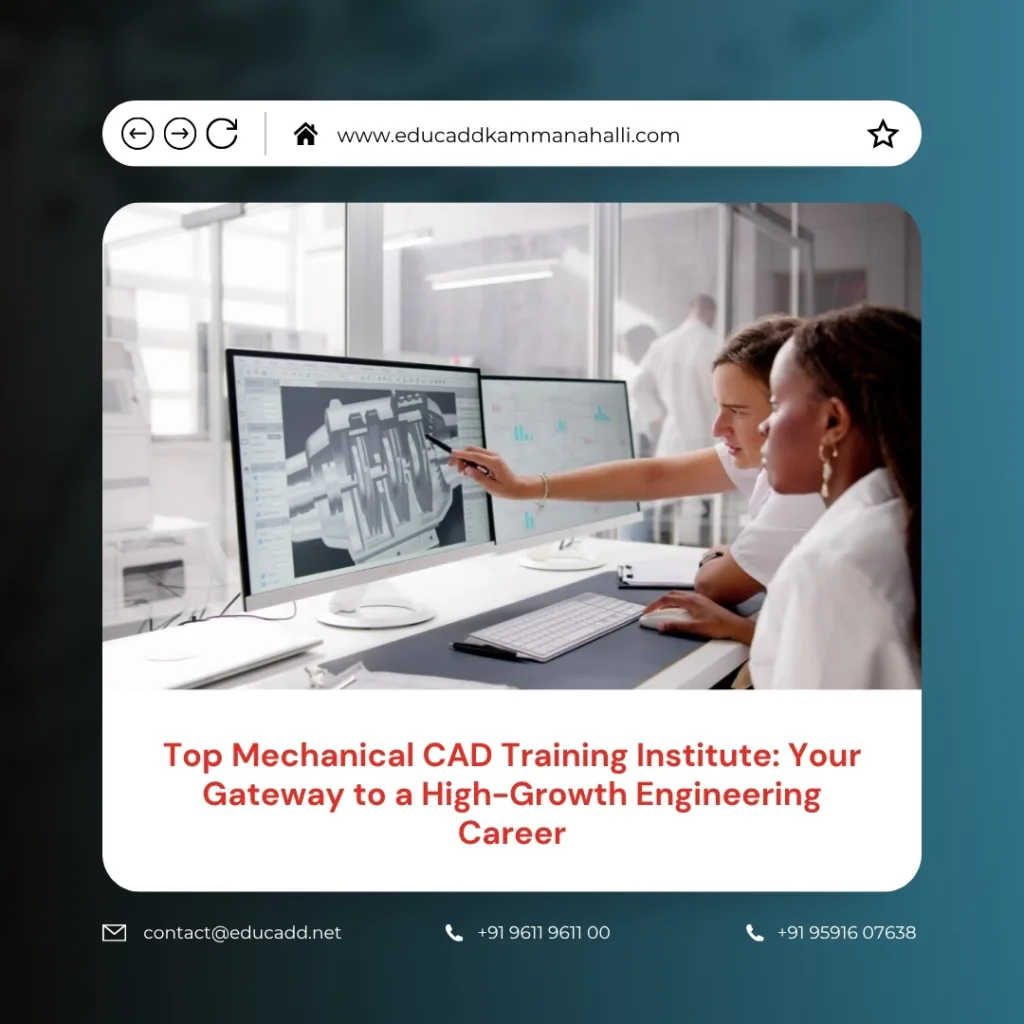
Mechanical CAD Training Institute
A well-structured training program not only teaches software but also builds practical knowledge, industry exposure, and confidence. However, with countless institutes available, selecting the best one can feel overwhelming. This blog explores everything you need to know—from features of a top institute to career benefits—so you can make an informed decision and accelerate your professional growth.
1. What is Mechanical CAD and Why It Matters
Mechanical CAD refers to the use of specialized software to design mechanical components, systems, and assemblies. Engineers use tools like AutoCAD, SolidWorks, and CATIA to create precise digital models. These models help in visualization, simulation, and testing before actual production.
This approach saves time, reduces errors, and improves efficiency. As industries move toward automation and smart manufacturing, CAD skills have become essential. Whether it is automotive, aerospace, or construction, CAD plays a critical role in innovation and development.
2. Growing Demand for Mechanical CAD Professionals
The demand for skilled CAD professionals continues to rise across industries. Companies are constantly searching for individuals who can design efficient products and reduce production costs. As a result, trained professionals often enjoy better job opportunities and higher salaries.
Moreover, globalization has opened doors to international projects. Engineers with strong CAD expertise can work with global teams and advanced technologies. This demand makes CAD training a smart investment for long-term career growth.
3. Key Features of a Top Mechanical CAD Training Institute
Not all training institutes offer the same quality of education. A top institute stands out through its comprehensive curriculum, experienced trainers, and practical approach. It focuses on both theoretical knowledge and real-world applications.
Here are some essential features to look for:
- Industry-relevant curriculum with updated software tools
- Hands-on training through live projects and case studies
These factors ensure that students gain practical skills that employers value.
4. Importance of Industry-Relevant Curriculum
A strong curriculum forms the backbone of any successful training program. Top institutes design their courses based on current industry requirements. They include essential modules such as 2D drafting, 3D modeling, assembly design, and simulation.
Additionally, students learn about real-world applications, which helps them understand how concepts work in practical scenarios. This approach bridges the gap between academic learning and industry expectations.
5. Role of Experienced Trainers in Skill Development
Experienced trainers bring valuable industry insights into the classroom. They share practical knowledge, real-world challenges, and effective solutions. This exposure helps students understand how to apply their skills in professional environments.
Moreover, trainers guide students through complex concepts and provide personalized support. Their mentorship plays a crucial role in building confidence and technical expertise.
6. Hands-On Training and Practical Exposure
Practical training is essential for mastering Mechanical CAD tools. Top institutes emphasize hands-on learning through projects, assignments, and workshops. This approach helps students develop problem-solving skills and gain real-world experience.
Instead of focusing only on theory, students work on live projects that simulate industry scenarios. As a result, they become job-ready and capable of handling professional challenges.
7. Software Tools Covered in Mechanical CAD Training
A comprehensive CAD course includes training in multiple software tools. Each tool serves a specific purpose and enhances a student’s skill set. Commonly taught software includes AutoCAD, SolidWorks, CATIA, and Creo.
Learning multiple tools increases versatility and job opportunities. It also allows professionals to work across different industries and projects with ease.
8. Certification and Its Career Impact
Certification plays a significant role in career advancement. A recognized certification validates your skills and increases your credibility in the job market. Employers often prefer candidates with certified expertise.
Furthermore, certifications demonstrate your commitment to learning and professional growth. They give you a competitive edge and improve your chances of securing high-paying jobs.
9. Placement Assistance and Career Support
Top Mechanical CAD training institutes offer strong placement support. They collaborate with companies and help students connect with potential employers. This support includes resume building, interview preparation, and job referrals.
Some institutes also organize job fairs and campus interviews. These opportunities help students start their careers with confidence and ease.
10. Benefits of Choosing the Right Training Institute
Selecting the right institute can significantly impact your career. A good institute provides quality education, practical exposure, and industry connections. These factors contribute to overall professional development.
Here are some key benefits:
- Faster career growth with job-ready skills
- Better salary opportunities and career stability
Choosing wisely ensures long-term success and professional satisfaction.
11. Career Opportunities After Mechanical CAD Training
Mechanical CAD training opens doors to various career paths. Graduates can work as design engineers, CAD designers, or project engineers. They can also explore roles in manufacturing, research, and development.
Industries such as automotive, aerospace, construction, and robotics offer numerous opportunities. With experience, professionals can move into senior roles and leadership positions.
12. Importance of Continuous Learning in CAD
Technology continues to evolve, and so do CAD tools. Professionals must stay updated with the latest advancements to remain competitive. Continuous learning helps in improving skills and adapting to new technologies.
Many institutes offer advanced courses and workshops for skill enhancement. These programs help professionals stay relevant in a rapidly changing industry.
13. How to Choose the Best Mechanical CAD Training Institute
Choosing the right institute requires careful evaluation. Start by researching the institute’s reputation, course structure, and faculty. Check reviews, testimonials, and placement records to gain insights.
Visit the institute if possible and interact with trainers and students. This step helps you understand the learning environment and facilities. A well-informed decision ensures better outcomes and career growth.
14. Future Scope of Mechanical CAD Training
The future of Mechanical CAD looks promising. With advancements in AI, automation, and smart manufacturing, the demand for skilled professionals will continue to grow. CAD tools are becoming more advanced, offering new opportunities for innovation.
Engineers with strong CAD skills will play a crucial role in shaping the future of design and manufacturing. This trend makes CAD training a valuable and future-proof investment.
Conclusion
Mechanical CAD Training Institute is more than just learning software—it is about building a strong foundation for a successful engineering career. The right training institute equips you with technical skills, practical experience, and industry exposure. These elements are essential for achieving professional success in today’s competitive world.
By choosing a top Mechanical CAD training institute, you invest in your future. You gain the knowledge, confidence, and opportunities needed to excel in your career. As industries continue to evolve, skilled CAD professionals will remain in high demand, making this field a smart and rewarding choice.

