
Design Your Future: Job-Oriented Mechanical CADD Training for High-Growth Careers
The modern engineering landscape is evolving at an unprecedented pace, and industries are constantly seeking professionals who can blend technical knowledge with practical design skills. Mechanical Computer-Aided Design and Drafting (CADD) has emerged as a critical tool in this transformation. It enables engineers and designers to create precise, efficient, and innovative solutions for complex mechanical systems. As industries adopt digital technologies, the demand for skilled CADD professionals continues to rise. Job -oriented Mechanical CADD Career Training bridges the gap between theoretical knowledge and real-world industry requirements.
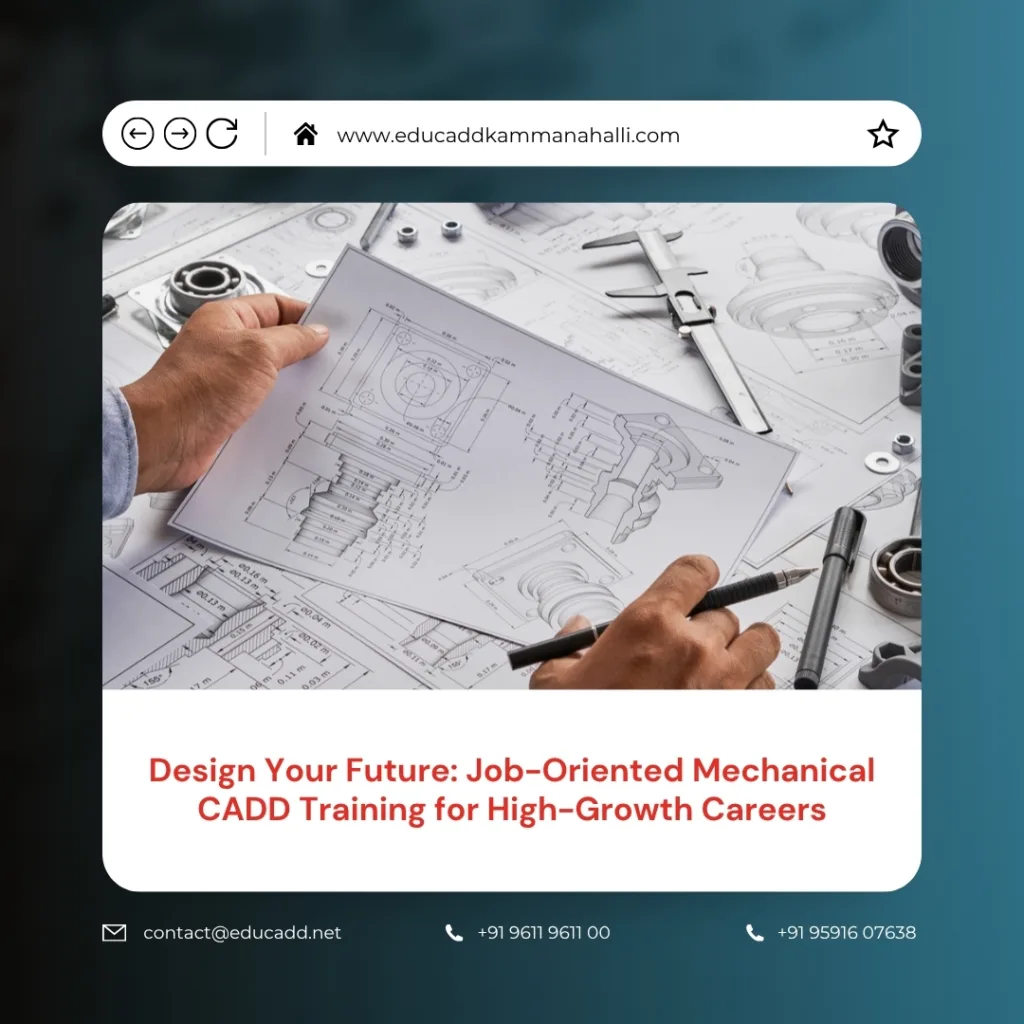
Mechanical CADD Career Training
It equips learners with hands-on skills, industry-relevant tools, and practical exposure that significantly enhance employability. Whether you are a student, a diploma holder, or a working professional looking to upgrade your skills, this training can open doors to rewarding career opportunities in manufacturing, automotive, aerospace, and more.
1. Understanding Mechanical CADD and Its Importance
Mechanical CADD refers to the use of computer software to design, draft, and analyze mechanical components and systems. It replaces traditional manual drafting with digital precision, making the design process faster and more efficient. Engineers can create 2D drawings and 3D models, simulate performance, and identify errors before production begins.
This technology is essential because it reduces production costs and improves design accuracy. Moreover, industries rely on CADD tools to streamline workflows and maintain consistency. As a result, professionals skilled in Mechanical CADD are highly valued across various sectors.
2. Why Job-Oriented Training Matters
Traditional academic programs often focus heavily on theory, leaving students underprepared for practical challenges. Job-oriented Mechanical CADD training addresses this gap by emphasizing real-world applications. It ensures that learners are industry-ready from day one.
Such training programs are structured around current industry standards and tools. They also include project-based learning, which helps students build a strong portfolio. Consequently, candidates gain confidence and become more attractive to employers.
3. Core Software Covered in Mechanical CADD Career Training
One of the key highlights of job-oriented training is exposure to industry-standard software. These tools are widely used by companies for designing and modeling.
Commonly included software tools are:
- AutoCAD for 2D drafting and detailing
- SolidWorks for 3D modeling and simulation
Learning these tools enhances technical proficiency and improves job prospects. In addition, familiarity with multiple software platforms makes candidates versatile and adaptable.
4. Skills You Gain Through Mechanical CADD Training
Job-oriented Mechanical CADD training focuses on developing both technical and analytical skills. Students learn how to interpret engineering drawings, create precise designs, and optimize components for performance.
In addition, problem-solving abilities are strengthened through practical assignments. Learners also develop attention to detail, which is crucial in design work. These skills collectively prepare individuals for real-world engineering challenges.
5. Industry Applications of Mechanical CADD
Mechanical CADD is widely used across multiple industries. From designing automotive parts to creating aerospace components, its applications are vast.
For instance, in the manufacturing sector, CADD is used to design machinery and tools. In the automotive industry, it helps in developing vehicle components with high precision. Therefore, professionals with CADD expertise have diverse career options.
6. Career Opportunities After Mechanical CADD Training
Completing a job-oriented Mechanical CADD course opens up various career paths. Companies are always looking for skilled designers and draftsmen who can contribute to product development.
Some popular job roles include:
- Mechanical Design Engineer
- CAD Draftsman
These roles offer excellent growth potential and competitive salaries. Furthermore, experienced professionals can move into senior design or project management positions.
7. Importance of Practical Training and Live Projects
Hands-on experience is a crucial part of job-oriented training. Working on live projects helps students understand industry workflows and expectations.
Practical training also improves confidence and reduces the learning curve in professional environments. As a result, candidates can perform efficiently from the very beginning of their careers.
8. Certification and Its Value in the Job Market
Certifications play a significant role in validating your skills. Employers often prefer candidates who have completed certified training programs.
A recognized certification demonstrates your expertise and commitment to professional growth. It also gives you an edge over other candidates in competitive job markets.
9. How Mechanical CADD Training Enhances Employability
Job-oriented training is designed to make candidates job-ready. It focuses on developing skills that employers are actively seeking.
Additionally, many training institutes offer placement assistance, resume building, and interview preparation. This support significantly increases the chances of securing a good job after course completion.
10. Role of Trainers and Industry Experts
Experienced trainers play a vital role in effective learning. They provide insights into real-world applications and share industry best practices.
Moreover, interaction with industry experts helps students stay updated with the latest trends. This exposure enhances both technical knowledge and professional understanding.
11. Flexibility of Learning Modes
Modern Mechanical CADD training programs offer flexible learning options. Students can choose between classroom training, online sessions, or hybrid models.
This flexibility allows learners to balance their studies with other commitments. As a result, more individuals can access quality education and skill development opportunities.
12. Key Benefits of Job-Oriented Mechanical CADD Training
Job-oriented training offers numerous advantages that go beyond traditional education.
Some of the major benefits include:
- Industry-relevant curriculum aligned with current demands
- Strong portfolio development through real projects
These benefits ensure that learners are well-prepared for professional roles. Furthermore, they help in building a strong foundation for long-term career growth.
13. Future Scope of Mechanical CADD Professionals
The future of Mechanical CADD is highly promising. With advancements in technology, the demand for skilled professionals continues to grow.
Emerging fields such as automation, robotics, and smart manufacturing are creating new opportunities. Therefore, individuals with CADD expertise can expect a stable and rewarding career path.
14. Choosing the Right Training Institute
Selecting the right training institute is crucial for success. A good institute provides quality education, experienced trainers, and placement support.
Before enrolling, it is important to evaluate the course content, infrastructure, and industry connections. Making the right choice can significantly impact your learning experience and career outcomes.
Conclusion
Job-oriented Mechanical CADD Career Training is more than just a course; it is a pathway to a successful engineering career. It equips learners with practical skills, industry knowledge, and the confidence needed to excel in competitive environments. As industries continue to embrace digital transformation, the demand for skilled CADD professionals will only increase.
By investing in the right training program, you position yourself for long-term success and growth. Whether you are starting your career or looking to upgrade your skills, Mechanical CADD training provides the tools and opportunities needed to achieve your goals.

