
Find the Best Mechanical Design Course Near You and Shape a Future in Engineering Excellence
In today’s fast-evolving industrial landscape, mechanical design plays a critical role in shaping innovation, efficiency, and product development. Whether it’s automobiles, heavy machinery, aerospace systems, or consumer products, every physical creation begins with a strong mechanical design foundation. If you are searching for a mechanical design course near me, you are already taking the first step toward a rewarding and future-proof career.
Choosing the right course is not just about proximity—it is about quality education, industry relevance, hands-on experience, and career opportunities. A well-structured mechanical design course can help you master essential tools, understand real-world applications, and gain the confidence to excel in competitive engineering environments.
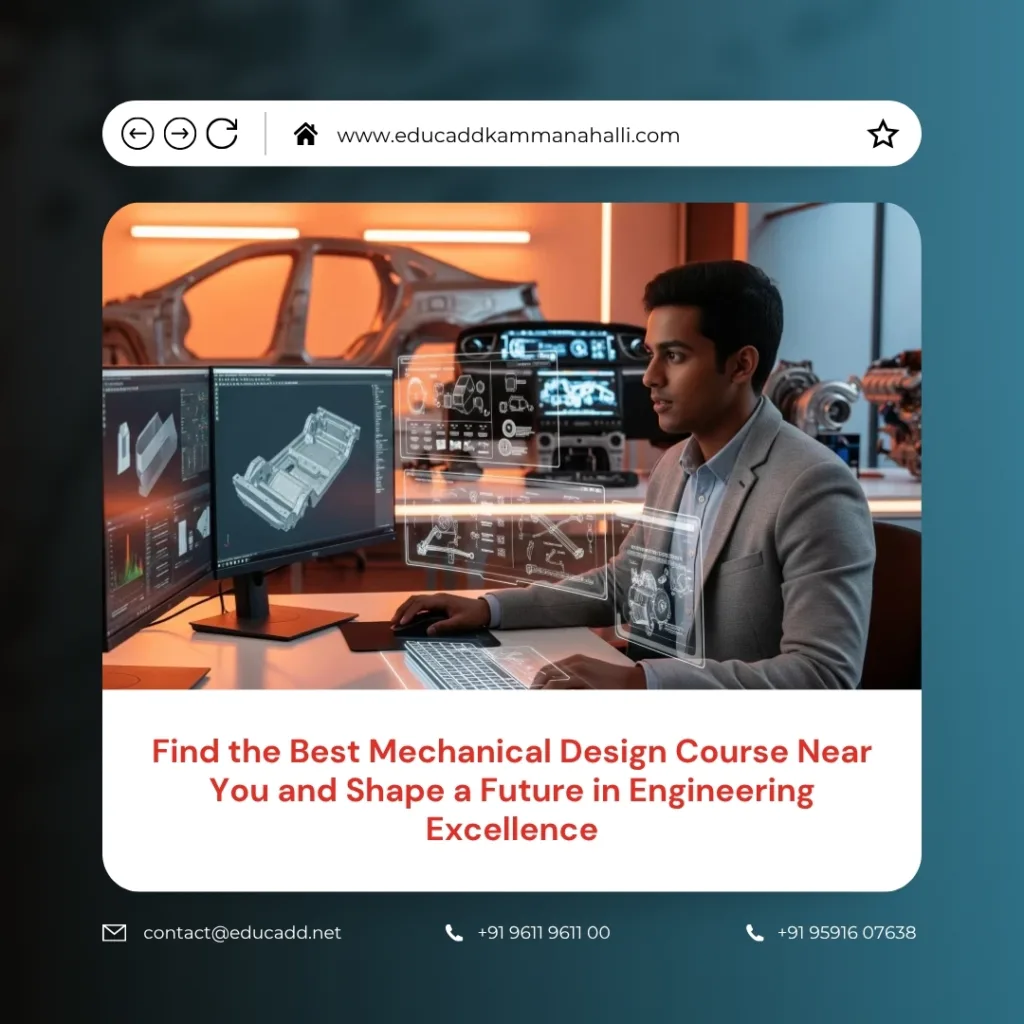
Mechanical Design Course Near Me
This comprehensive guide will help you understand everything about finding the best mechanical design course near you, what to expect, and how to make the most of your learning journey.
1. Understanding the Importance of Mechanical Design Courses
Mechanical design is the backbone of engineering innovation. It involves creating, analyzing, and improving mechanical systems using advanced tools and methodologies. As industries continue to adopt digital transformation, the demand for skilled mechanical designers has increased significantly.
A structured course equips students with both theoretical knowledge and practical skills. Moreover, it ensures that learners are prepared to handle real-world challenges effectively. Without proper training, understanding complex design concepts can become difficult.
In addition, mechanical design courses help bridge the gap between academic knowledge and industry requirements. Therefore, enrolling in a course near you can provide easier access to resources and mentorship.
2. Why Choosing a Course Near You Matters
Selecting a nearby institute offers several advantages. Firstly, it saves travel time and energy, allowing you to focus more on learning. Secondly, local institutes often have industry connections within the region, which can help in job placements.
Furthermore, attending a course in your area allows you to build a local professional network. This network can be highly valuable when searching for internships or job opportunities. Also, you can easily attend workshops, seminars, and additional training sessions.
Another key benefit is flexibility. Many institutes offer weekend or evening batches, making it easier for students and working professionals to balance their schedules.
3. Key Skills You Will Gain in a Mechanical Design Course
A mechanical design course focuses on developing both technical and analytical skills. These skills are essential for designing efficient and reliable systems.
Some of the major skills include:
- 3D modeling and drafting using CAD software
- Understanding engineering design principles and standards
Additionally, students learn problem-solving techniques and critical thinking. These abilities help in identifying design flaws and improving system performance.
Moreover, communication skills are also enhanced, as designers often work in teams and need to present their ideas clearly.
4. Core Software Covered in Mechanical Design Training
Modern mechanical design heavily relies on advanced software tools. Therefore, a good course must include training in industry-relevant software.
Popular tools include AutoCAD, SolidWorks, CATIA, and Creo. These tools are widely used across industries for creating detailed designs and simulations. Learning these software programs increases your employability significantly.
In addition, exposure to simulation tools helps in analyzing product performance before manufacturing. This reduces errors and improves efficiency.
Thus, choosing a course that offers hands-on training in these tools is crucial for career growth.
5. Course Curriculum: What to Expect
A well-designed curriculum ensures that students gain comprehensive knowledge. Typically, a mechanical design course includes modules such as engineering drawing, CAD modeling, and design analysis.
The course usually begins with basic concepts and gradually moves to advanced topics. This structured approach helps students build a strong foundation.
Furthermore, practical sessions play a major role in learning. Students work on real-world projects, which enhances their understanding. Regular assessments also help track progress and identify areas for improvement.
6. Importance of Practical Training and Projects
Practical exposure is one of the most important aspects of mechanical design training. While theory provides knowledge, hands-on experience builds confidence.
Working on projects allows students to apply what they have learned. It also helps them understand industry challenges and solutions.
Additionally, project work enhances creativity and innovation. Students learn to think beyond textbooks and develop unique solutions.
Therefore, always choose a course that emphasizes practical training and real-time projects.
7. Certification and Its Value in the Job Market
Certification plays a crucial role in validating your skills. Employers often prefer candidates who have completed certified courses from reputed institutes.
A recognized certification demonstrates your expertise and commitment to learning. It also increases your chances of getting shortlisted during job applications.
Moreover, certifications can help you stand out in a competitive job market. They act as proof of your technical abilities and practical knowledge.
Hence, ensure that the course you choose provides a valid and industry-recognized certificate.
8. Career Opportunities After Completing the Course
Mechanical design offers a wide range of career opportunities across various industries. After completing the course, you can explore roles such as design engineer, CAD engineer, and product designer.
Some popular career paths include:
- Automotive design engineer
- Aerospace design specialist
Additionally, industries like manufacturing, construction, and robotics also require skilled mechanical designers. With experience, you can move into senior roles or even managerial positions.
Furthermore, freelance opportunities are also available for skilled professionals. This provides flexibility and additional income potential.
9. How to Choose the Best Mechanical Design Institute Near You
Selecting the right institute is crucial for your success. While searching for a mechanical design course near you, consider factors such as faculty expertise, infrastructure, and course content.
Check whether the institute offers updated curriculum and modern software tools. Also, look for student reviews and testimonials to understand the quality of training.
Placement support is another important factor. Institutes that provide career guidance and job assistance can significantly boost your career.
Finally, visit the institute if possible. This will give you a clear idea about the learning environment.
10. Benefits of Learning from Experienced Trainers
Experienced trainers bring real-world knowledge into the classroom. They share practical insights and industry best practices, which cannot be found in textbooks.
Learning from professionals helps students understand current trends and technologies. It also prepares them for real workplace scenarios.
Moreover, trainers can provide personalized guidance and mentorship. This helps students overcome challenges and improve their skills effectively.
Therefore, always choose a course that is taught by industry experts.
11. Importance of Industry-Relevant Curriculum
An industry-oriented curriculum ensures that students are job-ready. It focuses on practical applications rather than just theoretical concepts.
Courses designed with industry input are more effective. They include the latest tools, technologies, and methodologies used in real projects.
Additionally, such courses often include case studies and live projects. These elements help students gain practical experience.
As a result, students become more confident and capable of handling professional responsibilities.
12. Flexibility and Learning Options Available
Modern training institutes offer flexible learning options to suit different needs. Students can choose between classroom training, online learning, or hybrid models.
Flexible schedules make it easier for working professionals to upgrade their skills. Evening and weekend batches are especially helpful.
Moreover, online learning provides access to recorded sessions and digital resources. This allows students to learn at their own pace.
Therefore, choose a course that aligns with your schedule and learning preferences.
13. Placement Assistance and Career Support
Placement support is a major advantage when choosing a mechanical design course. Many institutes offer resume building, interview preparation, and job referrals.
These services help students transition smoothly from learning to employment. Career guidance sessions also provide clarity on job roles and industry expectations.
Additionally, institutes often have tie-ups with companies. This increases the chances of getting placed in reputed organizations.
Hence, placement assistance should be a key consideration while selecting a course.
14. Future Scope of Mechanical Design Engineering
The future of mechanical design is bright and full of opportunities. With advancements in technology, the demand for skilled designers is expected to grow further.
Emerging fields such as automation, robotics, and renewable energy require advanced design skills. Mechanical designers play a crucial role in these industries.
Moreover, the integration of AI and simulation tools is transforming the design process. Professionals who stay updated with these trends will have a competitive edge.
Therefore, investing in a mechanical design course today can lead to a successful and rewarding career in the future.
Conclusion
Finding the right Mechanical Design Course Near Me is a crucial step toward building a strong and successful engineering career. With the right training, you can develop essential skills, gain practical experience, and unlock numerous job opportunities across industries.
By carefully evaluating institutes, course content, and career support, you can make an informed decision that aligns with your goals. Mechanical design is not just a profession—it is a gateway to innovation and creativity.
Take the first step today, enroll in a reputed course near you, and start shaping a future filled with growth, learning, and success.

