
The Backbone of Infrastructure: Why Civil Drafting Shapes the Future of Modern Civil Engineering
Cities rise, bridges stretch across rivers, highways connect economies, and skyscrapers define skylines. Behind every successful structure stands a powerful yet often overlooked discipline—Importance of Modern Civil Drafting Solutions. Civil drafting forms the technical language that converts ideas into measurable, buildable realities. While engineers design and architects visualize, civil drafters translate those visions into precise drawings that guide construction teams on-site.
In today’s fast-evolving construction landscape, technology, sustainability goals, and complex infrastructure demands have transformed how professionals approach design and execution. Consequently, civil drafting now plays a more strategic role than ever before. It ensures clarity, accuracy, coordination, and compliance across every project phase. From conceptual sketches to detailed construction documentation, drafting supports every milestone.
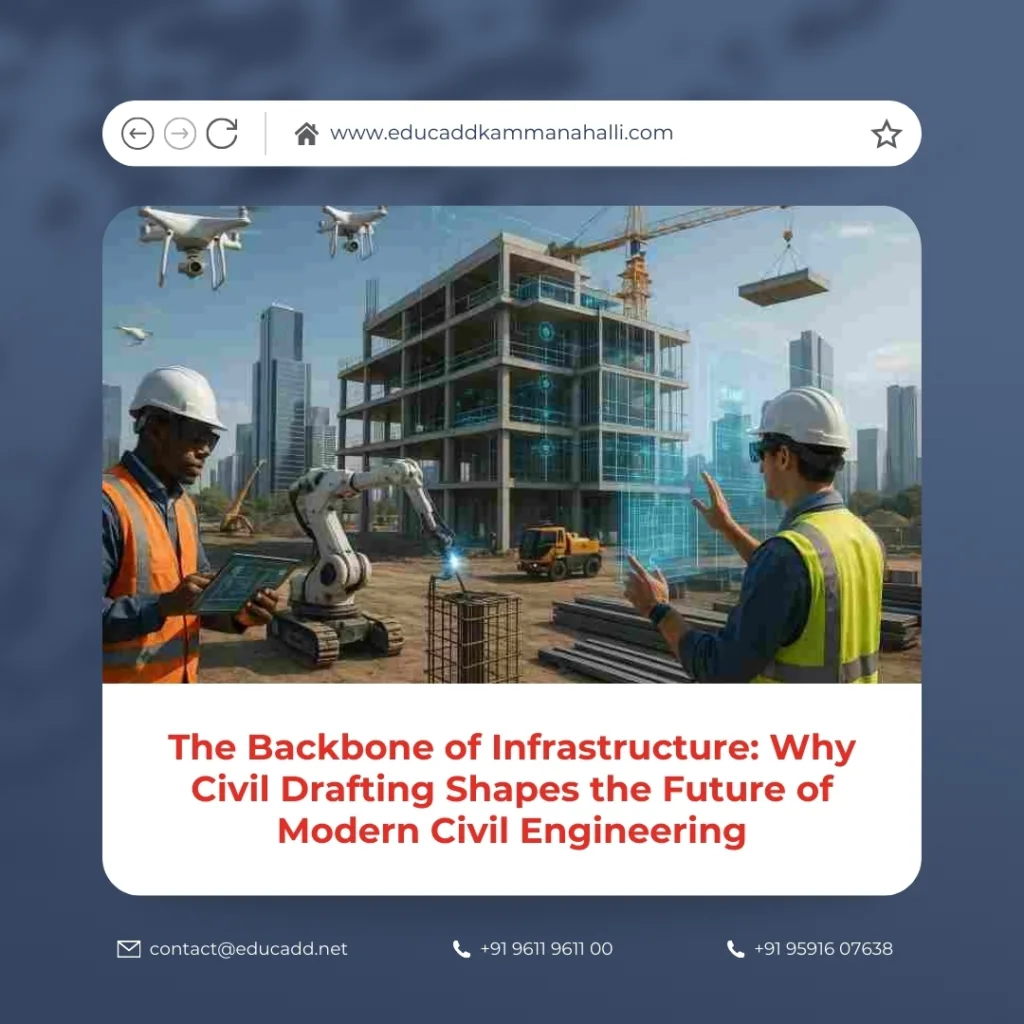
Modern Civil Drafting Solutions
This blog explores the Importance of Civil Drafting in Modern Civil Engineering in depth. It highlights how drafting enhances accuracy, improves collaboration, supports sustainability, integrates advanced software, and ultimately drives successful project delivery.
1. Understanding Civil Drafting in the Context of Modern Civil Engineering
Civil drafting refers to the creation of technical drawings and detailed plans used in civil engineering projects. These drawings include site layouts, structural plans, road alignments, drainage systems, and utility layouts. Through these documents, engineers communicate exact measurements, material specifications, and construction procedures.
The Importance of Modern Civil Drafting Solutions begins with communication. Without accurate drawings, project teams cannot interpret design intent properly. Drafting eliminates ambiguity and ensures each stakeholder understands the project scope clearly.
Furthermore, drafting supports coordination between architects, structural engineers, contractors, and surveyors. Every discipline relies on shared documentation to maintain alignment. Therefore, drafting acts as a central reference point throughout the construction lifecycle.
In addition, modern projects demand higher levels of detail. Urban infrastructure, smart cities, and sustainable developments require precise documentation. Civil drafting provides that precision. As a result, it strengthens project reliability and reduces errors.
2. From Manual Boards to Digital Precision
Civil drafting has evolved significantly over time. Traditionally, professionals relied on manual drawing boards, scales, and pencils. Although those methods built strong foundations, they lacked speed and flexibility. Today, advanced software has transformed drafting practices.
Programs like AutoCAD and Autodesk Civil 3D enable professionals to create highly detailed and editable drawings. These tools enhance efficiency while minimizing mistakes.
The Importance of Civil Drafting in Modern Civil Engineering has expanded because digital tools allow real-time updates. When engineers modify a design, the drafting software reflects changes instantly. Consequently, teams avoid costly revisions during construction.
Moreover, digital drafting improves storage and accessibility. Cloud platforms allow multiple stakeholders to review drawings simultaneously. This collaborative environment accelerates project timelines.
3. Enhancing Accuracy and Reducing Construction Errors
Accuracy determines the success of any civil engineering project. Even a minor error in measurement can lead to structural issues, financial losses, or safety hazards. Civil drafting ensures every dimension, elevation, and detail appears correctly documented.
The Importance of Modern Civil Drafting Solutions becomes evident when considering risk management. Accurate drawings reduce misinterpretation on-site. Contractors follow clear instructions, which lowers the probability of rework.
Additionally, drafting software includes validation tools that detect inconsistencies. These features allow drafters to correct problems before construction begins. Therefore, drafting contributes directly to quality assurance.
Clear documentation also supports inspection and auditing processes. Regulatory authorities review technical drawings before approving construction. Proper drafting ensures compliance with codes and standards.
4. Supporting Infrastructure Development
Modern infrastructure projects involve highways, bridges, metro systems, airports, and water supply networks. Each project requires comprehensive planning and documentation. Civil drafting supports these initiatives through detailed mapping and layout design.
The Importance of Civil Drafting in Modern Civil Engineering becomes even stronger in infrastructure development. Engineers rely on drafting to visualize terrain, calculate gradients, and plan utilities. These drawings guide construction teams step by step.
Furthermore, large-scale projects demand coordination across multiple departments. Drafted plans integrate structural, geotechnical, and environmental considerations. Consequently, civil drafting ensures smooth project execution from start to finish.
5. Integration with Building Information Modeling (BIM)
Modern civil engineering increasingly adopts Building Information Modeling. BIM creates intelligent 3D models that integrate geometry, data, and project lifecycle information. Drafting plays a vital role in supporting BIM workflows.
Tools like Revit allow professionals to generate coordinated drawings directly from 3D models. This integration enhances visualization and reduces conflicts between disciplines.
The Importance of Civil Drafting in Modern Civil Engineering expands further with BIM adoption. Drafting no longer serves only as 2D documentation. Instead, it connects data-rich models with construction outputs.
Moreover, BIM improves collaboration among stakeholders. Teams identify clashes before construction begins. This proactive approach saves time and resources.
6. Improving Project Coordination and Communication
Construction projects involve multiple teams working simultaneously. Effective communication ensures project continuity. Civil drafting provides a standardized format for conveying technical information.
The Importance of Civil Drafting in Modern Civil Engineering lies in its ability to bridge communication gaps. Drawings speak a universal engineering language. Contractors, engineers, and consultants interpret visual instructions consistently.
Additionally, updated drawings track design revisions. Teams reference the latest versions to avoid confusion. This organized documentation structure reduces delays and disputes.
7. Promoting Sustainable Design Practices
Sustainability has become a priority in modern construction. Engineers must optimize resource usage and reduce environmental impact. Civil drafting supports sustainable planning by enabling detailed environmental assessments.
For instance, drafters prepare site plans that incorporate drainage solutions, green spaces, and efficient utility networks. These plans allow engineers to evaluate ecological effects early in the project.
The Importance of Civil Drafting in Modern Civil Engineering extends to energy efficiency and water management systems. Clear documentation ensures sustainable features get implemented accurately.
Furthermore, digital drafting reduces paper waste. Cloud-based workflows minimize physical documentation. Therefore, drafting contributes to environmental responsibility.
8. Facilitating Cost Estimation and Budget Control
Precise drawings enable accurate quantity take-offs. Engineers calculate material requirements based on drafting details. This process supports budgeting and financial planning.
The Importance of Civil Drafting in Modern Civil Engineering becomes clear during cost estimation. Detailed plans prevent underestimation or overestimation of resources. Consequently, project managers maintain financial stability.
Moreover, drafting supports tender documentation. Contractors review drawings before submitting bids. Accurate documentation fosters transparent and competitive pricing.
9. Strengthening Safety and Compliance
Safety remains a top priority in civil engineering. Drafted drawings outline structural loads, reinforcement details, and safety measures. Construction teams rely on these instructions to ensure structural integrity.
The Importance of Civil Drafting in Modern Civil Engineering directly influences risk mitigation. Well-documented plans reduce hazards during construction.
Additionally, regulatory authorities require compliance documentation. Drafted plans demonstrate adherence to building codes. Therefore, drafting protects projects from legal complications.
10. Enhancing Career Opportunities and Skill Development
Civil drafting creates diverse career pathways. Skilled drafters work in construction firms, infrastructure companies, consultancy agencies, and government departments.
As technology advances, professionals must upgrade their skills in CAD and BIM tools. Mastery of drafting software increases employability and productivity.
The Importance of Civil Drafting in Modern Civil Engineering also impacts academic training. Educational institutions emphasize drafting proficiency to prepare students for industry demands.
11. Enabling Smart City and Urban Planning Projects
Smart city initiatives require detailed mapping, data integration, and infrastructure planning. Civil drafting supports these complex developments.
Urban planners rely on drafting for zoning layouts, transportation networks, and public utilities. Accurate documentation ensures efficient city expansion.
The Importance of Civil Drafting in Modern Civil Engineering plays a central role in shaping sustainable urban environments. Drafting translates futuristic city concepts into implementable plans.
12. Supporting Technological Advancements and Innovation
Technology continues to reshape construction practices. From 3D modeling to drone surveys, modern tools generate vast datasets. Civil drafting integrates these data sources into actionable drawings.
The Importance of Civil Drafting in Modern Civil Engineering lies in adaptability. Drafters incorporate survey data, GIS inputs, and structural analysis results into unified documentation.
Consequently, drafting remains relevant despite technological disruptions. It evolves alongside innovation.
13. Boosting Productivity and Time Management
Time efficiency determines project success. Delays increase costs and affect stakeholder confidence. Civil drafting accelerates planning and approval processes.
The Importance of Civil Drafting in Modern Civil Engineering includes workflow optimization. Automated tools streamline repetitive tasks. Standard templates ensure consistency.
Additionally, digital collaboration reduces communication lag. Teams coordinate quickly, which shortens project timelines.
14. Driving Quality and Long-Term Infrastructure Reliability
Quality infrastructure requires meticulous planning. Civil drafting ensures that structural elements align with design specifications.
The Importance of Civil Drafting in Modern Civil Engineering reflects in durability and performance. Well-documented designs reduce maintenance issues.
Furthermore, accurate records support future renovations and expansions. Engineers reference original drawings for upgrades. Thus, drafting contributes to long-term asset management.
Conclusion
The Importance of Modern Civil Drafting Solutions extends far beyond technical drawings. It shapes communication, enhances accuracy, supports sustainability, integrates advanced technologies, and strengthens infrastructure development. From highways to skyscrapers, every successful structure depends on precise drafting.
As the construction industry embraces digital transformation and smart solutions, civil drafting remains at its core. It bridges creativity and execution, ensuring that visionary designs transform into safe, reliable, and sustainable realities.
In an era defined by rapid urbanization and technological progress, civil drafting stands as the backbone of modern civil engineering—guiding projects from concept to completion with clarity, precision, and confidence.

