
Mastering Resource Allocation & Optimization in Primavera P6 for Project Excellence
In today’s fast-paced project-driven Primavera P6 Resource Optimization can make or break project success. Projects often face challenges like resource bottlenecks, budget overruns, and delayed timelines due to improper planning and inefficient resource utilization. Primavera P6, a premier project management software, offers advanced tools and techniques to efficiently allocate, track, and optimize resources. By leveraging Primavera P6’s robust functionalities, project managers can ensure timely completion, cost-effectiveness, and high-quality deliverables. This article explores in depth how to master resource allocation and optimization in Primavera P6, providing insights, practical strategies, and best practices that enhance overall project performance.
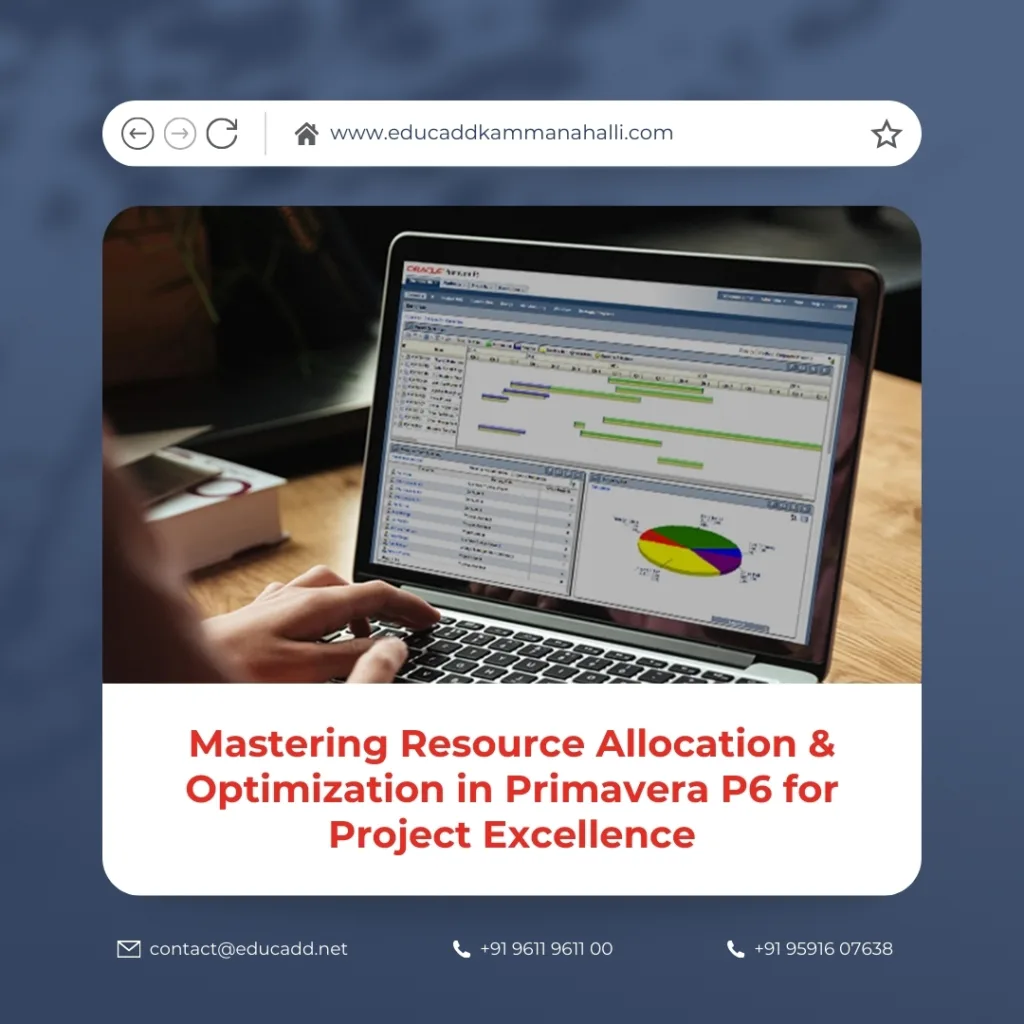
Primavera P6 Resource Optimization
Understanding Resource Allocation in Project Management
Primavera P6 Resource Optimization is the process of assigning available resources—such as labor, equipment, and materials—to project tasks efficiently. In the context of project management, misallocation can lead to delays, cost overruns, and underutilized workforce. Primavera P6 allows project managers to visualize resources against the project timeline, track their availability, and prevent over-assignments. By accurately assigning resources based on skill sets, availability, and task priority, organizations can improve project predictability and reduce risks associated with resource conflicts. Proper resource allocation ensures that every task has the right resources at the right time, creating a balanced workflow.
Types of Resources in Primavera P6
Primavera P6 classifies resources into three main categories: labor, non-labor, and material resources. Labor resources include employees or contractors whose effort is required to complete a task. Non-labor resources cover equipment or machinery used in project execution, while material resources refer to consumables or raw materials necessary for task completion. Understanding these resource types is essential for accurate allocation. Primavera P6 allows managers to define resource calendars, work hours, and productivity rates, ensuring that resource planning aligns with actual project requirements. This distinction also facilitates detailed reporting and forecasting for better decision-making.
The Role of Resource Calendars
Resource calendars in Primavera P6 are critical for managing availability and workload efficiently. These calendars define working days, non-working days, holidays, and shifts for each resource. Without accurate calendars, resource allocation may lead to overbooking or underutilization. By configuring resource calendars, project managers can visualize when resources are available and assign tasks accordingly. This feature enables managers to prevent conflicts, reduce idle time, and optimize scheduling. Additionally, integrating resource calendars with project schedules ensures that tasks are assigned realistically, reflecting the actual availability of personnel and equipment.
Resource Leveling: A Key Optimization Technique
Primavera P6 Resource Optimization is one of the most important tools for optimizing project resources. Primavera P6 allows managers to automatically or manually adjust task schedules to resolve resource over-allocations. By balancing workloads across tasks, resource leveling prevents burnout, reduces delays, and ensures sustainable resource utilization. Managers can set priorities, define leveling criteria, and analyze the impact of adjustments on the overall project schedule. Effective resource leveling results in smoother project execution, better adherence to deadlines, and improved employee productivity, while maintaining project quality and minimizing costs.
Allocating Resources Strategically
Strategic resource allocation involves assigning the right resources to the most critical tasks. Primavera P6 allows project managers to prioritize tasks based on deadlines, dependencies, and resource constraints. By using techniques such as critical path analysis and resource histograms, managers can identify resource-intensive tasks and allocate resources accordingly. This approach ensures that high-priority activities receive sufficient attention while avoiding resource underutilization in low-priority tasks. Strategic allocation also supports risk mitigation by preventing bottlenecks and delays that can cascade through the project timeline.
Managing Resource Conflicts in Primavera P6
Resource conflicts occur when multiple tasks require the same resource simultaneously, creating scheduling challenges. Primavera P6 provides visualization tools, such as resource usage profiles and histograms, to detect conflicts early. Project managers can then resolve these conflicts through rescheduling, resource substitution, or task splitting. Proactive conflict management minimizes disruptions, reduces idle time, and prevents project delays. By continuously monitoring resource allocation and adjusting schedules as needed, managers maintain project efficiency while ensuring optimal utilization of labor, equipment, and materials.
Tracking Resource Performance
Monitoring resource performance is vital for project success. Primavera P6 allows managers to track actual work completed, compare it with planned efforts, and adjust future allocations accordingly. Performance tracking involves analyzing labor hours, equipment usage, and material consumption against project benchmarks. This data helps identify underperforming resources, excessive workload, and potential delays. By leveraging these insights, managers can make informed decisions to optimize resource deployment, redistribute workloads, and improve overall project efficiency. Accurate tracking also supports accountability and transparency in project reporting.
Using Resource Codes for Better Organization
Resource codes in Primavera P6 provide an efficient way to categorize and manage resources. Codes can represent departments, skill sets, cost centers, or project phases, allowing managers to filter and report resource usage more effectively. By using resource codes, project managers can allocate resources consistently, identify trends, and generate comprehensive reports. These codes also facilitate benchmarking and historical analysis, enabling organizations to improve resource planning in future projects. Resource coding simplifies large-scale projects with multiple teams, ensuring better control over complex resource networks.
Cost Optimization Through Resource Allocation
Effective resource allocation in Primavera P6 directly impacts project costs. By analyzing resource rates, productivity, and utilization, managers can identify opportunities for cost savings. For instance, optimizing labor allocation prevents overtime expenses, while scheduling equipment efficiently reduces rental or operational costs. Primavera P6 allows managers to simulate different allocation scenarios to determine the most cost-effective approach. By balancing resource availability, workload, and budget constraints, organizations can achieve cost optimization without compromising quality or timelines.
Advanced Techniques for Resource Optimization
Beyond basic allocation, Primavera P6 offers advanced optimization techniques such as leveling by float, critical path analysis, and scenario modeling. Leveling by float prioritizes tasks based on available slack, ensuring minimal impact on the overall schedule. Scenario modeling allows managers to test different resource allocation strategies before implementation, enabling data-driven decisions. These techniques empower managers to optimize resources dynamically, respond to unexpected changes, and maintain project continuity. Advanced optimization ensures that resources are not only available but also utilized in the most effective and efficient manner.
Collaborative Resource Planning
Resource allocation is most effective when it involves collaboration between project managers, team leads, and stakeholders. Primavera P6 supports collaborative planning by allowing multiple users to access resource schedules, update progress, and communicate changes in real-time. Collaborative planning reduces misunderstandings, ensures alignment between departments, and facilitates faster decision-making. By fostering teamwork and transparency, organizations can achieve more accurate resource allocation, smoother project execution, and stronger accountability among team members.
Leveraging Primavera P6 Reports for Insights
Primavera P6 offers extensive reporting features to analyze resource allocation and optimization. Resource usage profiles, histograms, and earned value reports provide insights into workload, performance, and cost efficiency. Managers can generate customized reports to track key performance indicators (KPIs), identify trends, and make data-driven adjustments. Reporting not only improves project control but also aids in stakeholder communication and compliance. By leveraging Primavera P6 reports, project managers can continuously refine resource strategies, ensuring sustained project success and optimal utilization of all resources.
Best Practices for Resource Allocation & Optimization
To maximize efficiency in Primavera P6, project managers should adopt best practices such as defining clear resource roles, maintaining updated calendars, performing regular leveling, and continuously monitoring performance. Prioritizing high-impact tasks, using resource codes, and simulating allocation scenarios further enhance optimization. Regular training on Primavera P6 ensures that managers leverage all available features, avoiding common pitfalls. Following these practices results in better resource utilization, reduced costs, minimized conflicts, and timely project completion.
Conclusion
Mastering Primavera P6 Resource Optimization is a critical factor for project success. Proper allocation, performance tracking, cost optimization, and advanced techniques empower managers to overcome challenges and execute projects efficiently. By implementing strategic, collaborative, and data-driven resource management practices, organizations can ensure timely delivery, budget adherence, and high-quality outcomes. Primavera P6 serves as a comprehensive platform, enabling project managers to achieve project excellence through intelligent resource planning and optimization. Organizations that prioritize resource management unlock the full potential of their workforce, equipment, and materials, translating into measurable project success and sustainable growth.

