Facebook Pixel
Educadd Thinkworks Logo

No. 1 Project Monitoring Course: Master Project Control Skills for Career Success

Project success depends on proper planning, continuous monitoring, and timely decision-making. Every organization wants professionals who can track project progress, manage schedules, control costs, and reduce risks before they become serious problems. That is why enrolling in the No. 1 Project Monitoring Course Skills has become an excellent choice for students, engineers, project managers, and working professionals. This course develops practical skills that employers value across construction, manufacturing, infrastructure, oil and gas, information technology, and many other industries.
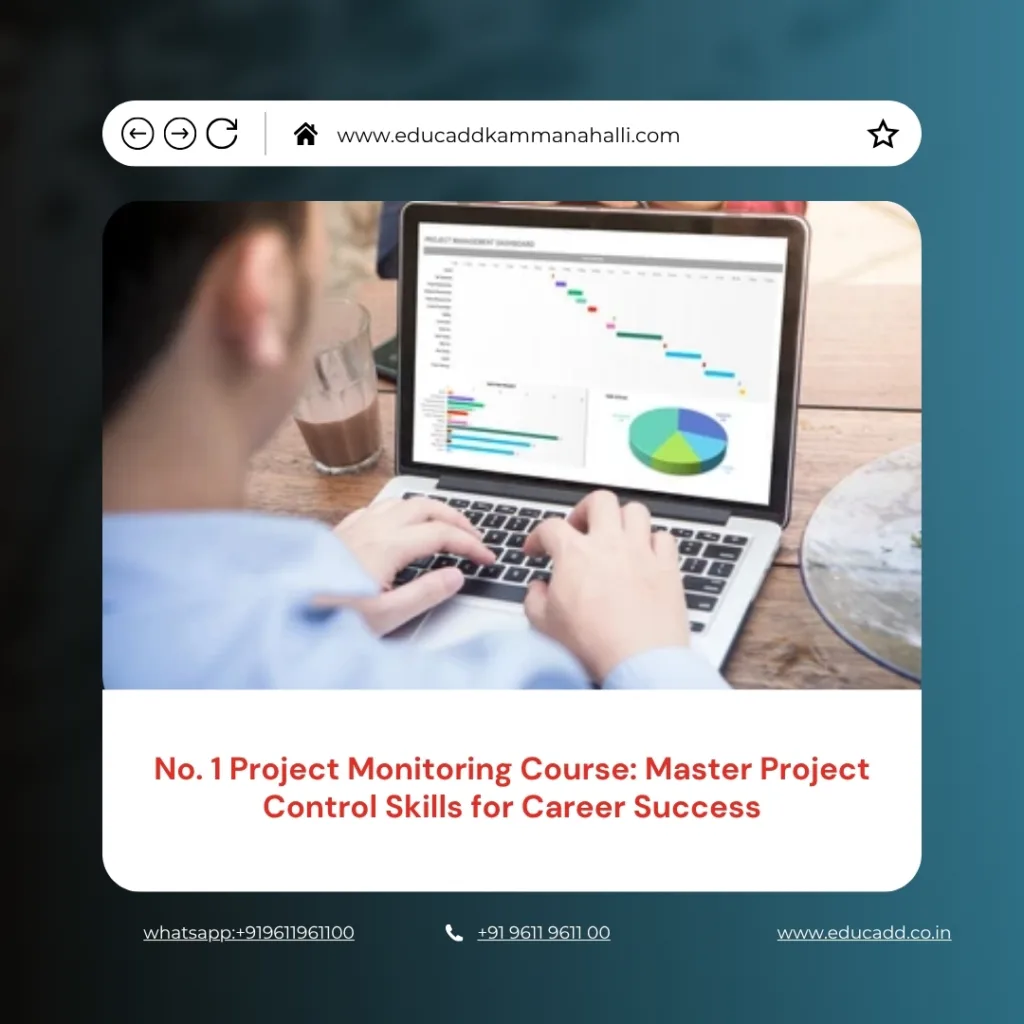
Project Monitoring Course Skills

Project Monitoring Course Skills

Moreover, learners gain hands-on experience with industry practices that improve project performance and increase career opportunities. Whether you are beginning your professional journey or planning to advance your career, this course provides the knowledge and confidence needed to manage projects successfully.

Why Project Monitoring Matters in Every Industry

Every successful project requires continuous monitoring from the planning stage until completion. Project monitoring helps organizations compare actual progress with planned activities. As a result, project teams can identify delays, control budgets, improve quality, and reduce unnecessary risks. Companies rely on project monitoring because even small mistakes can lead to significant financial losses.

Furthermore, effective monitoring improves communication among stakeholders and helps everyone stay informed about project performance. The No. 1 Project Monitoring Course Skills teaches these essential concepts through practical examples that prepare learners for real workplace challenges.

Understanding the Core Concepts of Project Monitoring

Project monitoring involves tracking schedules, resources, budgets, quality standards, and project milestones. Every project generates valuable data that supports informed decision-making. Therefore, professionals must understand how to collect, analyze, and interpret this information effectively.

The No. 1 Project Monitoring Course Skills introduces learners to project planning techniques, progress tracking methods, performance measurement, reporting systems, and project documentation. In addition, participants learn how to recognize project risks early and implement corrective actions before problems grow larger. These practical skills help professionals manage projects with greater confidence and efficiency.

Essential Skills You Will Develop

A successful project monitoring professional requires both technical knowledge and analytical thinking. This course focuses on developing valuable workplace skills that employers actively seek. Learners improve scheduling techniques, progress tracking, cost monitoring, resource allocation, risk assessment, and project reporting. They also strengthen communication, problem-solving, teamwork, and decision-making abilities.

Furthermore, the No. 1 Project Monitoring Course Skills encourages learners to analyze project performance using industry-standard methods. These competencies allow professionals to contribute effectively to projects of every size and complexity.

Practical Learning That Builds Real Confidence

Employers prefer candidates with practical knowledge rather than only theoretical understanding. Therefore, hands-on learning forms an important part of professional project monitoring training. The No. 1 Project Monitoring Course Skills includes practical exercises, project scenarios, reporting activities, scheduling demonstrations, and performance analysis tasks. Students apply classroom concepts to real-world situations that reflect industry expectations. As they complete these activities, they gain valuable experience in handling project challenges with confidence. Practical exposure also improves learning retention and prepares participants for workplace responsibilities.

Industry Tools Used in Project Monitoring

Modern organizations depend on digital tools to monitor project progress efficiently. Professionals must understand how technology supports planning, scheduling, reporting, and performance analysis. The No. 1 Project Monitoring Course introduces learners to widely used project management software and reporting techniques. Participants understand how dashboards, progress charts, scheduling applications, and performance indicators support project control.

Moreover, they learn how to prepare professional reports that help managers make informed business decisions. Familiarity with these tools increases employability across multiple industries.

Career Opportunities After Completing the Course

Project monitoring professionals enjoy excellent career opportunities because organizations continuously execute projects across different sectors. Construction companies, engineering firms, manufacturing industries, infrastructure developers, IT organizations, consulting firms, and government agencies require skilled project monitoring experts. After completing the No. 1 Project Monitoring Course, learners can explore roles such as Project Monitoring Engineer, Project Coordinator, Planning Engineer, Project Control Executive, Project Scheduler, Cost Control Engineer, Project Analyst, and Site Planning Professional. These career paths offer long-term growth and competitive salary packages for qualified candidates.

How Project Monitoring Improves Business Performance

Organizations achieve better results when projects remain under continuous observation. Regular monitoring helps managers identify issues before they affect deadlines or budgets. Consequently, corrective actions can be implemented without delaying the entire project. The No. 1 Project Monitoring Course teaches learners how to measure project performance using key performance indicators, progress reports, and milestone tracking.

These techniques improve productivity while reducing waste and unnecessary expenses. In addition, accurate monitoring supports better resource utilization, strengthens team coordination, and increases client satisfaction. Businesses that monitor projects effectively consistently deliver higher-quality outcomes and build stronger reputations in competitive markets.

The Importance of Risk Management in Project Monitoring

Every project faces uncertainties that can impact cost, quality, or completion time. Therefore, risk management plays a crucial role in successful project monitoring. Professionals must identify potential risks early and develop practical strategies to minimize their impact. The No. 1 Project Monitoring Course helps learners understand different types of project risks and teaches methods for evaluating their likelihood and severity.

Participants also learn how to prepare contingency plans and monitor risk throughout the project lifecycle. By applying these skills, professionals protect project objectives and ensure smoother execution even when unexpected challenges arise.

Effective Communication Drives Project Success

Clear communication keeps every stakeholder informed about project progress. Project managers, engineers, clients, contractors, and team members must share accurate information regularly to avoid misunderstandings. The No. 1 Project Monitoring Course emphasizes professional communication techniques that improve collaboration and decision-making.

Learners understand how to prepare progress reports, conduct review meetings, present project updates, and communicate project status with confidence. Furthermore, effective communication creates transparency, improves accountability, and helps resolve issues quickly. Strong communication skills make project monitoring professionals valuable assets in every organization.

Benefits for Students and Working Professionals

The No. 1 Project Monitoring Course benefits both fresh graduates and experienced professionals. Students gain industry-relevant skills that improve their employability and prepare them for competitive job markets. Working professionals can enhance their existing knowledge, improve project management capabilities, and qualify for higher-level responsibilities.

Moreover, this course supports career transitions into project planning and monitoring roles across various industries. Continuous learning also helps professionals remain competitive as project management practices continue to evolve with technology and changing business requirements.

Why Employers Prefer Certified Project Monitoring Professionals

Professional certification demonstrates commitment, practical knowledge, and technical competence. Employers often prefer candidates who have completed structured training because they require less onboarding and adapt quickly to project environments. The No. 1 Project Monitoring Course equips learners with practical skills that match current industry expectations.

Certified professionals understand scheduling, reporting, cost tracking, quality monitoring, and project documentation more effectively. As a result, organizations gain employees who contribute to project success from the beginning. This advantage often leads to better career opportunities, faster promotions, and increased professional credibility.

Choosing the Right Project Monitoring Training Institute

Selecting a quality training institute is essential for gaining valuable knowledge and practical experience. A good institute provides experienced trainers, updated course content, hands-on practice, industry-oriented projects, flexible learning options, and career guidance. Before enrolling in the No. 1 Project Monitoring Course, learners should evaluate the curriculum, training methodology, placement support, certification value, and learning resources.

An institute that focuses on practical applications rather than only theory helps students develop confidence and job-ready skills. The right learning environment significantly influences long-term career success.

Conclusion

Project monitoring has become one of the most valuable skills in today’s project-driven industries. Organizations seek professionals who can monitor progress, control costs, manage schedules, reduce risks, and deliver successful outcomes. The No. 1 Project Monitoring Course Skills provides the technical knowledge, practical exposure, and professional confidence needed to excel in these responsibilities.

Whether you are a student aiming to build a strong foundation or a working professional seeking career advancement, this course offers long-term value. By mastering project monitoring techniques, improving analytical abilities, and understanding industry best practices, you position yourself for rewarding career opportunities and become an essential contributor to successful projects across multiple industries.

Phone icon
Call
Contact us!
WhatsApp icon
Whatsapp