
Retargeting Strategies to Recover Lost Conversions and Maximize Every Marketing Dollar
Every marketer invests significant time, budget, and creativity into attracting potential customers, yet most visitors leave without taking action. They browse products, compare prices, read reviews, and then disappear. This behavior does not mean the opportunity is lost; rather, it signals that the buyer needs more time, trust, or motivation. Retargeting Strategies for Conversions bridges that gap by re-engaging people who already showed interest and gently guiding them back toward conversion. When executed strategically, retargeting becomes one of the most profitable digital marketing techniques because it focuses on warm audiences instead of starting from scratch.
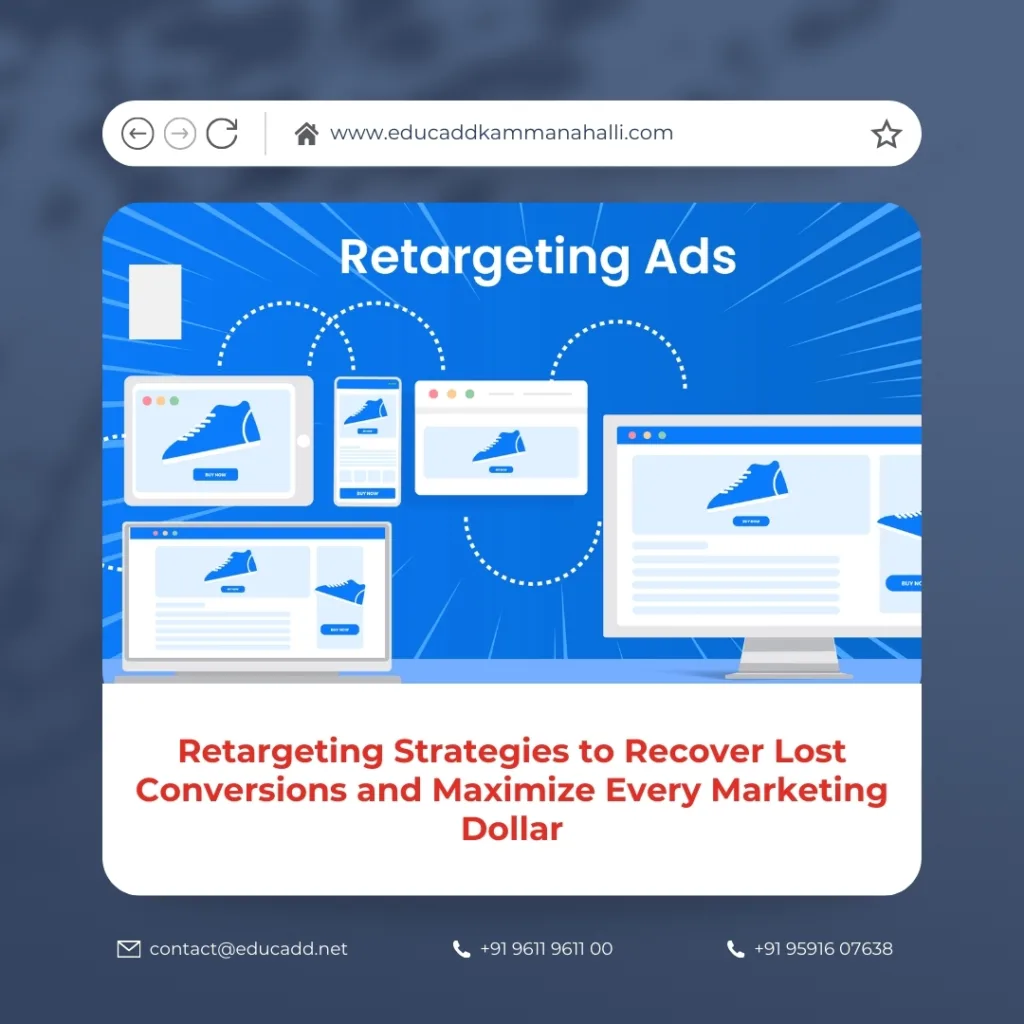
Retargeting Strategies for Conversions
Retargeting Strategies for Conversions help brands reconnect with visitors, remind them of their intent, and present persuasive reasons to complete their purchase. Instead of allowing high-intent traffic to vanish, marketers can use behavioral data, personalized messaging, and multi-channel engagement to recover lost conversions efficiently. This approach improves return on ad spend, strengthens brand recall, and shortens the buying cycle. The following comprehensive guide explores powerful methods, practical frameworks, and advanced techniques that enable businesses to recover missed opportunities and transform abandoned journeys into successful conversions.
1. Understanding Why Conversions Are Lost
Before implementing retargeting strategies, marketers must understand why users leave without converting. Most drop-offs occur due to distractions, unexpected costs, complicated checkout processes, lack of trust, or simple indecision. Modern buyers rarely complete purchases during their first visit because they prefer to compare options and evaluate value. Therefore, abandonment is a natural part of the buying journey rather than a failure of marketing efforts.
Psychological factors also influence buying behavior. Users often delay decisions due to fear of making the wrong choice, uncertainty about product performance, or waiting for better deals. Technical barriers such as slow websites, payment failures, or forced account creation further increase drop-off rates. When businesses analyze exit points, session duration, and behavioral patterns, they gain valuable insights into friction areas. These insights allow marketers to design retargeting strategies that directly address user hesitation and encourage re-engagement.
2. Segmenting Audiences for Precision Retargeting
Effective retargeting strategies rely on audience segmentation because not all visitors behave the same way. A user who abandoned a cart requires a different message than someone who only viewed a homepage. Precision targeting allows marketers to deliver relevant messages that match user intent and buying stage, increasing the likelihood of conversion.
Audience segmentation can be based on behavior, engagement time, pages visited, product categories explored, past purchases, and traffic sources. For example, frequent visitors who spend considerable time on product pages indicate strong interest and should receive high-priority retargeting ads. Meanwhile, casual visitors may need educational content that builds awareness before pushing sales messages. When segmentation becomes granular, messaging becomes more persuasive and efficient.
Key Audience Segments to Target
-
Cart Abandoners
These users added products to their cart but left before checkout. They have high purchase intent and respond well to urgency-driven reminders, discounts, or limited-time offers. -
Product Viewers
Visitors who viewed specific products show interest but may need comparisons, reviews, or testimonials to gain confidence. -
Category Browsers
Users who browse categories without viewing products may still be exploring options and benefit from curated recommendations. -
Past Customers
Previous buyers are more likely to purchase again. Retargeting them with complementary products increases lifetime value. -
Inactive Users
Users who have not engaged for long periods may need reactivation campaigns featuring special incentives or new arrivals.
3. Leveraging Pixel-Based Retargeting
Pixel-based retargeting remains a foundational component of high-performing retargeting strategies. A tracking pixel is a small piece of code placed on a website that collects visitor behavior data and enables marketers to display personalized ads later. This technology allows brands to follow users across platforms and maintain consistent visibility.
When users browse products, add items to carts, or exit checkout pages, pixels record these actions and trigger relevant ad sequences. This process ensures that advertisements align with the user’s previous activity rather than appearing random. Pixel-based retargeting also supports frequency control, ensuring ads appear often enough to remind users but not so frequently that they create irritation. Proper implementation helps brands remain visible throughout the decision-making cycle.
4. Crafting Personalized Ad Creatives
Generic ads rarely persuade returning visitors because users expect relevance. Personalized messaging improves engagement by aligning visuals, offers, and copy with user preferences. When ads reflect products previously viewed, users feel understood and are more likely to reconsider their purchase.
Dynamic retargeting allows advertisers to display the exact products a user explored, including updated pricing, availability, and offers. This technique reinforces intent and reduces the effort required to resume the purchase journey. Personalization can also include location-based messaging, seasonal themes, and user-specific discounts. Tailored creatives create emotional familiarity, which builds trust and motivates action.
Best Practices for Personalized Retargeting Ads
-
Show Recently Viewed Products
Dynamic product ads remind users of their earlier interest and simplify decision-making. -
Use Persuasive Call-to-Actions
Clear CTAs such as “Complete Your Purchase” or “Claim Your Offer” guide users toward action. -
Highlight Social Proof
Ratings, testimonials, and user reviews increase credibility and reduce purchase anxiety. -
Create Urgency
Limited-time deals and countdown offers encourage faster decisions. -
Optimize Visual Appeal
Clean designs, contrasting colors, and mobile-friendly formats improve engagement rates.
5. Multi-Channel Retargeting for Wider Reach
Consumers use multiple devices and platforms throughout their buying journey, making cross-channel visibility essential. Relying on a single platform limits reach and reduces conversion potential. Effective retargeting strategies ensure consistent messaging across social media, search engines, email, and display networks.
Multi-channel engagement strengthens brand recall because users encounter familiar messaging repeatedly in different environments. A user who ignores a social media ad may respond to a search ad or email reminder later. Each platform reinforces the previous interaction and builds cumulative persuasion. Cross-channel retargeting also adapts to user behavior patterns, ensuring brands stay present without overwhelming audiences.
6. Email Retargeting Strategies for Conversions
Email remains one of the most powerful tools for conversion recovery. When users share contact information but abandon purchases, personalized email sequences can re-engage them effectively. Email retargeting allows detailed messaging, compelling storytelling, and targeted incentives that guide users back to the sales funnel.
Triggered emails based on user behavior increase relevance and timing accuracy. Cart abandonment reminders, price drop alerts, and restock notifications prompt users to revisit products they previously considered. Well-designed emails include strong subject lines, persuasive visuals, and clear call-to-action buttons. Automated workflows ensure timely communication without manual intervention.
High-Converting Email Retargeting Techniques
-
Cart Abandonment Sequences
Send reminders within hours of abandonment to maintain urgency and relevance. -
Personalized Product Recommendations
Suggest similar or complementary products based on browsing history. -
Incentive-Based Follow-Ups
Offer exclusive discounts or free shipping to encourage purchase completion. -
Behavioral Trigger Emails
Re-engage users when they revisit the website without converting. -
Customer Reactivation Campaigns
Target dormant subscribers with new launches and loyalty rewards.
7. Using Social Media Retargeting to Re-Engage Audiences
Social platforms offer advanced targeting capabilities that make them essential for modern retargeting strategies. Users spend considerable time scrolling through feeds, making social ads highly visible and engaging. Platforms allow advertisers to target users based on website visits, content interactions, and previous engagements.
Visual storytelling works exceptionally well on social media. Brands can showcase product benefits through videos, carousel ads, testimonials, and interactive formats. Engagement features such as comments, shares, and reactions increase credibility and organic reach. Social retargeting also supports lookalike audiences, allowing marketers to find new users with behavior similar to existing prospects.
8. Search Retargeting for High-Intent Prospects
Search retargeting targets users based on keywords they previously searched, even if they never visited the advertiser’s website. This strategy captures high-intent prospects actively seeking solutions. By aligning ads with user search behavior, marketers reach audiences at critical decision-making moments.
Paid search ads combined with retargeting lists increase conversion probability because users are already familiar with the brand. Bidding strategies can prioritize previous visitors, ensuring they see tailored ads during future searches. Ad copy that emphasizes benefits, competitive pricing, and unique selling propositions strengthens persuasion.
9. Offering Strategic Incentives Without Reducing Value
Discounts can recover lost conversions, but excessive incentives reduce profit margins and brand value. Smart retargeting strategies focus on selective and time-bound offers rather than blanket discounts. Incentives should feel exclusive and rewarding rather than routine.
Free shipping, bonus products, loyalty points, and limited-time upgrades often perform better than direct price reductions. These value-added incentives enhance perceived benefits without eroding pricing structures. Marketers can also use tiered offers that increase based on cart value, encouraging higher spending.
Effective Incentive-Based Retargeting Approaches
-
Limited-Time Discounts
Short validity periods create urgency and drive immediate action. -
Free Shipping Offers
Removing extra costs eliminates a common purchase barrier. -
Bundle Deals
Combining related products increases perceived value. -
Loyalty Rewards
Returning customers feel appreciated and more likely to convert. -
Exclusive Early Access
VIP previews make customers feel prioritized and important.
10. Optimizing Landing Pages for Returning Visitors
Retargeting campaigns fail when landing pages do not align with ad messaging. Returning visitors expect seamless continuity between advertisements and website experiences. Optimized landing pages ensure users quickly find relevant products, offers, and checkout options.
Personalized landing pages can display recently viewed items, tailored discounts, and simplified navigation paths. Reducing form fields, enabling guest checkout, and improving page speed remove friction. Trust signals such as security badges, customer reviews, and easy return policies further reassure hesitant buyers.
11. Frequency Capping to Prevent Ad Fatigue
Excessive advertising annoys users and damages brand perception. Strategic retargeting strategies use frequency capping to control how often ads appear to the same individual. Balanced exposure maintains visibility without overwhelming potential customers.
Ad fatigue reduces click-through rates and increases negative feedback. Marketers should monitor engagement metrics and adjust exposure levels accordingly. Rotating creatives, updating messaging, and testing new formats maintain freshness and user interest.
12. A/B Testing for Continuous Improvement
Retargeting Strategies for Conversions improves when marketers consistently test variables and refine strategies. A/B testing compares different versions of ads, emails, landing pages, and offers to identify the most effective combinations. Small adjustments often produce significant improvements in engagement and conversion rates.
Testing elements such as headlines, visuals, CTA buttons, ad formats, and audience segments provides actionable insights. Data-driven decisions eliminate guesswork and maximize advertising efficiency. Continuous optimization ensures campaigns remain competitive and adaptable to evolving consumer behavior.
13. Using Marketing Automation for Scalable Retargeting
Manual campaign management becomes inefficient as audience size grows. Marketing automation streamlines retargeting strategies by triggering personalized interactions based on user behavior. Automated workflows ensure timely engagement without constant monitoring.
Automation platforms integrate website tracking, email sequences, ad management, and CRM systems into unified dashboards. This integration enables cohesive messaging across channels and improves operational efficiency. Behavioral triggers ensure users receive relevant communication at ideal moments.
Core Automation Workflows for Retargeting
-
Behavior-Based Triggers
Automated responses activate when users perform specific website actions. -
Lead Nurturing Sequences
Educational content builds trust before sales-focused messaging. -
Cart Recovery Funnels
Multi-step reminders encourage checkout completion. -
Customer Lifecycle Campaigns
Tailored messaging aligns with each stage of the buying journey. -
Cross-Sell and Upsell Automation
Relevant product suggestions increase average order value.
14. Measuring Retargeting Performance with the Right Metrics
Data analysis determines the effectiveness of retargeting strategies. Without performance tracking, marketers cannot identify strengths or optimize weaknesses. Conversion rate, return on ad spend, click-through rate, cost per acquisition, and engagement metrics provide valuable insights.
Attribution models help marketers understand which channels contribute most to recovered conversions. Cohort analysis reveals behavioral patterns among returning visitors. Continuous monitoring allows real-time adjustments that improve efficiency and reduce wasted spend.
Conclusion
Retargeting Strategies for Conversions transform missed opportunities into measurable business growth by reconnecting brands with interested audiences. Instead of allowing potential customers to disappear permanently, businesses can guide them back using personalized messaging, strategic incentives, multi-channel engagement, and data-driven optimization. Effective retargeting respects user behavior, reduces friction, and builds trust throughout the buying journey.
When marketers combine segmentation, automation, creative personalization, and performance tracking, they create seamless experiences that encourage users to complete their purchases. These strategies not only recover lost conversions but also strengthen brand loyalty and improve long-term customer value. Businesses that invest in intelligent retargeting systems gain a competitive advantage, maximize marketing returns, and ensure that every visitor receives multiple opportunities to convert.

