
Reverse Engineering in Mechanical Design: Unlocking Innovation Through Precision and Insight
In today’s highly competitive manufacturing environment, companies constantly seek ways to improve products, reduce development time, and gain a technological advantage. One of the most effective methods for achieving these goals is Reverse Engineering Mechanical Design. This process involves analyzing an existing product, component, or assembly to understand its design, functionality, dimensions, and manufacturing methods. Engineers then use this information to recreate, improve, or redesign the product for better performance and efficiency.
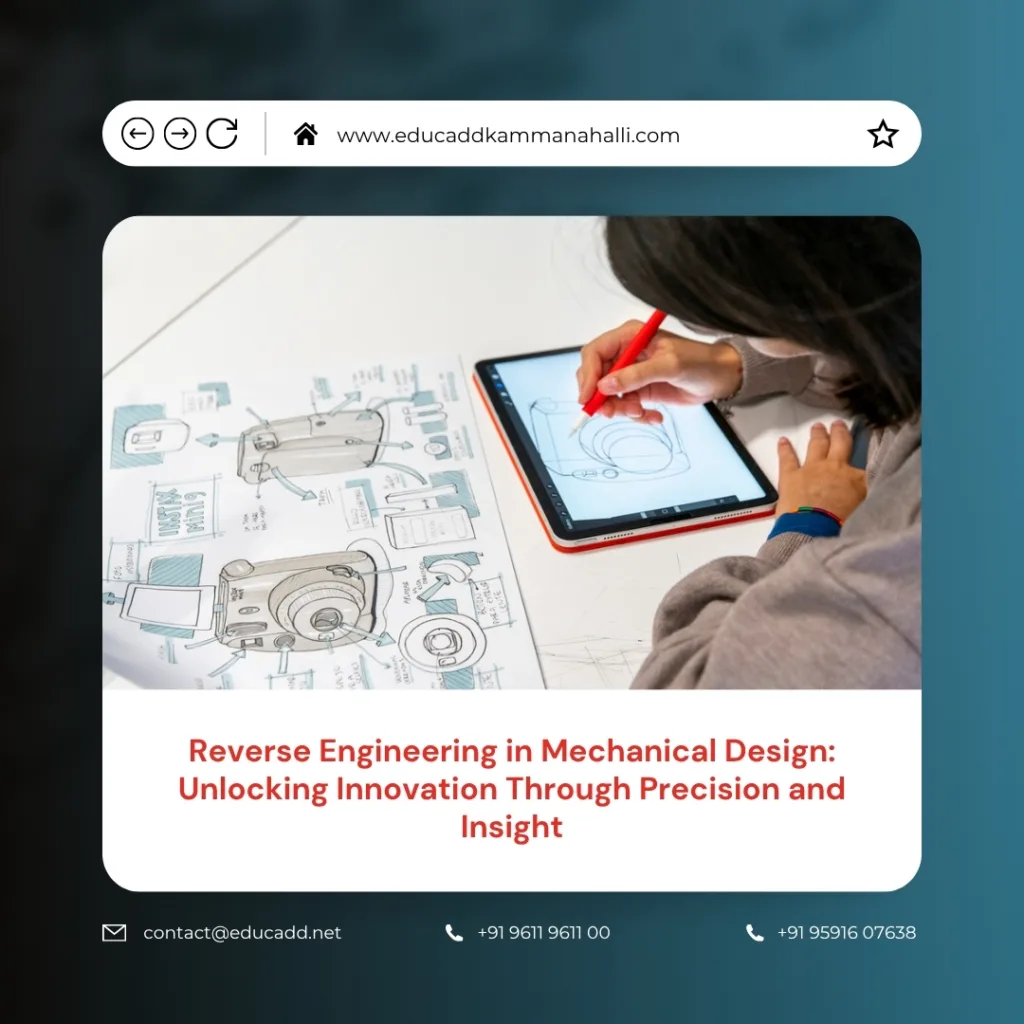
Reverse Engineering Mechanical Design
Reverse Engineering Mechanical Design has become an essential practice across industries such as automotive, aerospace, industrial machinery, consumer products, medical devices, and manufacturing. Modern technologies such as 3D scanning, CAD modeling, and advanced simulation tools have made the process faster and more accurate than ever before. As a result, organizations can replicate legacy parts, improve existing products, reduce costs, and accelerate innovation. This article explores the concept, process, benefits, applications, challenges, and future trends of Reverse Engineering Mechanical Design.
Understanding Reverse Engineering in Mechanical Design
Reverse engineering in mechanical design refers to the process of examining a physical object to determine its design specifications and operational principles. Unlike traditional product development, which starts with a concept and progresses toward manufacturing, reverse engineering works in the opposite direction. Engineers begin with a finished product and carefully analyze its structure, materials, dimensions, and performance characteristics.
The primary objective is to create accurate digital models and engineering documentation from an existing physical component. These models serve as a foundation for redesign, replication, performance improvement, or product optimization. Consequently, organizations can understand complex designs without having access to the original drawings or specifications.
Furthermore, reverse engineering helps manufacturers preserve valuable knowledge embedded within older products. This capability is particularly important when original documentation is unavailable or outdated.
The Evolution of Reverse Engineering Technology
The practice of Reverse Engineering Mechanical Design has evolved significantly over the years. Traditionally, engineers relied on manual measurements using calipers, micrometers, gauges, and coordinate measuring machines. Although these methods provided useful data, they often required extensive time and effort.
Today, advanced digital technologies have transformed the reverse engineering process. High-resolution 3D scanners can capture millions of data points within minutes. Specialized software converts these data points into detailed digital models that engineers can manipulate and analyze with remarkable precision.
As industries continue to embrace digital transformation, reverse engineering has become more efficient and accessible. Modern CAD software enables seamless integration between scanned data and engineering workflows. Consequently, companies can develop accurate models while minimizing errors and reducing development timelines.
Key Steps in the Reverse Engineering Process
A systematic approach ensures successful reverse engineering projects. The process typically includes several important stages that work together to generate accurate results.
- Physical inspection and evaluation of the component
- Data collection using measurement tools or 3D scanning
- Point cloud generation and processing
- CAD model creation and refinement
- Engineering analysis and validation
- Documentation and redesign implementation
Each stage contributes to building a complete understanding of the product. Therefore, careful execution of every step is essential for achieving reliable outcomes. When engineers follow a structured methodology, they can create precise digital representations that support manufacturing and design improvement initiatives.
Role of 3D Scanning in Reverse Engineering
3D scanning has revolutionized reverse engineering in mechanical design. This technology captures the exact geometry of physical objects by generating millions of coordinate points on their surfaces. Engineers then use these points to create accurate digital replicas of components.
Several scanning technologies support reverse engineering applications. Laser scanners provide excellent accuracy for mechanical parts, while structured light scanners offer fast data acquisition for complex geometries. Portable handheld scanners allow engineers to capture data directly in manufacturing facilities or field environments.
Additionally, 3D scanning significantly reduces measurement time compared to traditional methods. Engineers can capture intricate shapes, curves, and freeform surfaces that would otherwise be difficult to measure manually. As a result, organizations achieve greater accuracy while improving overall project efficiency.
Importance of CAD Modeling in Reverse Engineering
Once engineers acquire scan data, CAD modeling becomes the next critical phase. CAD software transforms raw point cloud information into usable engineering models. These models represent the exact dimensions, features, and geometry of the original component.
Engineers use CAD tools to create parametric models that support future modifications and improvements. Unlike static representations, parametric models allow design flexibility and easier optimization. Consequently, organizations can adapt products to changing requirements without starting from scratch.
Furthermore, CAD models enable collaboration across departments. Designers, manufacturers, analysts, and quality engineers can work from the same digital representation, ensuring consistency throughout the product development lifecycle.
Applications in Automotive Engineering
The automotive industry extensively uses reverse engineering to improve vehicle performance, maintain legacy systems, and accelerate product development. Manufacturers often analyze competitor products to understand design strategies and identify opportunities for innovation.
Reverse Engineering Mechanical Design also supports the restoration of vintage vehicles. Many classic automotive components no longer have original engineering drawings available. Engineers use scanning and modeling technologies to recreate replacement parts with exceptional accuracy.
Moreover, automotive companies leverage reverse engineering to optimize existing designs. By studying real-world components, engineers can identify weaknesses, reduce weight, enhance durability, and improve manufacturing efficiency. Consequently, organizations gain valuable insights that contribute to better vehicle performance and customer satisfaction.
Reverse Engineering in Aerospace and Defense
Aerospace and defense industries demand the highest levels of precision and reliability. Reverse engineering plays a crucial role in maintaining aging aircraft, military equipment, and specialized systems where replacement components may no longer be available.
Engineers use reverse engineering techniques to recreate obsolete parts while ensuring compliance with strict safety standards. Detailed digital models help organizations manufacture replacements that meet exact performance requirements.
Additionally, reverse engineering enables the modernization of older systems. Engineers can integrate new technologies into existing platforms while preserving critical operational capabilities. Therefore, organizations extend equipment life and reduce maintenance costs without compromising safety or functionality.
Product Improvement and Design Optimization
One of the most valuable benefits of reverse engineering is its ability to drive product improvement. Engineers can study existing products to identify performance limitations and opportunities for enhancement.
Through detailed analysis, teams evaluate structural strength, material usage, manufacturability, and operational efficiency. They then apply these insights to create improved versions that offer superior performance and reliability.
Key optimization opportunities include:
- Reducing product weight without sacrificing strength
- Improving manufacturing efficiency and cost effectiveness
These improvements help organizations remain competitive in rapidly changing markets. Furthermore, optimized designs often lead to increased customer satisfaction and stronger brand reputation.
Supporting Legacy Equipment Maintenance
Many industries continue operating machinery that has been in service for decades. Unfortunately, replacement parts for legacy equipment are often difficult to obtain. In many cases, original manufacturers no longer produce these components.
Reverse engineering provides an effective solution to this challenge. Engineers can analyze existing parts and generate precise digital models for manufacturing replacement components. This capability minimizes downtime and extends equipment lifespan.
Additionally, organizations avoid the substantial expense of replacing entire systems. Instead, they maintain operational continuity through accurate reproduction of critical components. Consequently, reverse engineering contributes significantly to cost savings and productivity improvements.
Material Analysis and Performance Evaluation
Mechanical design involves more than geometric accuracy. Material properties also influence product performance, durability, and reliability. Therefore, reverse engineering frequently includes material analysis to understand the composition and characteristics of existing components.
Engineers perform various tests to determine hardness, tensile strength, corrosion resistance, thermal behavior, and microstructural properties. These evaluations help identify suitable materials for reproduction or improvement.
Furthermore, material analysis enables organizations to discover alternative materials that reduce costs or enhance performance. By combining geometric and material data, engineers create comprehensive design solutions that meet modern manufacturing requirements.
Benefits of Reverse Engineering in Manufacturing
Manufacturers gain numerous advantages from implementing reverse engineering strategies. The ability to capture and analyze product data creates opportunities for innovation, efficiency, and cost reduction.
Reverse engineering shortens development cycles by eliminating the need to start designs from the beginning. Engineers can build upon proven products while introducing targeted improvements. As a result, organizations bring products to market more quickly.
The process also enhances quality control by enabling detailed inspection and comparison of manufactured parts. Consequently, manufacturers maintain tighter tolerances and achieve greater consistency across production batches. These advantages contribute directly to profitability and long-term business success.
Challenges and Considerations
Although reverse engineering offers substantial benefits, it also presents several challenges. Complex geometries may generate large volumes of scan data that require extensive processing and refinement. Engineers must carefully manage data quality to ensure accurate results.
Intellectual property considerations represent another important factor. Organizations must comply with applicable laws and regulations when analyzing products developed by other companies. Proper legal review helps prevent potential disputes and protects business interests.
Additionally, successful reverse engineering requires specialized expertise in scanning technology, CAD modeling, material science, and manufacturing processes. Therefore, organizations should invest in skilled professionals and advanced tools to maximize project success.
Future Trends in Reverse Engineering
The future of Reverse Engineering Mechanical Design appears exceptionally promising. Emerging technologies such as artificial intelligence, machine learning, digital twins, and cloud-based collaboration platforms continue to expand the capabilities of reverse engineering workflows.
Artificial intelligence can automate feature recognition and accelerate CAD model generation from scanned data. Meanwhile, digital twin technology enables continuous monitoring and optimization of products throughout their operational lifecycle.
Furthermore, additive manufacturing is creating new opportunities for reverse-engineered designs. Engineers can rapidly produce customized components directly from digital models, reducing lead times and enhancing flexibility. As these technologies mature, reverse engineering will become even more powerful and accessible across industries.
Conclusion
Reverse Engineering Mechanical Design has evolved into a critical tool for innovation, product development, maintenance, and manufacturing excellence. By transforming physical components into accurate digital models, organizations gain valuable insights that support redesign, optimization, and reproduction efforts. Modern technologies such as 3D scanning, CAD modeling, material analysis, and simulation have significantly improved the speed and accuracy of reverse engineering processes.
As industries continue embracing digital transformation, the importance of reverse engineering will only increase. Companies can leverage this approach to preserve legacy knowledge, improve product performance, reduce costs, and accelerate innovation. Whether applied in automotive engineering, aerospace systems, industrial machinery, or consumer products, reverse engineering provides a pathway to smarter design decisions and sustainable competitive advantage. Organizations that invest in these capabilities position themselves for long-term success in an increasingly technology-driven world.

