
Revit Architecture Course with Certification: The Smart Path to a Successful BIM and Design Career
The architecture, engineering, and construction industry has evolved significantly over the last decade. Traditional drafting methods have gradually given way to intelligent Building Information Modeling (BIM) solutions that improve accuracy, collaboration, and project efficiency. Among the many BIM software platforms available today, Autodesk Revit stands out as one of the most widely used tools for architectural design and documentation. As companies increasingly seek professionals with advanced BIM skills, enrolling in a Revit Architecture Course Certification has become a strategic move for students and working professionals alike.
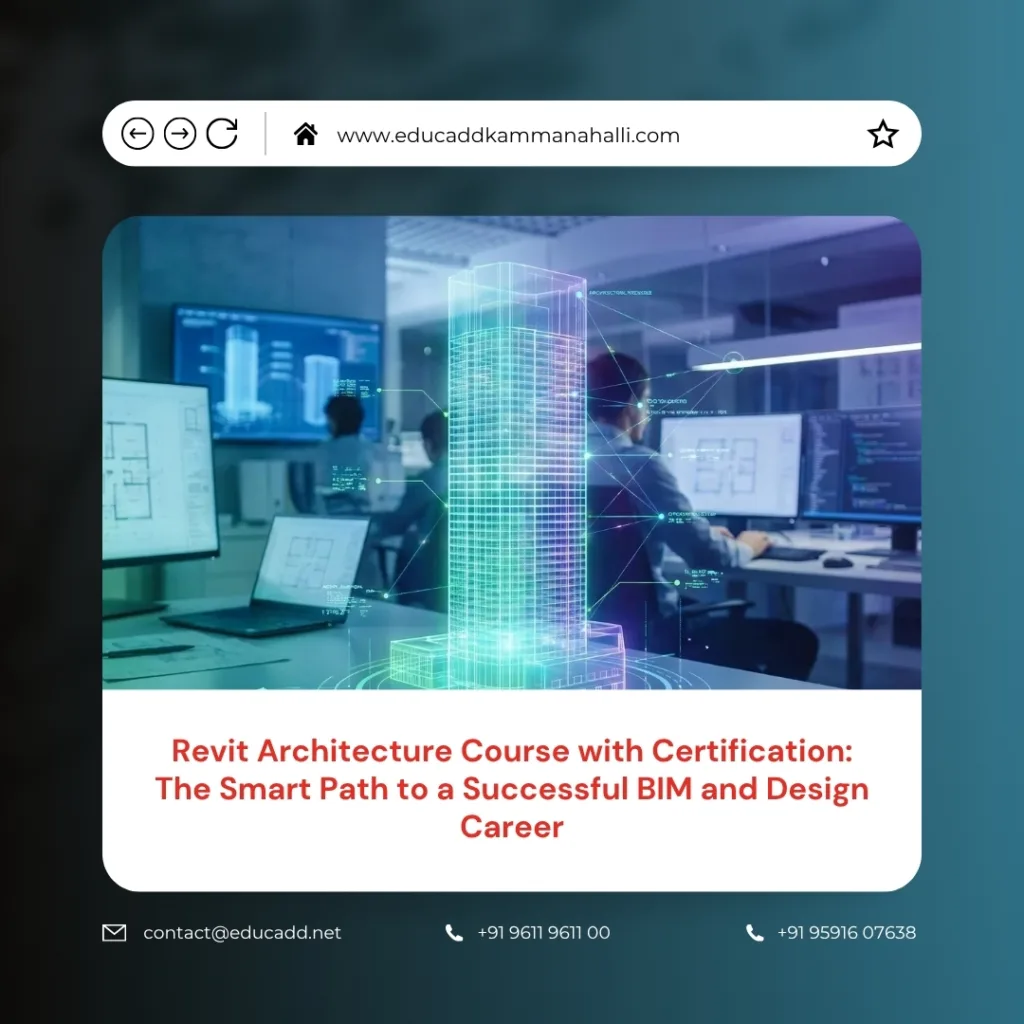
Revit Architecture Course Certification
A certified Revit training program equips learners with practical knowledge of architectural modeling, project documentation, visualization, and BIM workflows. More importantly, certification validates your expertise and demonstrates your commitment to professional development. Whether you are an architecture student, civil engineer, interior designer, or construction professional, a structured learning program can help you stay competitive in the modern job market. This comprehensive guide explores the benefits, curriculum, career opportunities, certification advantages, and future prospects associated with a Revit Architecture Course Certification.
Understanding the Importance of Revit in Modern Architecture
Modern construction projects demand precision, coordination, and efficient project management. Revit has transformed architectural workflows by allowing professionals to create intelligent 3D building models that contain both graphical and non-graphical information. Unlike traditional CAD software, Revit enables real-time updates across all project views whenever changes are made.
This capability significantly reduces errors and improves collaboration among architects, structural engineers, and MEP professionals. Consequently, organizations across the globe prefer hiring professionals who understand Revit-based BIM processes. A Revit Architecture Course with Certification provides the foundation required to work effectively within these modern project environments. As BIM adoption continues to grow, Revit skills have become an essential requirement for architecture-related careers.
What Is a Revit Architecture Course Certification?
A Revit Architecture Course Certification is a professional training program designed to teach architectural modeling and BIM concepts using Autodesk Revit. The course combines theoretical knowledge with practical exercises that simulate real-world project scenarios.
Students learn how to create building models, develop construction documents, generate schedules, produce elevations and sections, and manage project data efficiently. Certification is awarded after successful completion of assessments or projects, validating the learner’s proficiency in Revit Architecture.
The course is suitable for:
- Architecture students seeking industry-ready skills.
- Civil engineers looking to expand BIM expertise.
- Interior designers working on integrated projects.
- Construction professionals transitioning into digital workflows.
With practical training and recognized certification, learners gain confidence and improve their employability in the AEC industry.
Core Topics Covered in the Course
A comprehensive Revit training program covers multiple modules that gradually build expertise. The curriculum typically begins with software fundamentals before progressing to advanced architectural modeling techniques.
Students learn project setup, interface navigation, family creation, building components, annotation tools, documentation standards, rendering, and project collaboration. In addition, instructors often include BIM workflows and industry best practices to prepare learners for professional environments.
By mastering these concepts, learners gain the ability to create complete architectural projects from concept development to final documentation. This practical exposure ensures that students can confidently handle industry assignments upon course completion.
Learning Architectural Modeling from Scratch
Architectural modeling forms the backbone of any Revit project. During training, students learn how to create walls, doors, windows, floors, roofs, ceilings, and staircases using intelligent BIM objects.
Unlike conventional drafting methods, Revit modeling creates interconnected building elements that automatically update across all project views. As a result, learners understand how design modifications affect the overall project model.
Furthermore, hands-on assignments help students develop problem-solving skills while working on residential, commercial, and institutional projects. These exercises strengthen technical competence and prepare learners for professional architectural design tasks.
Understanding BIM Concepts and Workflows
Building Information Modeling is more than just creating 3D models. It involves managing building data throughout the project lifecycle. Therefore, a quality Revit Architecture Course with Certification includes a strong focus on BIM methodologies.
Students learn how BIM improves project coordination, reduces conflicts, enhances collaboration, and supports informed decision-making. They also gain insights into multidisciplinary workflows where architects, structural engineers, and MEP teams work together within a unified environment.
Key BIM benefits include:
- Improved project accuracy and reduced design conflicts.
- Better collaboration among multiple project stakeholders.
Understanding these concepts helps learners align their skills with current industry requirements and future technological advancements.
Developing Construction Documentation Skills
Construction documentation remains one of the most critical responsibilities of architectural professionals. Revit simplifies this process by generating drawings directly from the building model.
During the course, students learn how to create floor plans, elevations, sections, details, schedules, legends, and sheet layouts. They also understand annotation standards and documentation best practices.
Because all documentation remains linked to the central model, updates occur automatically whenever design changes are made. This feature improves efficiency and minimizes costly errors. Consequently, learners become proficient in producing professional-quality construction documents that meet industry expectations.
Mastering Families and Custom Components
One of Revit’s most powerful features is its family creation capability. Families are customizable components used throughout a project, including furniture, doors, windows, fixtures, and equipment.
A Revit Architecture Course with Certification teaches students how to create and modify parametric families based on project requirements. This skill enables professionals to develop customized solutions rather than relying solely on predefined components.
As projects become increasingly specialized, employers value professionals who can design and manage custom BIM content efficiently. Therefore, family creation skills significantly enhance career prospects and technical expertise.
Visualization and Rendering Techniques
Architectural visualization plays a crucial role in communicating design ideas to clients and stakeholders. Revit offers powerful visualization tools that help transform concepts into realistic presentations.
Students learn material assignment, lighting setup, camera positioning, walkthrough creation, and rendering techniques. These skills enable them to produce compelling visual representations of architectural designs.
Additionally, visualization helps clients understand project outcomes before construction begins. Therefore, professionals with rendering expertise often contribute more effectively during design presentations and client meetings.
Benefits of Earning Professional Certification
Certification serves as tangible proof of your knowledge and practical abilities. While learning software skills is important, certification provides formal recognition that can strengthen your professional profile.
Employers frequently prefer certified candidates because certification demonstrates commitment to industry standards and continuous learning. A recognized credential can also help candidates stand out in competitive job markets.
Some key advantages include:
- Increased credibility during job applications and interviews.
- Enhanced professional confidence and career growth opportunities.
These benefits make certification a valuable investment for aspiring and experienced professionals alike.
Career Opportunities After Course Completion
The demand for BIM professionals continues to rise across architecture, engineering, and construction sectors. After completing a Revit Architecture Course with Certification, learners can pursue various career paths.
Common job roles include BIM Modeler, Revit Technician, Architectural Draftsman, BIM Coordinator, Design Engineer, Architectural Designer, and Project Documentation Specialist. Many organizations actively recruit professionals with Revit expertise because BIM has become integral to modern construction practices.
Furthermore, international opportunities continue to expand as BIM adoption increases worldwide. This trend creates excellent prospects for skilled Revit professionals seeking long-term career advancement.
Why Employers Value Certified Revit Professionals
Companies invest heavily in technology-driven project delivery methods. Consequently, they seek employees who can contribute immediately without extensive retraining. Certified Revit professionals often possess practical skills that align with current project requirements.
Employers recognize that certified candidates understand BIM workflows, documentation standards, and architectural modeling principles. This understanding reduces onboarding time and improves project productivity.
Moreover, professionals with certification often demonstrate stronger technical discipline and a commitment to staying current with industry trends. These qualities make them valuable assets within design and construction teams.
How the Course Enhances Career Growth
Learning Revit is not merely about software operation. It involves developing a comprehensive understanding of digital design and BIM implementation. As professionals gain expertise, they become eligible for higher-level responsibilities within organizations.
Many professionals begin as BIM modelers and gradually advance to coordinator, manager, or consultant roles. The technical knowledge acquired during a Revit Architecture Course with Certification creates a foundation for continuous career progression.
Additionally, Revit skills complement other industry software such as Navisworks, AutoCAD, BIM 360, and construction management platforms. This versatility further strengthens career opportunities across various disciplines.
Choosing the Right Revit Training Institute
Selecting the right training provider plays a significant role in learning outcomes. A quality institute should offer experienced instructors, practical project work, updated course content, and industry-recognized certification.
Prospective students should evaluate training methodologies, lab facilities, placement assistance, and student reviews before enrolling. Institutes that emphasize hands-on learning often produce graduates who perform better in real-world project environments.
Furthermore, access to live projects and industry case studies enhances practical understanding and bridges the gap between academic learning and professional application. Therefore, careful evaluation of training providers can maximize the return on your educational investment.
The Future of Revit and BIM Technology
The future of architecture and construction is increasingly digital. Governments, private developers, and multinational firms continue adopting BIM-based workflows to improve efficiency and sustainability. Revit remains one of the leading software platforms driving this transformation.
Emerging technologies such as artificial intelligence, digital twins, cloud collaboration, and virtual reality are integrating with BIM processes. As these innovations gain momentum, demand for Revit-skilled professionals will continue to grow.
Professionals who invest in learning Revit today position themselves for long-term success in a rapidly evolving industry. Therefore, acquiring certified Revit expertise is not just a short-term career move but a strategic investment in future opportunities.
Conclusion
A Revit Architecture Course Certification offers far more than software training. It provides a comprehensive introduction to modern BIM workflows, architectural modeling, construction documentation, visualization, and collaborative project delivery. As the construction industry embraces digital transformation, Revit skills have become increasingly valuable for students, architects, engineers, and design professionals.
Certification adds credibility to your profile, improves employability, and opens doors to diverse career opportunities within the global architecture and construction sectors. Whether you are starting your professional journey or looking to upgrade your existing skills, enrolling in a Revit Architecture Course with Certification can significantly enhance your career prospects. By mastering Revit and understanding BIM methodologies, you gain the expertise needed to thrive in the future of architectural design and construction technology.

