
Design Smarter Spaces: Master Interior Design with SketchUp
Interior design today is no longer limited to imagination and hand-drawn sketches. Technology has reshaped how designers think, present, and execute their ideas. Among the many tools available, SketchUp stands out as one of the most practical and accessible platforms for interior designers. Whether you are a beginner exploring creative fields or a professional looking to upgrade your skills, enrolling in a SketchUp Interior Design Course can open doors to exciting opportunities. This blog explores how SketchUp transforms interior design workflows, enhances creativity, and helps designers deliver precise, visually appealing results.
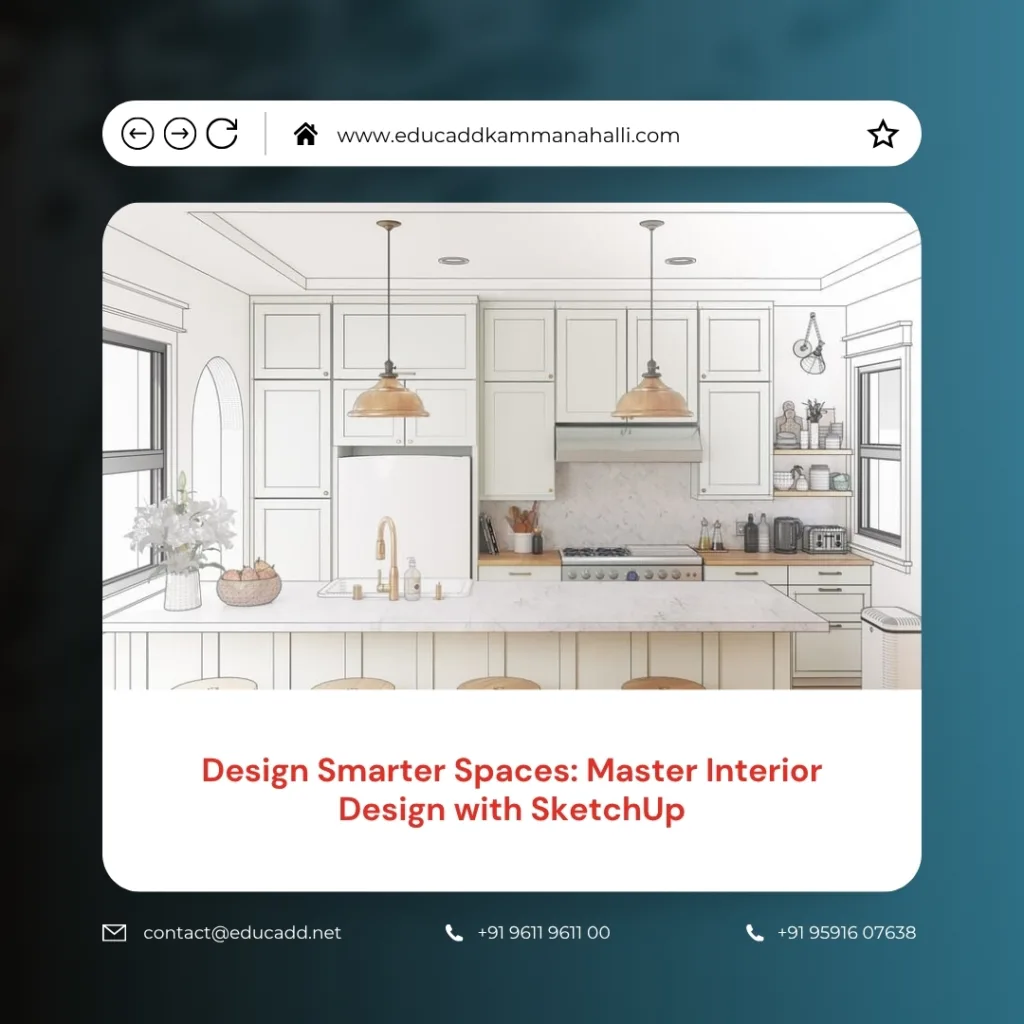
SketchUp Interior Design Course
1. Why SketchUp is Essential for Interior Designers
SketchUp has become a preferred tool because it balances simplicity with powerful features. Interior designers often need to present concepts quickly, and this software allows them to build 3D models without a steep learning curve. Unlike complex design tools, SketchUp focuses on ease of use while still offering detailed modeling capabilities.
Moreover, designers can visualize layouts, furniture placements, and lighting in real time. This helps clients understand concepts clearly, reducing revisions and improving satisfaction. As a result, professionals who master SketchUp gain a strong competitive advantage in the industry.
2. Understanding the Basics of SketchUp
Before diving into advanced techniques, it is important to understand the fundamentals. A SketchUp course typically begins with navigation tools, drawing commands, and basic modeling techniques. These foundational skills help users create walls, floors, and simple furniture models.
Additionally, learning how to use groups and components ensures that designs remain organized. This reduces errors and improves workflow efficiency. Once the basics are clear, designers can move on to more advanced features with confidence.
3. Creating Realistic Interior Spaces
SketchUp allows designers to create highly realistic interior environments. From textures to lighting, every detail can be customized. Materials such as wood, glass, and fabric can be applied to surfaces, making designs more lifelike.
Furthermore, the ability to import textures and use plugins enhances realism. Designers can experiment with colors, finishes, and layouts before finalizing a concept. This reduces costly mistakes during execution and ensures better planning.
4. Benefits of Learning SketchUp for Interior Design
Learning SketchUp offers several practical benefits for both beginners and professionals:
- Improves visualization skills by converting ideas into 3D models
- Enhances communication with clients through clear presentations
These advantages make SketchUp a valuable tool in modern interior design. As a result, many training institutes now include it as a core part of their curriculum.
5. Speed and Efficiency in Design Projects
Time management is crucial in interior design projects. SketchUp enables designers to work faster without compromising quality. Features like pre-built models and reusable components save time during project development.
In addition, designers can quickly modify layouts based on client feedback. This flexibility ensures that projects move forward smoothly. Faster workflows also allow professionals to handle multiple projects simultaneously.
6. Enhancing Creativity Through 3D Modeling
Creativity thrives when designers can experiment freely. SketchUp provides a platform where ideas can be tested and refined. Designers can explore different layouts, furniture styles, and color schemes without limitations.
Moreover, the ability to view designs from multiple angles encourages innovative thinking. This helps designers create unique and functional spaces that meet client expectations.
7. Importance of SketchUp in Client Presentations
Client presentations play a key role in interior design projects. SketchUp models make it easier to showcase ideas in a visually appealing way. Instead of relying on verbal explanations, designers can present detailed 3D views.
This clarity builds trust and helps clients make informed decisions. Additionally, realistic presentations reduce misunderstandings and ensure that the final design matches expectations.
8. Learning Advanced Tools and Plugins
Once the basics are mastered, designers can explore advanced tools and plugins. These features extend SketchUp’s capabilities and improve productivity. For example, rendering plugins can create photorealistic images.
Other tools help with lighting analysis, space planning, and detailed modeling. By learning these advanced features, designers can deliver high-quality results that stand out in the market.
9. Career Opportunities After a SketchUp Course
Completing a SketchUp course opens up various career opportunities. Interior designers, architects, and freelancers can benefit from this skill. Many companies look for professionals who can create 3D models and presentations.
Some popular career paths include:
- Interior designer
- 3D visualization artist
These roles offer growth potential and competitive salaries. As demand for digital design skills increases, SketchUp expertise becomes even more valuable.
10. SketchUp for Residential Interior Design
Residential projects require attention to detail and personalization. SketchUp helps designers create customized layouts that suit individual preferences. From living rooms to kitchens, every space can be designed with precision.
Designers can also experiment with furniture arrangements and color schemes. This ensures that the final design reflects the client’s lifestyle and taste.
11. SketchUp for Commercial Interior Design
Commercial spaces demand functionality and efficiency. SketchUp allows designers to plan layouts that maximize space utilization. Offices, retail stores, and restaurants can be designed with both aesthetics and practicality in mind.
Additionally, designers can simulate lighting and movement within a space. This helps create environments that enhance productivity and customer experience.
12. Improving Collaboration with SketchUp
Collaboration is essential in interior design projects. SketchUp makes it easier for teams to work together. Designers can share models with clients, architects, and contractors.
This improves communication and ensures that everyone is aligned with the project goals. As a result, projects are completed more efficiently and with fewer errors.
13. Tips to Choose the Right SketchUp Course
Selecting the right course is important for effective learning. A good SketchUp course should cover both basic and advanced concepts. It should also include practical projects that help students apply their knowledge.
Look for courses that offer hands-on training and industry-relevant content. This ensures that learners gain skills that are directly applicable in real-world scenarios.
14. Future of Interior Design with SketchUp
The future of interior design is closely linked to digital tools. SketchUp continues to evolve with new features and integrations. As technology advances, designers will have access to even more powerful tools.
Learning SketchUp today prepares designers for future challenges. It ensures that they remain competitive in a rapidly changing industry.
Conclusion
A SketchUp Interior Design Course is more than just a technical training program. It is a gateway to creativity, efficiency, and professional growth. By mastering SketchUp, designers can bring their ideas to life with precision and clarity. From residential spaces to commercial projects, the possibilities are endless. As the demand for skilled designers continues to grow, investing in SketchUp training can be a smart and rewarding decision.

