
Smart Construction Using BIM: The Future of Intelligent, Efficient, and Sustainable Building
The construction industry is rapidly evolving, and smart technologies are reshaping how projects are planned, designed, and executed. One of the most transformative innovations driving this change is Building Information Modeling (BIM). Smart Construction Using BIM is no longer just a trend—it has become a necessity for companies aiming to stay competitive in a fast-paced and digitally driven world.
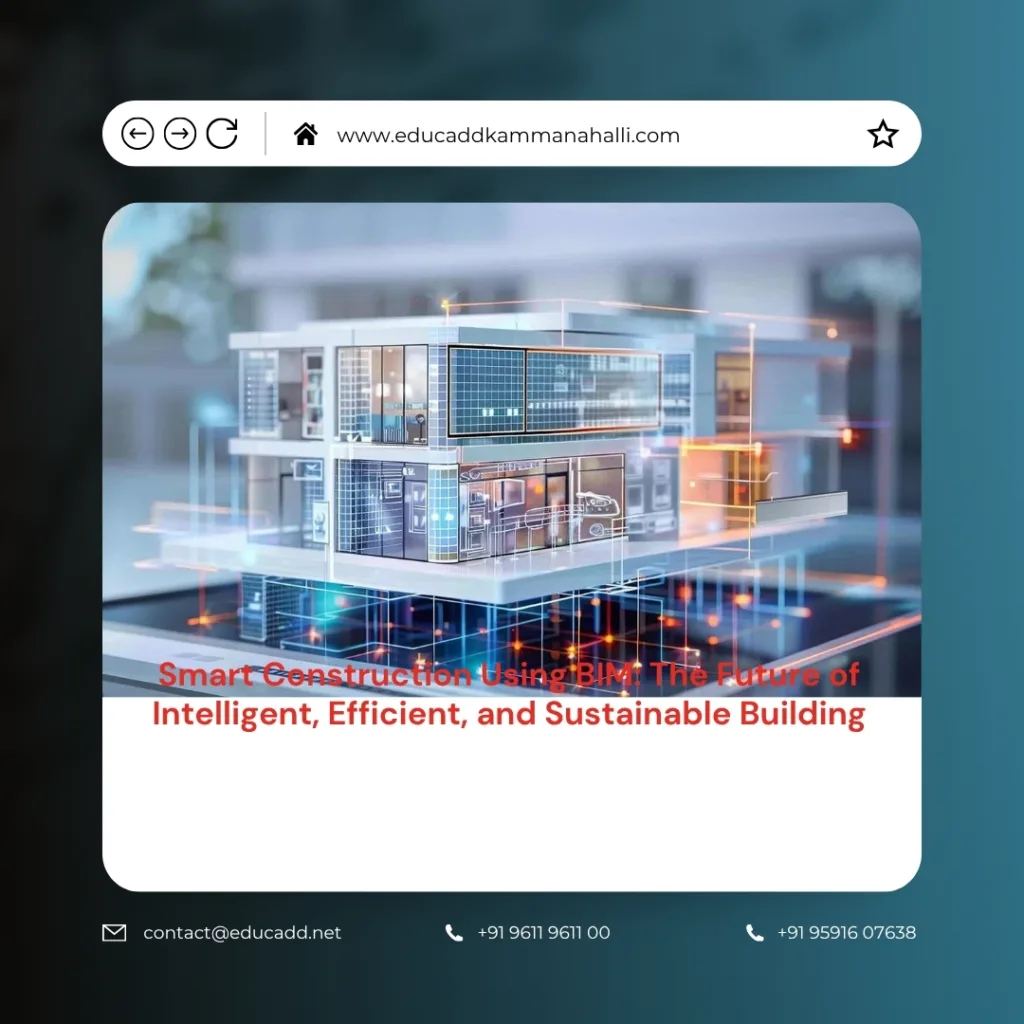
Smart Construction Using BIM
BIM enables construction professionals to create, manage, and optimize building data in a collaborative digital environment. As a result, projects become more efficient, cost-effective, and sustainable. From reducing errors to improving communication, Smart Construction Using BIM is revolutionizing traditional construction practices. In this blog, you will explore how smart construction powered by BIM is transforming the industry and why it is essential for future-ready infrastructure development.
1. Understanding Smart Construction in the Digital Era
Smart construction refers to the integration of advanced technologies, digital tools, and data-driven processes into construction workflows. BIM plays a central role in this transformation by enabling real-time collaboration and visualization.
Unlike traditional methods, where data is fragmented, BIM ensures that all stakeholders work on a unified model. This improves accuracy and reduces misunderstandings. Consequently, projects are completed faster and with fewer complications.
2. What is BIM and Why It Matters
Building Information Modeling (BIM) is a digital representation of a building’s physical and functional characteristics. It goes beyond 2D drawings by incorporating 3D models enriched with data.
This data-driven approach allows architects, engineers, and contractors to make informed decisions. Moreover, BIM improves transparency, ensuring that every detail is accounted for during the project lifecycle.
3. Key Benefits of Smart Construction Using BIM
The adoption of BIM in construction offers several advantages that directly impact project success.
- Improved collaboration among teams
- Enhanced project visualization and planning
These benefits lead to better efficiency and fewer costly errors. Additionally, BIM ensures that resources are utilized optimally, reducing waste and improving sustainability.
4. Enhanced Project Planning and Design Accuracy
One of the most significant advantages of BIM is its ability to improve planning and design accuracy. With detailed 3D models, stakeholders can visualize the project before construction begins.
This reduces design conflicts and allows teams to identify potential issues early. As a result, costly rework is minimized, and project timelines are maintained effectively.
5. Real-Time Collaboration and Communication
Smart construction thrives on seamless communication, and BIM makes it possible. All project stakeholders can access the same model in real time, ensuring consistency.
This level of collaboration eliminates confusion and enhances decision-making. Furthermore, teams can quickly adapt to changes without disrupting the entire workflow.
6. Cost Efficiency and Budget Control
Cost overruns are a common challenge in construction projects. However, BIM helps in managing budgets more effectively by providing accurate cost estimations.
With better planning and resource allocation, unnecessary expenses are avoided. Consequently, projects are delivered within budget, increasing profitability for stakeholders.
7. Time Management and Faster Project Delivery
Time is a critical factor in construction, and delays can lead to significant losses. BIM improves scheduling by integrating time-related data into the model.
- Faster decision-making through real-time updates
- Reduced project delays due to improved coordination
This ensures that projects are completed on time, meeting client expectations and industry standards.
8. Clash Detection and Risk Mitigation
One of the most powerful features of BIM is clash detection. It identifies conflicts between different building systems before construction begins.
By resolving these issues early, risks are significantly reduced. This not only saves time but also prevents costly errors during the construction phase.
9. Sustainable and Eco-Friendly Construction
Sustainability is a growing priority in modern construction. BIM supports eco-friendly practices by enabling energy analysis and material optimization.
With better resource management, waste is minimized, and environmental impact is reduced. Therefore, BIM contributes to greener and more sustainable construction projects.
10. Improved Facility Management and Lifecycle Efficiency
BIM is not limited to the construction phase; it also plays a vital role in facility management. The data stored in BIM models can be used for maintenance and operations.
This ensures that buildings remain efficient throughout their lifecycle. Additionally, facility managers can make informed decisions based on accurate data.
11. Integration with Emerging Technologies
Smart construction becomes even more powerful when BIM is integrated with other technologies such as IoT, AI, and cloud computing.
These integrations enhance data analysis and automation. As a result, construction processes become more efficient and intelligent, paving the way for innovation.
12. Challenges in Implementing BIM
Despite its advantages, BIM implementation comes with challenges. High initial costs and the need for skilled professionals can be barriers.
However, these challenges can be overcome with proper training and strategic planning. Over time, the benefits of BIM outweigh the initial investment.
13. The Future of Smart Construction with BIM
The future of construction lies in digital transformation, and BIM is at the forefront of this change. As technology advances, BIM will become more sophisticated and accessible.
This will lead to smarter cities, improved infrastructure, and enhanced project outcomes. Therefore, adopting BIM today ensures long-term success in the industry.
14. Why Professionals Must Learn BIM Today
For professionals in the construction industry, learning BIM is no longer optional. It has become a critical skill for career growth and competitiveness.
With increasing demand for BIM expertise, individuals who master this technology will have better job opportunities. Moreover, they will play a key role in shaping the future of construction.
Conclusion
Smart Construction Using BIM is transforming the way buildings are designed, constructed, and managed. It enhances efficiency, reduces costs, and promotes sustainability, making it an essential tool for modern construction projects. While challenges exist, the long-term benefits of BIM far outweigh the initial hurdles.
As the construction industry continues to evolve, embracing BIM will be crucial for staying ahead of the competition. Whether you are a student, engineer, or industry professional, investing in BIM knowledge will open doors to endless opportunities. The future of construction is smart, digital, and data-driven—and BIM is leading the way.

