
Small Spaces, Big Style: Smart Interior Design That Transforms Compact Apartments
Modern city living has changed how people experience their homes. Rising property prices and compact floor plans have made small apartments a common reality. However, limited space does not mean limited comfort or style. With the right approach, small homes can feel open, functional, and visually appealing. This is where Smart Small Apartment Design becomes essential.
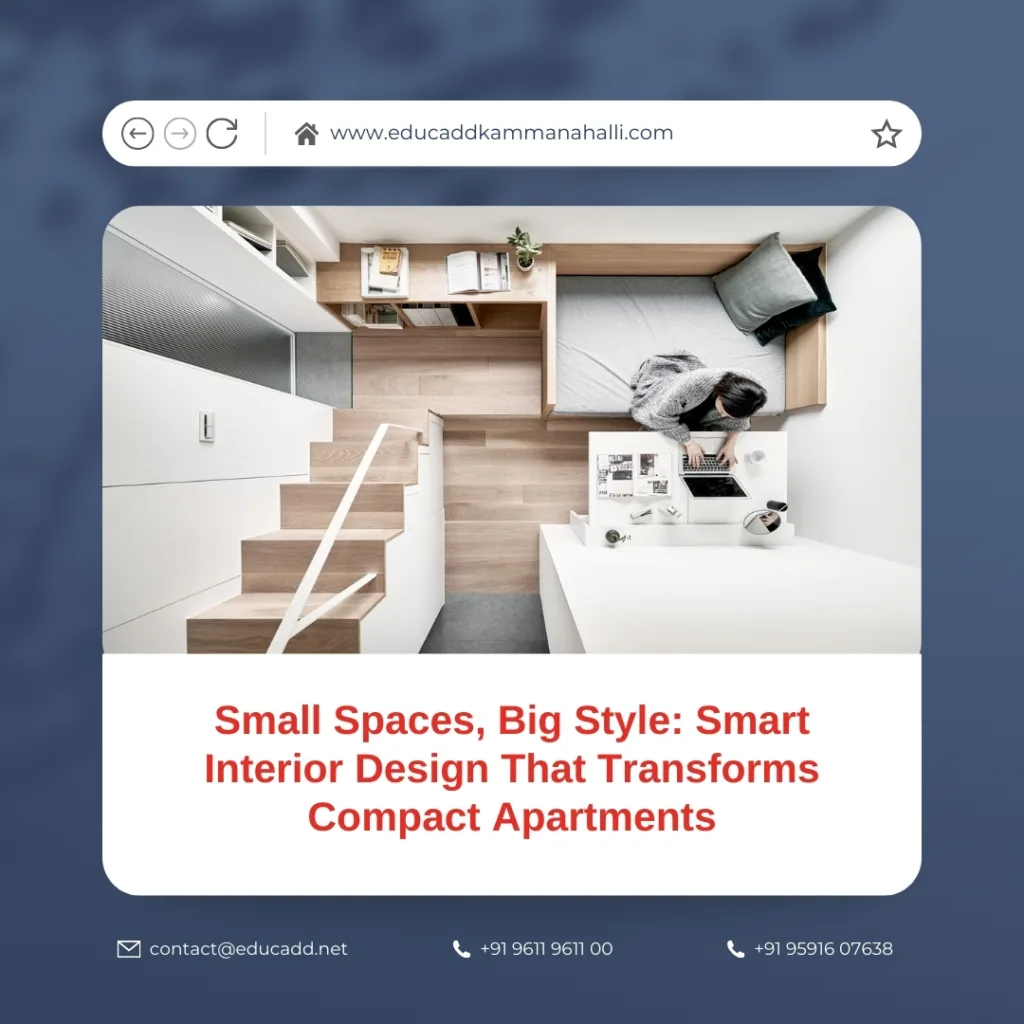
Smart Small Apartment Design
Smart interior design focuses on maximizing usability without overcrowding the space. It combines intelligent planning, multifunctional furniture, clever storage, and visual balance. When done well, it improves daily living and enhances comfort. This blog explores practical, design-driven strategies that help transform small apartments into efficient and stylish homes.
1. Smart Space Planning: Designing Every Inch with Intention
Effective space-saving interior design begins with planning. Without a clear plan, small apartments can quickly feel cramped. A well-thought-out layout creates flow, balance, and comfort.
The first step is understanding how the space will be used. Each area should have a defined purpose. Living, dining, working, and sleeping zones must feel distinct, even in an open layout. Rugs, lighting, and furniture placement help separate these zones without building walls.
Furniture scale also plays a crucial role. Oversized furniture reduces movement and blocks light. Compact, well-proportioned furniture allows better circulation. Always maintain clear walkways. Open paths instantly make rooms feel larger.
Vertical space should never be ignored. Walls offer excellent opportunities for storage and décor. Tall cabinets, vertical shelves, and wall-mounted units free up floor space. This approach adds height and structure to interiors.
Flexibility is another key principle. Small apartments benefit from layouts that adapt to changing needs. Movable furniture and foldable elements allow quick transformation. Smart planning supports the foundation of Smart Small Apartment Design and ensures long-term usability.
2. Multifunctional Furniture: One Design, Multiple Purposes
Multifunctional furniture is the heart of compact living. In small apartments, every piece must work harder. Furniture that serves more than one purpose reduces clutter and increases efficiency.
Sofa beds remain one of the most popular solutions. They provide comfortable seating during the day and convert into beds at night. Storage beds also offer hidden compartments for linens and seasonal items.
Extendable dining tables provide flexibility. They stay compact for daily use and expand when guests arrive. Nesting tables offer similar advantages. They can be stacked away when not required.
Wall-mounted desks and fold-down tables work well for home offices. Once work is done, these elements disappear, restoring open space. Ottomans with storage combine seating, storage, and design.
Custom-built furniture offers even better results. Built-in wardrobes, window seats with storage, and wall beds maximize awkward spaces. These solutions align perfectly with Space-Saving Interior Design for Small Apartments, where efficiency defines success.
3. Intelligent Storage Solutions That Stay Invisible
Storage challenges often define small apartments. However, good storage should feel seamless and visually light. The goal is to hide clutter without adding bulk.
Hidden storage is the most effective approach. Beds, benches, and sofas with built-in compartments keep essentials out of sight. This creates a cleaner and calmer environment.
A mix of open and closed storage works best. Open shelves display books and décor. Closed cabinets hide everyday items. This balance maintains visual interest without overcrowding.
Kitchens require special attention. Vertical cabinets maximize wall height. Pull-out drawers improve access. Corner storage systems eliminate wasted space. Hanging racks free up counters and drawers.
Bathrooms benefit from floating vanities and mirrored cabinets. These features keep floors visible and make the room appear larger. Over-the-door organizers add extra storage without structural changes.
Entryways also deserve smart solutions. Slim shoe racks, wall hooks, and overhead shelves keep clutter contained. These ideas reinforce the value of Space-Saving Interior Design for Small Apartments, where storage must blend with design.
4. Visual Design Techniques That Create a Spacious Feel
Visual perception plays a powerful role in small interiors. The right design choices can dramatically change how space feels.
Light colors help reflect natural light. Whites, creams, and soft neutrals create openness. Accent colors should remain subtle to avoid visual clutter.
Mirrors add depth and brightness. Large mirrors reflect light and visually double the space. Placing mirrors opposite windows enhances this effect.
Lighting should be layered for balance. Combine ceiling lights, wall-mounted fixtures, and task lighting. Floor lamps can feel bulky, so wall options work better in small homes.
Curtains should hang from ceiling to floor. This technique increases perceived height. Sheer fabrics allow light while maintaining privacy.
Minimal décor keeps interiors balanced. Avoid overcrowding surfaces. Choose a few meaningful pieces instead. These visual strategies support Smart Small Apartment Design by expanding space without physical changes.
5. Personalization Without Compromising Space
A small apartment should still feel personal and inviting. Space-saving design does not mean sacrificing warmth or identity.
Consistency in style helps maintain visual order. Choose a clear design theme and stick to it. Matching materials and colors reduce visual noise.
Wall-mounted décor works better than floor-based elements. Floating shelves, artwork, and hanging planters add personality without taking up space. Indoor plants improve air quality and mood while enhancing design.
Technology also supports compact living. Smart lighting systems reduce the need for multiple fixtures. Compact appliances save space and energy.
Regular decluttering remains essential. Keeping only what is useful or meaningful prevents overcrowding. A well-edited home always feels larger. This habit strengthens the principles of Space-Saving Interior Design for Small Apartments and improves daily comfort.
Conclusion
Small apartments present challenges, but they also inspire creativity. With thoughtful planning, multifunctional furniture, smart storage, and visual balance, compact spaces can feel open and stylish. Smart Small Apartment Design focuses on efficiency without sacrificing comfort or aesthetics. When every element has a purpose, small homes become powerful examples of smart living. With the right design mindset, limited space can deliver unlimited potential.

