
Mastering Structural Drafting Using Civil CADD for High-Performance Construction Design
Structural drafting using Civil CADD plays a critical role in modern construction projects. Today, engineers and designers rely on precise digital drawings to transform ideas into safe and efficient structures. Structural Drafting Using Civil CADD ensures clarity, accuracy, and speed throughout the design process. As infrastructure projects grow more complex, the demand for detailed structural drawings continues to increase.
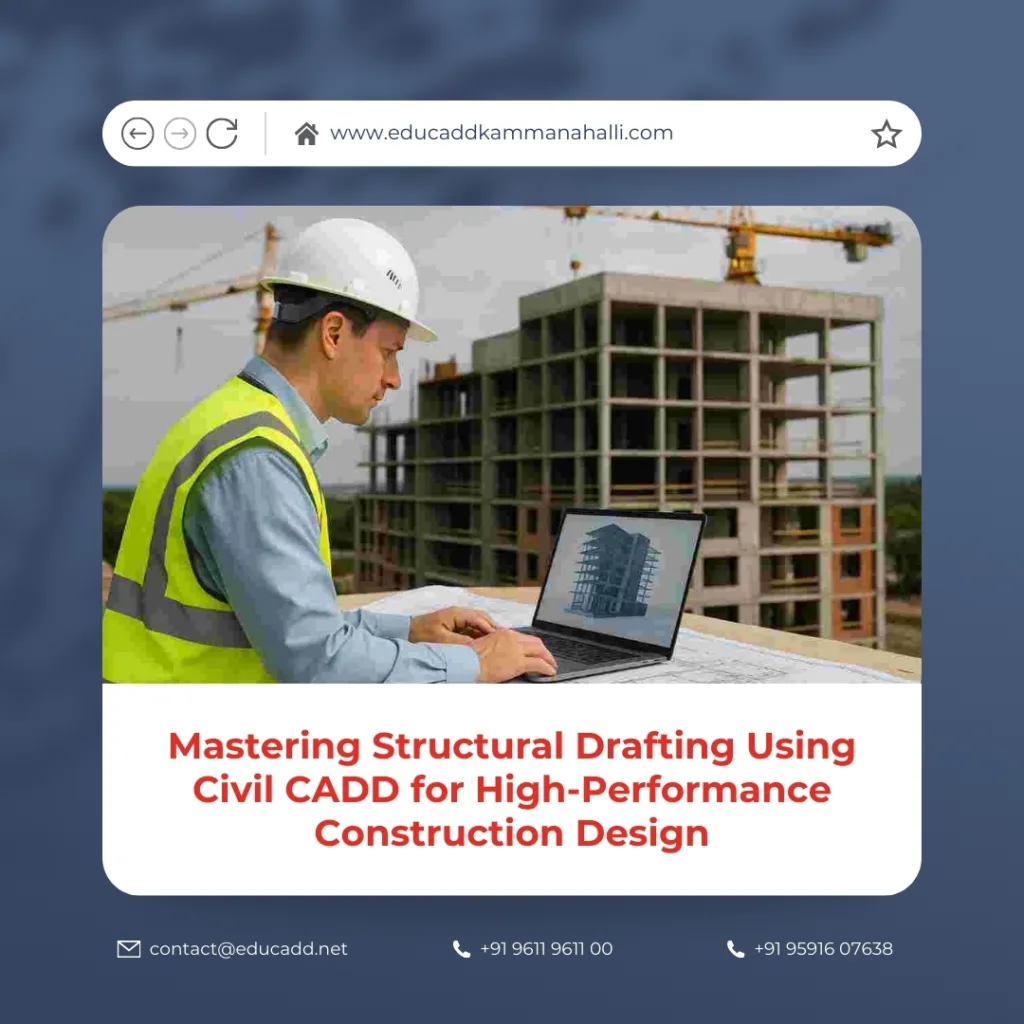
Structural Drafting Using Civil CADD
Moreover, construction teams expect drawings that reduce errors and support smooth execution. Structural Drafting Using Civil CADD helps professionals create foundation plans, column layouts, beam details, slab reinforcements, and structural sections with confidence. This technology-driven approach improves coordination between architects, structural engineers, and site teams. In this comprehensive guide, you will explore the principles, tools, workflows, and career benefits of structural drafting using Civil CADD in detail.
1. Understanding the Fundamentals of Structural Drafting Using Civil CADD
Structural Drafting Using Civil CADD begins with a clear understanding of structural engineering concepts. Before creating drawings, drafters must understand loads, support systems, materials, and design codes. Civil CADD provides a digital platform to convert engineering calculations into professional drawings.
Unlike manual drafting, structural drafting using Civil CADD allows precise line work, dimension control, and standardized annotations. The software enables users to create scaled drawings with consistent accuracy. Additionally, it supports layering systems that separate structural elements such as beams, columns, slabs, and reinforcement details.
Because of these features, professionals can easily modify drawings without redrawing entire sheets. This flexibility saves time and reduces costly mistakes. Therefore, mastering the basics of structural drafting using Civil CADD forms the foundation for advanced design tasks.
2. Importance of Structural Drafting in Modern Construction
In today’s competitive construction industry, precision matters more than ever. Structural drafting using Civil CADD ensures that every structural component aligns with engineering calculations. Clear drawings reduce confusion at the construction site.
Furthermore, contractors depend on accurate structural drawings to estimate materials and schedule work efficiently. Structural drafting using Civil CADD supports detailed reinforcement drawings, which guide steel placement in concrete structures. Without accurate drafting, structural integrity may suffer.
Additionally, digital drafting improves collaboration. Engineers can share files instantly and update designs in real time. As a result, project timelines improve significantly. The importance of structural drafting using Civil CADD continues to grow as projects become larger and more technically demanding.
3. Essential Tools and Features in Civil CADD for Structural Drafting
Civil CADD offers powerful tools that streamline structural drafting work. Basic commands such as line, polyline, offset, trim, and extend help create accurate geometries. These commands form the backbone of structural drafting using Civil CADD.
Layer management is another essential feature. By assigning different colors and line types to structural components, drafters maintain clarity and organization. Dimensioning tools ensure accurate measurement representation. Text and annotation tools provide detailed specifications.
Moreover, block creation allows repetitive elements like column sections or footing details to be reused efficiently. This function speeds up structural drafting using Civil CADD and maintains uniformity across drawings. With practice, these tools significantly enhance productivity and drawing quality.
4. Structural Components Commonly Drafted in Civil CADD
Structural drafting using Civil CADD involves multiple structural elements. Foundation plans illustrate footing sizes, depth levels, and reinforcement details. Column layout drawings show exact positioning and dimensions.
Beam detailing forms another major part of structural drafting using Civil CADD. Drafters prepare beam schedules, cross sections, and reinforcement placement diagrams. Slab reinforcement drawings specify bar spacing, diameters, and support conditions.
In addition, staircase details, retaining walls, and roof truss drawings often require precise drafting. Each component demands attention to scale, dimensioning, and labeling. Therefore, structural drafting using Civil CADD requires both technical knowledge and drafting expertise.
5. Workflow Process in Structural Drafting Using Civil CADD
A systematic workflow improves efficiency and accuracy. Structural drafting using Civil CADD usually begins with reviewing structural calculations and architectural layouts. Understanding design intent prevents drafting errors.
Next, drafters set up drawing units, layers, and sheet templates. After that, they create structural layouts such as column grids and foundation plans. Beam and slab details follow in sequence.
Finally, they add annotations, dimensions, and schedules. Reviewing and cross-checking ensure consistency. By following a structured workflow, professionals maintain high standards in structural drafting using Civil CADD and deliver reliable project documentation.
6. Reinforcement Detailing and Bar Bending Schedules
Reinforcement detailing represents one of the most critical aspects of structural drafting using Civil CADD. Concrete structures depend on properly placed steel bars for strength and durability.
Drafters prepare detailed rebar drawings that show bar sizes, shapes, spacing, and lap lengths. They also generate bar bending schedules, which summarize quantities and cutting lengths. These schedules help procurement teams estimate materials accurately.
Because reinforcement details influence structural safety, accuracy remains essential. Structural drafting using Civil CADD simplifies the process by allowing precise measurement and easy editing. Consequently, projects achieve better quality control and material optimization.
7. Advantages of Digital Drafting Over Manual Methods
Manual drafting once dominated the construction industry. However, structural drafting using Civil CADD has transformed the process. Digital drafting eliminates repetitive redrawing and reduces human error.
Moreover, software tools enable quick revisions. When engineers update structural dimensions, drafters modify drawings instantly. This efficiency saves both time and cost.
Additionally, digital files remain easy to store, share, and archive. Structural drafting using Civil CADD also enhances visual clarity through consistent line weights and standardized templates. These advantages make digital drafting indispensable in modern structural projects.
8. Coordination Between Architectural and Structural Drawings
Successful construction requires coordination among disciplines. Structural drafting using Civil CADD ensures alignment with architectural layouts. Column placements must match architectural grids. Beam depths must align with ceiling heights.
By overlaying architectural drawings, drafters identify conflicts early. This proactive approach prevents on-site modifications. Furthermore, consistent scaling and referencing maintain drawing accuracy.
Therefore, structural drafting using Civil CADD supports smooth communication between architects, engineers, and contractors. Strong coordination reduces project delays and enhances overall construction quality.
9. Industry Standards and Code Compliance
Every structural drawing must comply with relevant building codes and standards. Structural drafting using Civil CADD incorporates these requirements into dimensioning and detailing practices.
Drafters include clear notations for material grades, reinforcement specifications, and load conditions. They follow standardized symbols and abbreviations for clarity. By adhering to established guidelines, structural drafting using Civil CADD ensures regulatory approval and structural safety.
Moreover, standardized documentation enhances professional credibility. Clients and authorities trust drawings that follow recognized codes. Compliance therefore remains a fundamental responsibility in structural drafting using Civil CADD.
10. Quality Control and Error Reduction Techniques
Errors in structural drawings can lead to costly construction issues. Therefore, structural drafting using Civil CADD emphasizes quality control. Drafters must cross-check dimensions, verify reinforcement spacing, and confirm structural alignment.
Layer organization helps detect overlapping or missing elements. Clear annotation prevents misinterpretation. Additionally, regular coordination meetings with engineers reduce misunderstandings.
Because digital tools allow easy revisions, professionals can correct mistakes before final submission. As a result, structural drafting using Civil CADD enhances reliability and minimizes risk during construction.
11. Career Opportunities in Structural Drafting Using Civil CADD
The demand for skilled drafters continues to grow worldwide. Structural drafting using Civil CADD opens doors to roles such as structural drafter, CAD technician, design coordinator, and BIM assistant.
Infrastructure development, residential construction, and commercial projects all require professional drafting expertise. Skilled individuals can work with consulting firms, contractors, or design studios.
Moreover, mastering structural drafting using Civil CADD increases employability and career growth potential. With experience, professionals can advance into senior drafting roles or project coordination positions.
12. Integration with Advanced Design Technologies
Although Civil CADD remains fundamental, integration with advanced tools enhances productivity. Structural drafting using Civil CADD often connects with 3D modeling and building information modeling platforms.
This integration improves visualization and coordination. Engineers can verify structural performance before construction begins. Additionally, digital collaboration tools streamline communication among project stakeholders.
By embracing technological advancements, structural drafting using Civil CADD continues to evolve. Professionals who adapt to these changes remain competitive in the industry.
13. Best Practices for Efficient Structural Drafting
Efficiency improves with disciplined drafting habits. Structural drafting using Civil CADD benefits from consistent layer naming conventions and template usage. Organized file management prevents confusion.
Drafters should maintain uniform text sizes, dimension styles, and title blocks. Regular backups protect valuable project data. Clear communication with engineers ensures correct interpretation of calculations.
By following best practices, professionals deliver high-quality results in structural drafting using Civil CADD while maintaining productivity and accuracy.
14. Future Trends in Structural Drafting and Civil CADD
The construction industry continues to adopt digital transformation strategies. Structural drafting using Civil CADD will increasingly integrate automation and intelligent drafting tools.
Artificial intelligence may assist in error detection and design optimization. Cloud-based collaboration will enable real-time project coordination. Sustainable design considerations will also influence structural detailing practices.
As technology advances, structural drafting using Civil CADD will remain a core skill. However, professionals must continuously upgrade their knowledge to stay relevant in a rapidly evolving industry.
Conclusion
Structural Drafting Using Civil CADD stands at the heart of modern structural engineering and construction. It transforms engineering calculations into precise, buildable drawings that guide every stage of a project. From foundation layouts to reinforcement detailing, structural drafting using Civil CADD ensures accuracy, efficiency, and compliance with industry standards.
Furthermore, digital drafting improves collaboration, reduces errors, and accelerates project timelines. Professionals who master structural drafting using Civil CADD gain strong career opportunities and long-term growth potential. As construction technology continues to evolve, this essential skill will remain a cornerstone of successful structural design and project execution.

