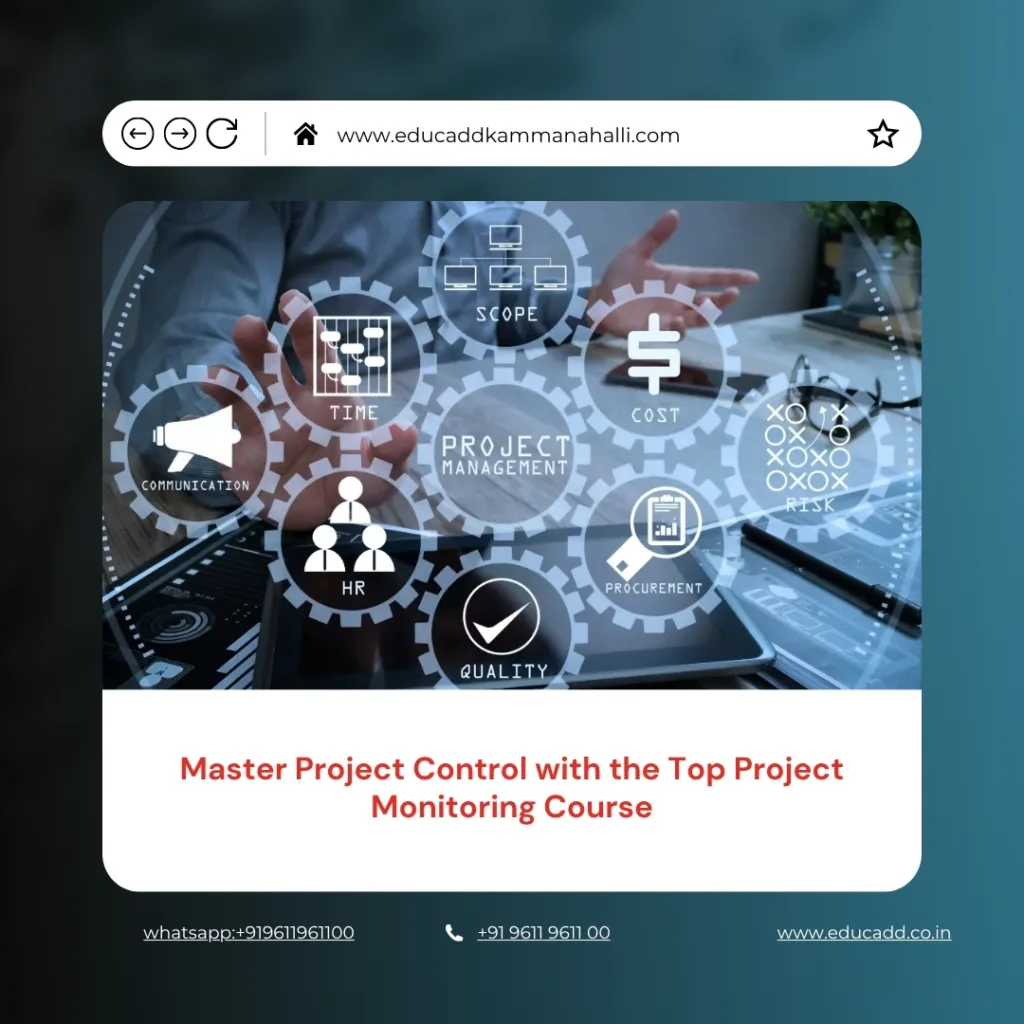
Master Project Control with the Top Project Monitoring Course
Successful projects depend on more than planning and execution. Teams must track progress, control resources, manage risks, and respond quickly when problems arise. This is where project monitoring becomes essential. A strong Top Project Monitoring Course helps learners understand how to measure project performance and keep work aligned with business goals. It develops practical skills that professionals can use across construction, engineering, infrastructure, IT, and other industries. With the right training, learners can improve their ability to monitor schedules, costs, resources, quality, and project milestones while supporting better decision-making throughout the project lifecycle.
Top Project Monitoring Course
Understand the Fundamentals of Project Monitoring
Project monitoring involves continuously checking whether a project is moving according to its approved plan. It compares actual progress with planned targets and identifies gaps before they become major issues. Learners begin by understanding important project monitoring concepts, including milestones, deliverables, timelines, budgets, resources, and performance indicators. A Top Project Monitoring Course introduces these concepts in a practical way, allowing students to understand how different project activities connect. This foundation helps professionals monitor daily work with greater confidence and maintain better control over project outcomes.
Develop Strong Schedule Monitoring Skills
Time management plays a major role in project success. Even a well-designed project can face difficulties when activities fall behind schedule. Training helps learners understand how to monitor planned and actual timelines effectively. Students learn to identify delayed activities, track milestones, review dependencies, and evaluate schedule performance. They can also understand how small delays can affect later activities. By developing strong schedule monitoring skills, professionals can communicate issues earlier and support timely corrective action. These abilities are valuable for project coordinators, planners, engineers, supervisors, and managers working on complex projects.
Learn to Track Project Costs Effectively
Budget control is another important part of project monitoring. Projects often involve large investments in materials, labour, equipment, technology, and services. Without regular cost tracking, unexpected expenses can affect profitability and project completion. A quality Top Project Monitoring Course explains how professionals can compare planned costs with actual spending. Learners gain an understanding of cost variance, budget tracking, resource expenses, and financial performance. These skills help teams identify overspending at an early stage. As a result, project professionals can recommend suitable adjustments and maintain stronger financial control throughout the project.
Improve Resource Management and Utilisation
Efficient resource utilisation can directly influence project productivity. Resources may include employees, equipment, materials, software, and other project assets. Monitoring these resources helps teams understand whether they are being used effectively. During training, learners explore methods for tracking resource allocation and identifying shortages or underutilisation. They also learn how resource issues can affect schedules and budgets. A practical Top Project Monitoring Course helps professionals connect resource performance with overall project progress. This approach supports better planning, reduces unnecessary waste, and helps teams use available resources more efficiently.
Master Progress Tracking Techniques
Progress tracking provides a clear picture of what has been completed and what remains. Professionals need accurate progress information to make informed decisions. Training introduces methods for recording activity completion, comparing planned progress with actual performance, and identifying deviations. Learners can also explore progress reports, dashboards, tracking sheets, and performance indicators. These tools make project information easier to understand and communicate. Furthermore, regular progress tracking gives project managers an opportunity to address challenges before they become difficult to control. This makes monitoring a continuous and valuable part of project management.
Understand Key Performance Indicators
Key Performance Indicators, commonly known as KPIs, help professionals measure project performance using meaningful data. Different projects may use different indicators depending on their objectives. Common examples include schedule performance, cost performance, productivity, quality, resource utilisation, and milestone completion. A project monitoring course teaches learners how to understand and apply relevant performance indicators. Instead of relying only on assumptions, professionals can use measurable information to evaluate project health. Consequently, project teams can make better decisions and communicate performance more clearly to clients, management, and other stakeholders.
Strengthen Risk Identification and Monitoring
Every project faces risks, including delays, budget changes, resource shortages, technical issues, and unexpected external factors. Effective monitoring helps teams identify warning signs early. Learners can develop skills for recording risks, assessing their possible impact, and tracking mitigation actions. They also learn why risk monitoring should continue throughout the project rather than stop after the initial planning stage. With these skills, professionals can respond more quickly when project conditions change. Therefore, risk monitoring becomes an important part of maintaining stability and protecting project objectives.
Learn Practical Reporting and Documentation
Accurate documentation supports effective project monitoring. Project teams need reliable records to understand previous decisions, current progress, resource usage, costs, and outstanding issues. Training helps learners understand how to prepare clear progress reports and maintain useful project records. Reports should present important information without unnecessary complexity. Professionals can learn to highlight achievements, delays, risks, variations, and upcoming activities. Clear documentation also improves communication between project managers, clients, contractors, consultants, and team members. In addition, well-maintained records can support future planning and project reviews.
Build Confidence with Project Monitoring Tools
Modern projects often use digital tools to simplify monitoring activities. Depending on the industry, professionals may work with scheduling applications, spreadsheets, dashboards, reporting platforms, and project management software. A comprehensive Top Project Monitoring Course introduces learners to the principles behind these tools and shows how they support project control. The goal is not simply to learn software features. Instead, learners should understand how to use data effectively for monitoring and decision-making. This practical approach can make professionals more productive and better prepared for technology-driven project environments.
Improve Decision-Making Through Data
Good project decisions depend on accurate and timely information. Monitoring provides data that can reveal whether a project is performing as expected. Learners develop the ability to interpret project information, identify trends, and recognise performance gaps. For example, repeated schedule delays may indicate a resource problem, while rising costs may point to inefficient procurement or changing requirements. By analysing these patterns, professionals can support suitable corrective actions. A Top Project Monitoring Course therefore helps learners move beyond simply collecting information and develop the ability to turn project data into useful insights.
Enhance Communication with Project Stakeholders
Project monitoring is closely connected to communication. Stakeholders need regular updates to understand project status and make informed decisions. Professionals must communicate progress, challenges, risks, and changes in a clear manner. Training helps learners present project information in a structured and professional format. They can also learn how to communicate technical information to people with different levels of project knowledge. Effective communication reduces confusion and encourages faster responses. Moreover, strong reporting and communication skills can improve trust between project teams and stakeholders.
Prepare for Real-World Project Challenges
Theoretical knowledge becomes more valuable when learners can apply it to practical situations. A well-designed Top Project Monitoring Course should expose students to realistic project scenarios and common challenges. These may include schedule slippage, cost overruns, resource conflicts, changing requirements, and incomplete deliverables. By working through such situations, learners can practise identifying problems and developing appropriate responses. Practical exposure also improves confidence because students gain experience in applying monitoring concepts rather than simply memorising definitions.
Expand Career Opportunities in Project Management
Project monitoring skills can support professionals across several industries. Construction companies, engineering organisations, infrastructure firms, manufacturing businesses, IT companies, and consulting organisations all need professionals who can track project performance. Learners with monitoring knowledge can explore roles such as project coordinator, project planner, project controls professional, planning engineer, project analyst, or project manager. Completing a project monitoring course can strengthen a professional profile by demonstrating knowledge of project tracking and control. Combined with industry experience, these skills can create opportunities for career development and increased responsibility.
Why Choose the Right Project Monitoring Training?
Choosing suitable training can make a significant difference to the learning experience. Professionals should look for a course that combines fundamental concepts with practical applications, reporting techniques, project tracking methods, and industry-relevant examples. Training should also help learners understand how schedule, cost, resources, risks, and performance work together. A strong learning environment allows students to ask questions, practise concepts, and understand real project situations. By selecting the right project monitoring course, learners can build a useful skill set that supports both immediate job responsibilities and long-term professional growth.
Conclusion
Project monitoring is an essential skill for professionals who want to keep projects on schedule, within budget, and aligned with planned objectives. It brings together progress tracking, cost control, resource management, risk monitoring, reporting, performance measurement, and communication. The right training can help learners develop these abilities through structured and practical learning. Whether you are beginning a career in project management or looking to strengthen your existing skills, a Top Project Monitoring Course can provide valuable knowledge for today’s competitive project environment. With consistent practice and industry-focused training, professionals can become more confident in monitoring performance, identifying challenges, and supporting successful project delivery.

