
Zero Trust Security Model Explained Simply: The Smarter Way to Protect Modern Digital Systems
Cyber threats have evolved faster than most organizations can adapt. Traditional security systems were designed when employees worked inside office networks and sensitive data stayed within company servers. Today, however, people work remotely, use cloud platforms, and access systems from multiple devices. As a result, attackers no longer need to break through a single strong perimeter. Instead, they exploit weak credentials, compromised devices, and unsecured applications. This major shift has made old security approaches ineffective. The Zero Trust Security Model solves this problem by changing how trust is granted inside digital environments.
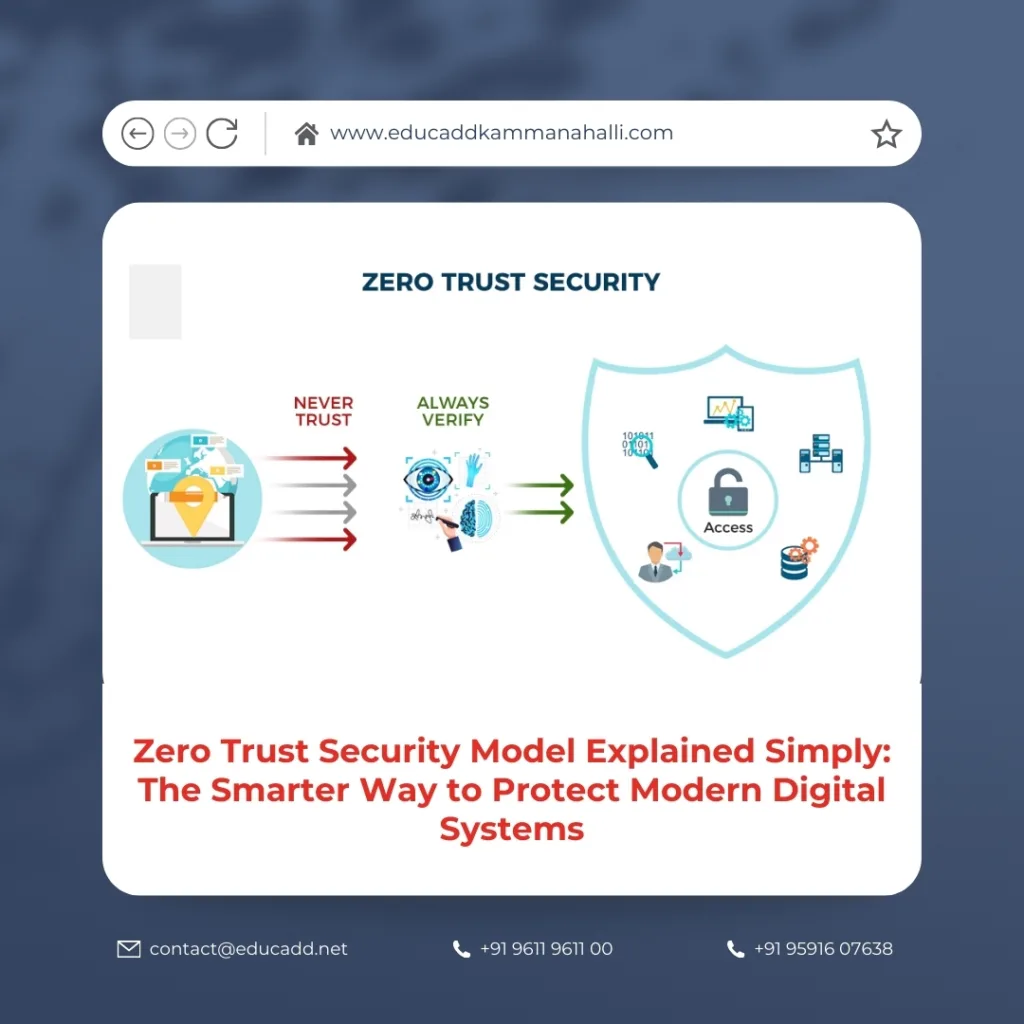
Zero Trust Security Model
Rather than assuming users or devices are safe after one verification, this model requires continuous validation. Every access request is checked, verified, and monitored. This modern approach minimizes risk, reduces unauthorized access, and strengthens overall cybersecurity posture. Understanding how the Zero Trust Security Model works is now essential for businesses, IT professionals, and even individuals who value data protection.
1. Understanding the Core Idea Behind the Zero Trust Security Model
The Zero Trust Security Model is built on a simple principle: never trust, always verify. Traditional systems automatically trusted users inside a network, but this approach created dangerous security gaps. Once attackers entered, they could move freely across systems. The Zero Trust Security Model eliminates this risk by treating every user, device, and application as potentially untrusted. Even if someone is already inside the network, verification is still required. This continuous validation ensures that trust is never permanent and always depends on identity, device health, and behavior patterns. As a result, security becomes stronger, smarter, and more adaptable to modern digital risks.
2. Why Traditional Security Models Are No Longer Enough
Older cybersecurity strategies focused on building strong outer defenses like firewalls and secure gateways. This approach worked when digital assets were centralized. However, cloud computing, mobile devices, and remote work environments have removed clear network boundaries. Attackers now exploit stolen passwords, phishing attacks, and malware to gain access without triggering alarms. Once inside, they often remain undetected for months. The Zero Trust Security Model addresses this weakness by removing automatic trust within networks. Instead of relying only on perimeter protection, it applies strict identity checks and access controls at every stage. Consequently, organizations gain better visibility and prevent unauthorized lateral movement.
3. Key Principles That Define the Zero Trust Security Model
Several guiding principles shape how the Zero Trust Security Model functions across modern infrastructures. These principles help organizations create multiple layers of intelligent protection rather than relying on a single defense mechanism.
• Continuous verification ensures that users and devices are authenticated repeatedly, not just once.
• Least-privilege access allows users to access only the data and systems necessary for their roles.
These practices significantly reduce exposure to insider threats and external cyberattacks. Moreover, strict monitoring systems detect unusual behavior early, preventing large-scale damage.
4. Identity Verification as the First Line of Defense
Identity verification plays a central role in the Zero Trust Security. Every access request must confirm that the user is legitimate before permission is granted. This process involves multiple authentication methods such as passwords, biometric scans, and one-time verification codes. Multi-factor authentication strengthens security because attackers rarely possess all verification elements. Additionally, adaptive authentication analyzes login behavior, device type, and location patterns to detect suspicious activity. If anomalies appear, extra verification steps are triggered automatically. This layered identity approach ensures that unauthorized users cannot easily penetrate protected systems.
5. Device Security and Endpoint Protection in Zero Trust
Modern workplaces allow employees to use laptops, smartphones, and tablets from various locations. Unfortunately, unsecured devices often become entry points for cybercriminals. The Zero Trust Security Model reduces this risk by verifying device health before granting access. Security systems check whether devices have updated software, active antivirus protection, and secure configurations. If a device fails to meet safety standards, access is denied automatically. Furthermore, endpoint detection tools continuously monitor device activity to identify malware or suspicious behavior. This proactive protection prevents compromised devices from spreading threats across the network.
6. Network Segmentation Limits the Spread of Attacks
Network segmentation divides large systems into smaller, isolated sections. This strategy prevents attackers from moving freely after gaining access. The Zero Trust Security Model uses micro-segmentation to create strict boundaries between applications, databases, and user groups. Each segment requires separate authorization, which adds additional layers of protection. Even if a breach occurs, attackers remain confined to a limited area. Consequently, sensitive information stays protected while incident response teams gain more time to neutralize threats. Segmentation also improves monitoring because unusual traffic patterns become easier to detect.
7. Least-Privilege Access Minimizes Security Risks
Least-privilege access ensures users receive only the permissions necessary to perform their duties. Many traditional systems granted broad access rights, which increased exposure to insider threats. The Zero Trust Security Model eliminates excessive permissions by defining strict role-based access controls. Users cannot open files, applications, or systems beyond their authorization level. This strategy reduces the impact of compromised accounts because attackers gain limited capabilities. Additionally, access privileges are reviewed regularly and updated when roles change. Such disciplined control significantly strengthens organizational cybersecurity.
8. Continuous Monitoring Detects Suspicious Behavior Early
Continuous monitoring allows organizations to track user activity, system changes, and network traffic in real time. The Zero Trust Security Model relies heavily on intelligent monitoring tools powered by artificial intelligence and behavioral analytics. These tools establish normal activity patterns and detect deviations instantly. For example, if an employee suddenly downloads massive data volumes or logs in from unusual locations, alerts are triggered immediately. Rapid detection enables security teams to respond before serious damage occurs. Instead of reacting after a breach, organizations prevent incidents proactively through continuous observation.
9. Role of Encryption in Protecting Sensitive Data
Encryption transforms readable information into coded formats that unauthorized users cannot interpret. The Zero Trust Security Model requires strong encryption for data stored on servers and transmitted across networks. Even if attackers intercept encrypted data, they cannot misuse it without decryption keys. Modern encryption protocols protect emails, financial transactions, customer databases, and confidential communications. Additionally, encrypted connections ensure secure communication between cloud services and on-premises systems. This layer of protection becomes especially important when employees access corporate resources through public networks.
10. How Zero Trust Supports Remote and Hybrid Work Environments
Remote work has expanded rapidly, creating new cybersecurity challenges. Employees now connect from homes, coworking spaces, and public networks using personal devices. These flexible environments increase vulnerability. The Zero Trust Security Model addresses this challenge by verifying every access attempt regardless of location. Secure gateways, identity authentication, and device validation ensure safe connectivity. Employees can work productively without compromising organizational security. Furthermore, centralized access controls simplify security management across distributed teams. Businesses gain flexibility while maintaining strong protection standards.
11. Benefits Organizations Gain from Implementing Zero Trust
Adopting the Zero Trust Security Model delivers several operational and strategic advantages. Businesses strengthen defenses while improving visibility across digital assets.
• Reduced risk of data breaches and insider threats
• Improved regulatory compliance and audit readiness
Additionally, organizations gain better control over user activities and data movement. Incident response becomes faster because security teams access detailed logs and behavioral insights. Over time, reduced breach costs and minimized downtime improve overall financial stability.
12. Challenges Businesses Face During Implementation
Although the Zero Trust Security Model offers strong protection, implementation can be complex. Legacy systems may lack compatibility with modern authentication protocols. Migrating infrastructure requires careful planning and skilled cybersecurity professionals. Moreover, employees may resist additional verification steps due to perceived inconvenience. However, proper training and awareness programs reduce friction. Organizations should adopt phased implementation strategies rather than attempting rapid transformation. Gradual deployment ensures smoother integration, fewer operational disruptions, and better cost management.
13. Technologies That Enable the Zero Trust Security Model
Several advanced technologies support effective Zero Trust environments. Identity and Access Management systems handle authentication and user permissions. Multi-factor authentication tools add verification layers. Endpoint Detection and Response solutions monitor device behavior continuously. Secure Access Service Edge frameworks combine networking and security functions into cloud-based platforms. Artificial intelligence strengthens threat detection through predictive analytics. Together, these technologies create an interconnected ecosystem where every access request undergoes strict validation. The Zero Trust Security Model becomes more efficient when these tools operate in coordination.
14. Future of Cybersecurity with Zero Trust Architecture
Cybersecurity strategies will continue evolving as digital transformation accelerates. Organizations are adopting cloud-native applications, Internet of Things devices, and artificial intelligence systems. These advancements introduce new vulnerabilities that traditional defenses cannot address effectively. The Zero Trust Security Model provides a flexible foundation that adapts to emerging technologies. Continuous authentication, intelligent monitoring, and strict access controls ensure resilient protection against sophisticated threats. As cyberattacks grow more advanced, Zero Trust architecture will likely become the global security standard across industries.
Conclusion
The digital world demands smarter security strategies that go beyond outdated perimeter defenses. The Zero Trust Security Model meets this demand by eliminating automatic trust and enforcing continuous verification at every level. Users, devices, and applications must prove legitimacy before accessing resources, which drastically reduces cyber risks. Through identity authentication, device validation, network segmentation, encryption, and real-time monitoring, organizations build multiple layers of strong defense. Although implementation requires planning and investment, long-term benefits outweigh initial challenges. Businesses gain improved visibility, reduced breach risks, and stronger compliance readiness. As remote work and cloud technologies expand, adopting the Zero Trust Security Model becomes essential rather than optional. Organizations that embrace this proactive approach position themselves for a safer and more resilient digital future.

