
AI in Healthcare IT: Transforming Digital Health Into a Smarter, Safer Future
Healthcare is experiencing one of the most profound transformations in its history. Digital systems have already changed how hospitals store data, manage patients, and deliver services. Now, AI Healthcare IT Solutions a decisive step forward. By combining advanced algorithms with massive volumes of medical data, AI in Healthcare IT is redefining diagnosis, treatment, operations, and patient engagement. This evolution is not about replacing healthcare professionals. Instead, it empowers them with intelligent tools that enhance accuracy, efficiency, and outcomes. As digital health matures, AI stands at the center of this progress, shaping a future where care is proactive, personalized, and precise.
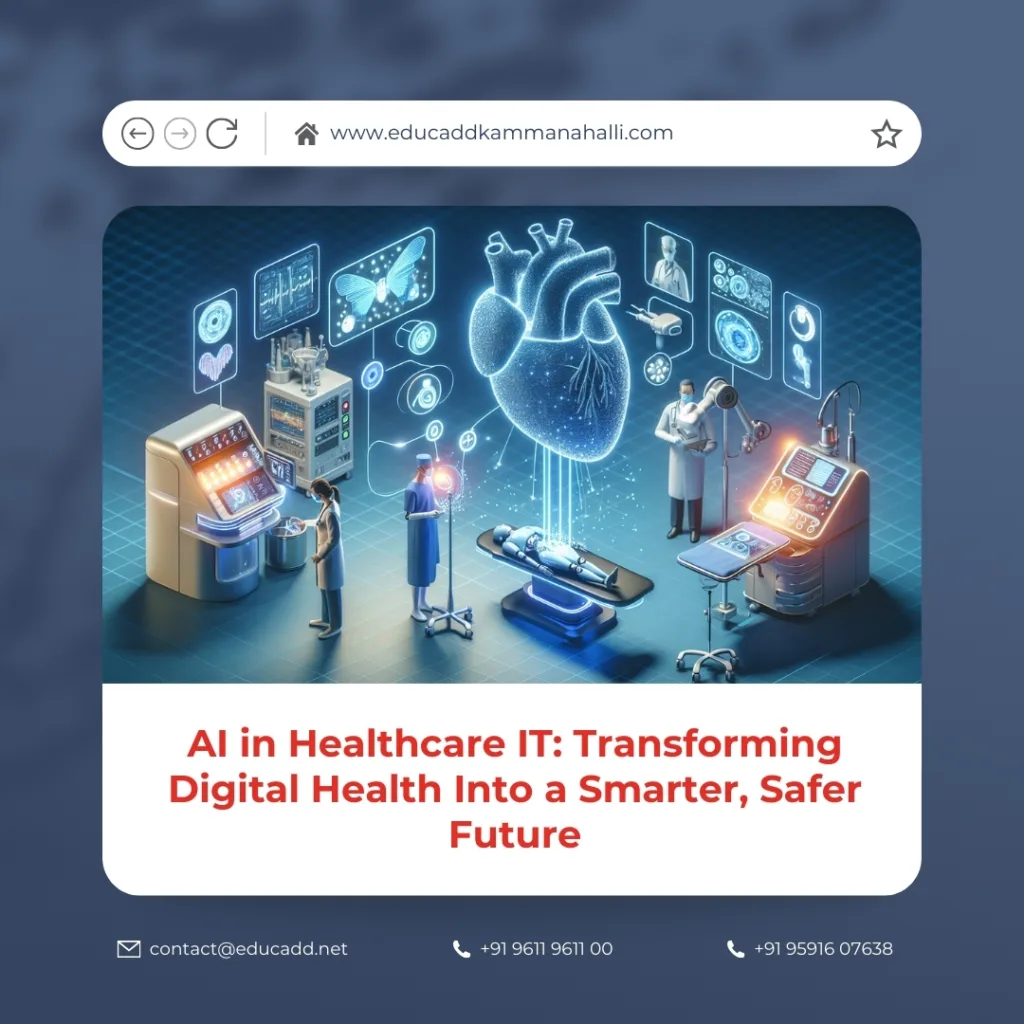
AI Healthcare IT Solutions
1. Understanding AI in Healthcare IT: The Foundation of Digital Intelligence
AI Healthcare IT Solutions refers to the use of machine learning, deep learning, natural language processing, and data analytics within healthcare information systems. These technologies allow systems to learn from data, identify patterns, and support decision-making. Unlike traditional software, AI-driven systems improve over time. They adapt to new datasets and clinical insights. Healthcare IT platforms now integrate AI to analyze electronic health records, medical images, genomic data, and real-time patient metrics. As a result, clinicians gain insights that were previously hidden. This foundational shift marks a step forward in digital health, where information becomes actionable intelligence rather than static records.
2. The Evolution of Healthcare IT in the Digital Health Era
Healthcare IT has evolved from paper-based records to complex digital ecosystems. Early systems focused on digitization. Electronic Health Records improved accessibility and storage. However, they often created data overload. AI addresses this challenge directly. By organizing, filtering, and interpreting data, AI transforms Healthcare IT into a dynamic support system. Digital health platforms now predict trends instead of only reporting history. This evolution enables healthcare organizations to move from reactive care to preventive strategies. Consequently, AI-driven Healthcare IT is no longer optional. It has become essential for modern healthcare delivery.
3. AI-Powered Diagnostics: Enhancing Accuracy and Speed
One of the most impactful applications of AI in Healthcare IT is diagnostics. AI algorithms analyze medical images, pathology slides, and radiology scans with remarkable precision. They detect anomalies that the human eye may overlook. Moreover, AI systems process thousands of images in minutes. This speed supports early diagnosis of conditions such as cancer, cardiovascular disease, and neurological disorders. When integrated into Healthcare IT systems, AI acts as a second opinion for clinicians. It reduces diagnostic errors and improves confidence in clinical decisions. Therefore, AI represents a significant step forward in digital health diagnostics.
4. Clinical Decision Support Systems: Smarter Choices at the Point of Care
Clinical Decision Support Systems powered by AI assist healthcare professionals during diagnosis and treatment planning. These systems analyze patient history, lab results, and clinical guidelines in real time. They then provide evidence-based recommendations. AI in Healthcare IT ensures that clinicians receive relevant insights without disrupting workflows. This support enhances consistency and reduces variability in care. Importantly, clinicians remain in control. AI provides guidance, not commands. As a result, patient outcomes improve while clinical autonomy remains intact.
5. Personalized Medicine Through AI-Driven Healthcare IT
Personalized medicine represents a major advancement in digital health. AI enables Healthcare IT systems to tailor treatments based on individual patient characteristics. These include genetics, lifestyle, medical history, and environmental factors. By analyzing complex datasets, AI identifies which therapies will be most effective for each patient. This approach reduces trial-and-error treatments. It also minimizes side effects. Personalized care strengthens patient trust and engagement. Therefore, AI Healthcare IT Solutions is a crucial driver of patient-centered digital health.
6. Predictive Analytics: Shifting From Reactive to Preventive Care
Predictive analytics is another powerful contribution of AI in Healthcare IT. AI models forecast disease progression, hospital readmissions, and potential complications. They analyze historical and real-time data to identify risk patterns. Healthcare providers can intervene early based on these predictions. Preventive care reduces costs and improves quality of life. Moreover, predictive insights support population health management. Healthcare organizations can allocate resources more effectively. This shift represents a strategic step forward in digital health transformation.
7. AI in Healthcare IT for Operational Efficiency
Beyond clinical applications, AI improves operational efficiency across healthcare systems. AI-driven scheduling optimizes appointment management. Automated billing and coding reduce administrative burden. Supply chain systems powered by AI forecast demand accurately. As a result, hospitals reduce waste and control costs. Healthcare IT becomes a strategic asset rather than a support function. By streamlining operations, AI allows healthcare professionals to focus more on patient care. Efficiency gains directly support better digital health outcomes.
8. Enhancing Patient Engagement With Intelligent Digital Platforms
Patient engagement is central to digital health success. AI-powered chatbots, virtual assistants, and remote monitoring tools enhance communication between patients and providers. These tools answer questions, remind patients about medications, and track symptoms. Integrated into Healthcare IT systems, they ensure continuity of care beyond hospital walls. Patients feel more connected and informed. This engagement improves adherence to treatment plans. Consequently, AI in Healthcare IT strengthens the patient-provider relationship in meaningful ways.
9. Data Management and Interoperability in AI-Driven Healthcare IT
Healthcare generates vast amounts of data. Managing this data effectively is a challenge. AI improves data integration and interoperability across systems. It standardizes formats and identifies inconsistencies. This capability ensures that information flows seamlessly between departments and organizations. Secure data sharing supports coordinated care. Furthermore, AI enhances data quality by identifying errors and gaps. Reliable data forms the backbone of digital health innovation. Thus, AI plays a vital role in strengthening Healthcare IT infrastructure.
10. Cybersecurity and Ethical Considerations in AI Healthcare Systems
As AI adoption increases, cybersecurity and ethics gain importance. Healthcare IT systems handle sensitive patient data. AI helps detect unusual patterns that indicate security threats. It strengthens defenses against cyberattacks. Ethical considerations also require attention. Transparency, fairness, and accountability must guide AI deployment. Healthcare organizations must ensure that AI models avoid bias. Responsible governance frameworks support trust. Addressing these challenges ensures that AI remains a positive force in digital health advancement.
11. AI and Telemedicine: Expanding Access to Quality Care
Telemedicine has become an integral part of digital health. AI enhances telemedicine platforms by supporting remote diagnostics and monitoring. AI analyzes patient data collected through wearable devices and home sensors. Clinicians receive timely insights during virtual consultations. This integration expands access to quality care, especially in rural and underserved areas. Healthcare IT systems powered by AI ensure continuity and reliability in remote care delivery. This expansion represents a significant step forward in healthcare accessibility.
12. Workforce Transformation: Supporting Healthcare Professionals With AI
AI in Healthcare IT transforms workforce dynamics. It reduces repetitive tasks and documentation burdens. Clinicians spend more time with patients. AI also supports training and education by simulating clinical scenarios. Decision support tools enhance learning and confidence. Rather than replacing professionals, AI augments their capabilities. This collaboration improves job satisfaction and reduces burnout. A supported workforce is essential for sustainable digital health progress.
13. Challenges in Implementing AI in Healthcare IT
Despite its potential, AI implementation faces challenges. Data quality issues can limit accuracy. Integration with legacy systems requires careful planning. Regulatory compliance demands rigorous validation. Change management is also critical. Healthcare professionals need training and trust in AI tools. Addressing these challenges requires collaboration between technology providers, clinicians, and policymakers. When managed effectively, these obstacles become opportunities for improvement. Overcoming them accelerates digital health maturity.
14. The Future Outlook: AI as the Backbone of Digital Health
The future of healthcare lies in intelligent, connected systems. AI will continue to evolve within Healthcare IT ecosystems. Advances in machine learning and real-time analytics will drive innovation. Digital health platforms will become more predictive and personalized. Collaboration between human expertise and artificial intelligence will define success. Healthcare organizations that embrace AI strategically will lead the transformation. This future promises safer, more efficient, and more compassionate care.
Conclusion
AI Healthcare IT Solutions represents a defining step forward in digital health. It transforms data into intelligence, supports clinicians, empowers patients, and improves outcomes. From diagnostics to operations, AI reshapes every aspect of healthcare delivery. While challenges remain, thoughtful implementation ensures long-term value. As healthcare systems continue to evolve, AI will remain a cornerstone of innovation. Embracing this technology today lays the foundation for a healthier, smarter, and more resilient healthcare future.

