
Civil CADD Techniques for High-Rise Buildings: Precision Engineering for Modern Skyscrapers
High-rise buildings define modern city skylines and represent the pinnacle of engineering, architecture, and construction innovation. Designing and constructing these massive structures requires exceptional precision, coordination, and planning. Traditional drafting methods once dominated the construction industry, but digital tools have now transformed how engineers design complex structures. One of the most influential technologies driving this transformation is Civil CADD High-Rise Techniques.
Civil CADD (Computer-Aided Design and Drafting) has become an essential tool for civil engineers, architects, and construction professionals who work on tall building projects. It allows professionals to create accurate drawings, detailed structural layouts, and coordinated infrastructure plans that reduce errors and improve construction efficiency. High-rise structures involve multiple systems such as foundations, structural frameworks, plumbing networks, electrical layouts, and transportation systems like elevators. Managing these components manually would be extremely difficult, but Civil CADD techniques simplify the process through digital modeling and precise drafting.
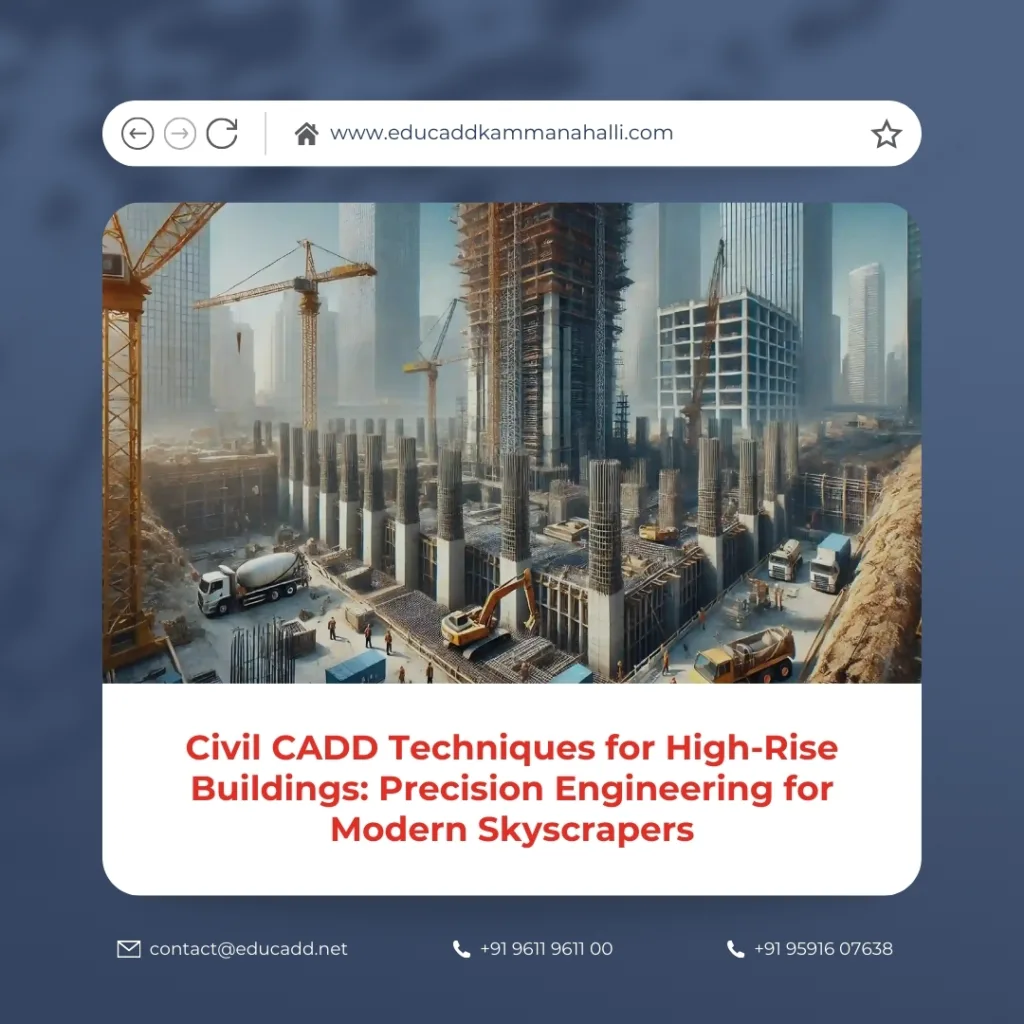
Civil CADD High-Rise Techniques
These techniques help engineers visualize designs before construction begins, allowing them to detect potential problems early. With advanced Civil CADD tools, professionals can develop 2D drawings, 3D models, site plans, and structural layouts that ensure stability and safety in tall buildings. As cities continue to grow vertically, the demand for skilled professionals who understand Civil CADD High-Rise Techniques is increasing rapidly. In this blog, we will explore the key techniques, benefits, and applications of Civil CADD in high-rise construction and how they contribute to efficient project execution.
Understanding the Importance of Civil CADD in High-Rise Construction
High-rise buildings present unique engineering challenges because they must withstand enormous structural loads, environmental forces, and complex service systems. Engineers rely heavily on Civil CADD High-Rise Techniques to address these challenges and create reliable structural designs.
Civil CADD enables engineers to produce highly accurate drawings that represent every component of a building project. From the initial concept to the final construction phase, digital drafting ensures that all design elements remain consistent and aligned. For example, when engineers design the foundation of a skyscraper, they must consider soil conditions, load distribution, and structural stability. Civil CADD tools allow them to analyze these factors and develop detailed foundation plans that reduce construction risks.
Another key advantage of Civil CADD is its ability to improve collaboration among different professionals involved in the project. Architects, structural engineers, electrical designers, and mechanical experts often work together on high-rise developments. With Civil CADD, these teams can share digital drawings and coordinate their designs effectively. As a result, the chances of design conflicts decrease significantly.
Furthermore, Civil CADD helps engineers maintain accuracy during large-scale construction projects. Even a small drafting error can lead to costly delays or structural problems in tall buildings. Therefore, using advanced Civil CADD techniques ensures that all design components align perfectly with the project requirements.
Site Planning and Layout Design Using Civil CADD
One of the first stages in high-rise construction involves proper site planning and layout development. Engineers use Civil CADD Techniques for High-Rise Buildings to design site plans that define building placement, access roads, drainage systems, and utility connections.
Site planning plays a crucial role in ensuring that the building integrates smoothly with its surrounding environment. Engineers must consider several factors such as land topography, soil conditions, nearby infrastructure, and zoning regulations. Civil CADD software enables professionals to analyze these factors and develop accurate site layouts.
Through digital mapping tools, engineers can generate contour maps and elevation profiles that help them understand the terrain of the construction site. These insights allow them to design foundations that adapt to the land conditions effectively. Additionally, Civil CADD assists in planning road access, parking spaces, and landscaping elements around the high-rise building.
Another important aspect of site planning is drainage design. Tall buildings often cover large areas, which can influence water flow during rainfall. Engineers use Civil CADD techniques to design drainage networks that prevent water accumulation and protect the building structure.
Structural Drafting Techniques for Skyscraper Stability
Structural stability is one of the most critical aspects of high-rise building construction. Engineers depend on Civil CADD Techniques for High-Rise Buildings to develop structural drawings that ensure the safety and durability of tall structures.
Structural drafting involves creating detailed plans for beams, columns, slabs, and load-bearing elements. Civil CADD tools allow engineers to produce precise drawings that illustrate how these components connect and distribute loads throughout the building.
High-rise buildings experience strong wind forces and seismic activities, especially in urban regions. Engineers must design structural systems that can withstand these forces without compromising safety. Civil CADD software provides simulation capabilities that help engineers test structural performance under different conditions.
Moreover, Civil CADD techniques support the creation of reinforcement detailing for concrete structures. Reinforcement bars must follow specific patterns and spacing to ensure structural strength. By using digital drafting tools, engineers can prepare reinforcement drawings that guide construction teams accurately.
Foundation Design and Geotechnical Integration
The foundation is the backbone of any high-rise building. A strong foundation ensures that the entire structure remains stable under heavy loads. Engineers apply Civil CADD Techniques for High-Rise Buildings to develop foundation layouts that match soil conditions and structural requirements.
High-rise buildings typically use deep foundations such as pile foundations or raft foundations. Civil CADD tools allow engineers to create detailed foundation plans that specify pile locations, depths, and reinforcement details. These drawings guide contractors during excavation and foundation construction.
Geotechnical data also plays a vital role in foundation design. Engineers analyze soil test results and integrate them into Civil CADD models to determine load-bearing capacity. By combining geotechnical insights with digital drafting techniques, they can design foundations that prevent settlement or structural instability.
Another advantage of Civil CADD is its ability to adjust designs quickly. If soil conditions change or new data becomes available, engineers can update foundation drawings without recreating the entire design. This flexibility saves both time and resources during project development.
Floor Plan Development for High-Rise Structures
Floor planning is a key component of skyscraper design. Engineers and architects use Civil CADD Techniques for High-Rise Buildings to create detailed floor plans that organize interior spaces efficiently.
Civil CADD allows designers to produce accurate floor layouts that include rooms, corridors, staircases, elevators, and service areas. These plans ensure that every floor of the building meets functional and safety requirements. For instance, emergency exit routes must follow strict building regulations. Civil CADD tools help designers position staircases and exits in optimal locations.
Another important aspect of floor planning involves vertical transportation systems. High-rise buildings require elevators and service lifts that move people and materials efficiently. Engineers use Civil CADD techniques to design elevator shafts and mechanical spaces that support these systems.
Additionally, Civil CADD software helps designers maintain consistency across multiple floors. Many high-rise buildings feature repetitive floor patterns. By using digital drafting tools, engineers can replicate these layouts while maintaining precision throughout the design process.
Utility and Infrastructure Planning
Modern skyscrapers require complex infrastructure systems that support water supply, drainage, electricity, and communication networks. Engineers rely on Civil CADD High-Rise Techniques to plan these utilities accurately.
Civil CADD tools allow professionals to design piping networks, electrical conduits, and ventilation pathways within the building structure. These systems must fit within limited spaces without interfering with structural components. Therefore, precise drafting is essential.
Water supply systems are particularly important in tall buildings. Engineers must ensure that water reaches upper floors with adequate pressure. Civil CADD software helps them design pump systems, storage tanks, and distribution pipelines that maintain reliable water flow.
Similarly, electrical planning requires careful coordination with other building systems. Civil CADD techniques help engineers organize cable trays, switch rooms, and power distribution networks in a structured manner. As a result, maintenance and troubleshooting become easier after construction.
3D Modeling for High-Rise Visualization
Visualization plays a major role in modern construction projects. Engineers use Civil CADD Techniques for High-Rise Buildings to create 3D models that represent the entire structure before construction begins.
3D modeling allows project teams to understand how different components interact within the building. Structural elements, architectural features, and service systems can all be visualized in a single digital environment. This comprehensive view helps engineers detect design conflicts early.
Another advantage of 3D modeling is improved communication with stakeholders. Clients, investors, and construction teams can examine the digital model to understand the project clearly. This transparency helps decision-makers approve designs faster.
Moreover, 3D models support construction planning by providing accurate dimensions and spatial relationships. Contractors can use these models to plan material usage, equipment placement, and construction sequences effectively.
Reinforcement Detailing Techniques
Reinforcement detailing is essential for ensuring the strength and durability of concrete structures in high-rise buildings. Engineers apply Civil CADD Techniques for High-Rise Buildings to prepare reinforcement drawings that guide construction teams.
Civil CADD software allows engineers to create detailed bar bending schedules, reinforcement layouts, and sectional views. These drawings specify the size, spacing, and placement of steel bars within concrete elements.
Accurate reinforcement detailing helps prevent structural weaknesses that may occur due to improper bar placement. It also improves construction efficiency because workers can follow clear instructions from the drawings.
Furthermore, Civil CADD tools make it easier to modify reinforcement designs when structural changes occur. Engineers can update drawings quickly while maintaining consistency across the project documentation.
Construction Documentation and Drafting Standards
High-rise construction projects require extensive documentation to guide contractors and ensure compliance with engineering standards. Engineers use Civil CADD Techniques for High-Rise Buildings to prepare these documents with high accuracy.
Construction documentation includes structural drawings, site plans, section views, and detailed specifications. Civil CADD software ensures that these documents follow standardized drafting conventions, which improves readability and consistency.
Clear documentation reduces confusion on construction sites. Contractors can interpret drawings easily and execute tasks according to the design requirements. As a result, project delays and costly mistakes become less likely.
Additionally, Civil CADD tools allow engineers to maintain digital archives of project drawings. These records help facility managers perform maintenance and renovation work in the future.
Coordination Between Engineering Disciplines
High-rise buildings involve collaboration among multiple engineering disciplines. Structural engineers, architects, mechanical engineers, and electrical designers must coordinate their work effectively. Civil CADD Techniques for High-Rise Buildings play a crucial role in achieving this coordination.
Digital drafting platforms allow professionals to share drawings and integrate different systems into a unified design. For example, mechanical ducts must not interfere with structural beams or electrical cables. Civil CADD tools help identify such conflicts during the design phase.
This coordinated approach reduces construction errors and ensures that all systems operate efficiently within the building structure. It also improves project timelines because teams can resolve issues before construction begins.
Accuracy and Error Reduction in High-Rise Design
Accuracy is essential when designing tall structures. Engineers depend on Civil CADD High-Rise Techniques to minimize drafting errors and maintain precision throughout the design process.
Digital drafting eliminates many mistakes that often occur in manual drawings. Engineers can use measurement tools, alignment guides, and automated commands to create exact dimensions and layouts.
Civil CADD software also supports revision management. When design changes occur, engineers can update drawings without compromising accuracy. These updates ensure that construction teams always work with the latest design information.
As a result, Civil CADD techniques contribute to safer structures and smoother construction processes.
Enhancing Construction Efficiency Through Digital Drafting
Efficiency plays a major role in the success of large construction projects. Engineers use Civil CADD Techniques for High-Rise Buildings to streamline design workflows and accelerate project development.
Digital drafting tools allow engineers to reuse templates, standard components, and predefined layouts. This approach reduces the time required to create complex drawings from scratch.
Civil CADD also supports automated calculations and dimensioning, which improves productivity and reduces manual effort. Engineers can focus more on design optimization rather than repetitive drafting tasks.
Furthermore, digital files can be shared instantly with project teams, enabling faster communication and decision-making during the construction process.
Future Trends in Civil CADD for High-Rise Construction
Technology continues to evolve rapidly in the construction industry. New innovations are expanding the capabilities of Civil CADD Techniques for High-Rise Buildings and transforming how engineers design tall structures.
One emerging trend is the integration of Civil CADD with Building Information Modeling (BIM). BIM platforms combine design data, construction schedules, and cost information into a unified digital model. This integration provides deeper insights into project performance and lifecycle management.
Another trend involves the use of artificial intelligence and automation in design processes. Advanced software tools can analyze structural data and suggest optimized design solutions. These technologies will help engineers develop safer and more efficient high-rise buildings.
Additionally, cloud-based collaboration platforms are improving teamwork among global design teams. Engineers can access project drawings from anywhere, which enhances coordination and productivity.
Conclusion
High-rise buildings represent the future of urban development, and their construction demands exceptional accuracy, planning, and coordination. Civil CADD High-Rise Techniques have become indispensable tools for engineers and architects who design these towering structures.
From site planning and structural drafting to reinforcement detailing and infrastructure design, Civil CADD techniques support every stage of the construction process. They improve accuracy, reduce design conflicts, and enhance collaboration among project teams. By using digital drafting tools, engineers can visualize complex structures, optimize designs, and ensure that construction projects proceed smoothly.
As technology continues to advance, Civil CADD will remain a vital component of modern engineering practices. Its integration with emerging technologies such as BIM and AI will further enhance design capabilities and construction efficiency. Professionals who master Civil CADD techniques will play a crucial role in shaping the skylines of tomorrow’s cities.

