
Office Interior Design for Productivity: Creating Workspaces That Inspire Focus, Creativity, and Peak Performance
Modern workplaces are evolving faster than ever as businesses recognize how strongly physical environments influence employee efficiency, engagement, and overall job satisfaction. Office Interior Design Productivity is no longer limited to arranging desks and chairs neatly; it is now a strategic approach that blends ergonomics, psychology, aesthetics, and technology to build spaces that actively support performance. When a workplace is thoughtfully designed, employees feel energized, motivated, and comfortable, which directly improves the quality of their work. From lighting and color schemes to layout planning and acoustic balance, every design choice affects how people think, collaborate, and deliver results. Companies that invest in Office Interior Design for Productivity often experience reduced absenteeism, better teamwork, stronger brand identity, and higher employee retention.
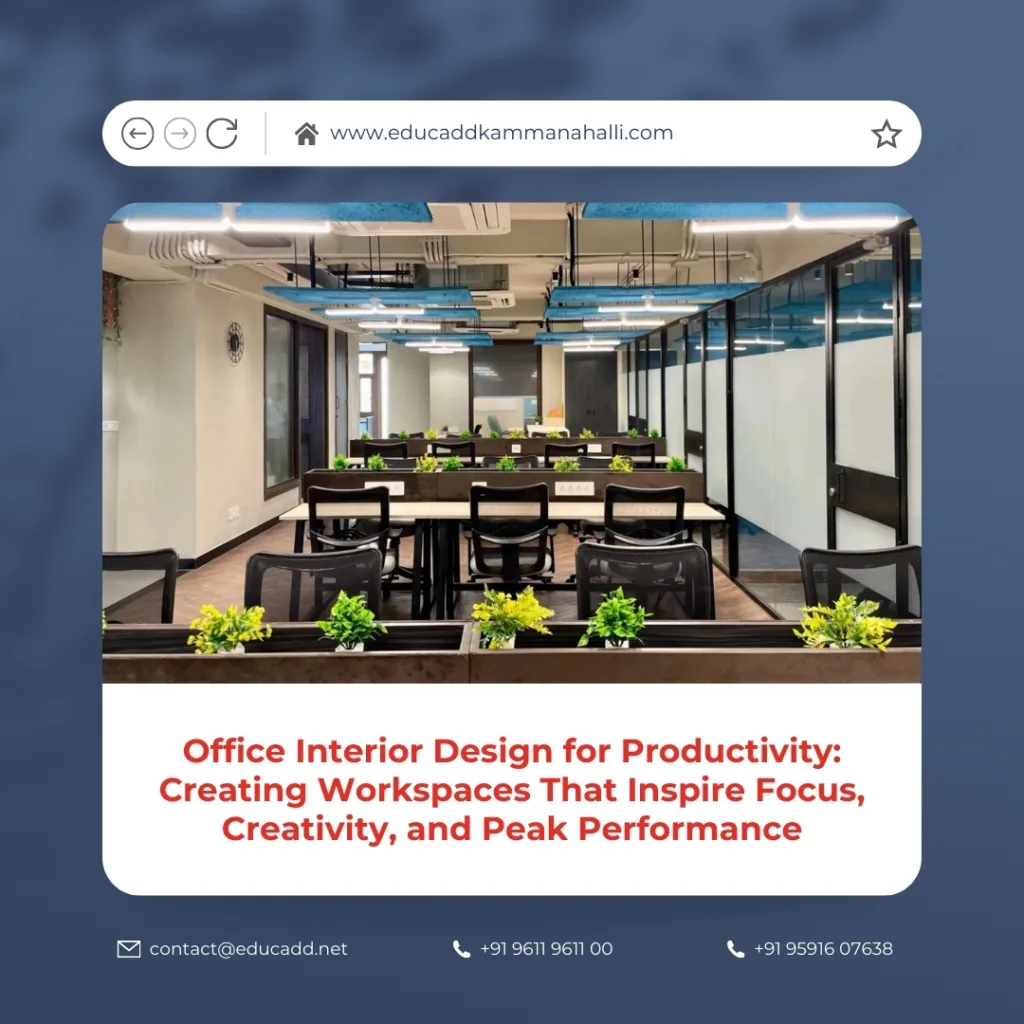
Office Interior Design Productivity
A productive office environment encourages clarity of thought, minimizes distractions, and supports both independent tasks and collaborative activities. As hybrid work models grow and employee expectations change, organizations must create workspaces that feel purposeful and inspiring rather than rigid and exhausting. The right design transforms an office into a space where creativity flows naturally and employees feel mentally refreshed throughout the day. Understanding how interior design shapes behavior helps businesses create environments that support well-being while maximizing operational efficiency.
1. The Psychology Behind Productive Workspaces
Office Interior Design Productivity is deeply connected to environmental psychology, which studies how surroundings influence human behavior and emotional responses. People react subconsciously to spatial arrangements, lighting conditions, and visual balance. When an office feels cluttered or poorly organized, stress levels increase and concentration declines. In contrast, a well-structured environment promotes mental clarity and encourages focused thinking. Open pathways, balanced proportions, and visually pleasing layouts reduce cognitive overload and make navigation effortless. Employees working in psychologically supportive environments tend to experience improved mood and stronger motivation. Design elements such as symmetry, natural materials, and orderly storage solutions help create a sense of control and stability. When workers feel comfortable within their environment, they devote more mental energy to meaningful tasks rather than distractions. Office Interior Design for Productivity also considers how different personalities interact with space, ensuring that both extroverts and introverts find areas where they can perform at their best. By designing with human psychology in mind, organizations create workspaces that naturally support efficient work habits and sustained attention.
2. Space Planning and Functional Layouts
Effective space planning forms the backbone of Office Interior Design because layout determines how easily employees move, communicate, and access resources. A poorly planned office leads to unnecessary movement, interruptions, and wasted time. Strategic layouts group related departments together to streamline collaboration while reducing noise spillover into focused work zones. Designers carefully analyze workflow patterns before deciding where meeting rooms, collaborative hubs, and individual workstations should be placed. Flexible floor plans allow organizations to adapt quickly as team sizes change or project demands shift. Clear pathways ensure safe and comfortable movement while preventing congestion during peak hours. Functional zoning separates quiet areas from high-traffic zones so employees can choose spaces that match their tasks. Breakout spaces placed strategically between work zones provide areas for quick discussions without disturbing others. Office Interior Design for Productivity also considers accessibility, ensuring every employee can navigate comfortably regardless of physical ability. When layout supports workflow rather than obstructing it, employees experience fewer disruptions and maintain consistent performance throughout the day.
3. Ergonomic Furniture for Comfort and Efficiency
Physical discomfort is one of the biggest barriers to sustained concentration, which makes ergonomic furniture essential in Office Interior Design for Productivity. Employees who sit for long hours often experience fatigue, back pain, and posture issues that reduce efficiency. Ergonomic chairs with lumbar support, adjustable armrests, and seat height controls help maintain healthy posture and minimize strain. Height-adjustable desks allow workers to alternate between sitting and standing, which improves circulation and reduces stiffness. Monitor stands positioned at eye level prevent neck strain and promote comfortable viewing angles. Proper keyboard placement supports natural wrist alignment and prevents repetitive stress injuries. Office Interior Design for Productivity prioritizes user-friendly furniture that adapts to individual needs rather than forcing employees into rigid positions. Comfortable employees remain focused for longer periods and take fewer breaks caused by physical discomfort. When workers feel physically supported, their mental stamina improves, leading to higher-quality output. Investing in ergonomic design demonstrates that an organization values employee well-being, which strengthens morale and long-term loyalty.
4. Lighting Design That Enhances Focus
Lighting significantly influences mood, alertness, and visual comfort, making it a critical factor in Office Interior Design for Productivity. Poor lighting causes eye strain, headaches, and fatigue, which reduce concentration levels. Natural light is highly beneficial because it regulates circadian rhythms and improves mental alertness. Offices designed with large windows, glass partitions, and skylights allow daylight to spread evenly across workspaces. Artificial lighting should complement natural light by maintaining consistent brightness without glare. Layered lighting strategies combine ambient lighting for overall illumination, task lighting for focused work, and accent lighting for visual appeal. LED lighting systems with adjustable brightness allow employees to customize their environment according to their needs. Office Interior Design for Productivity avoids overly harsh fluorescent lights that create discomfort and visual fatigue. Warm lighting tones create a welcoming atmosphere, while cooler tones support alertness in task-focused zones. Proper lighting reduces visual stress, maintains energy levels, and enhances attention to detail, enabling employees to work efficiently throughout the day.
5. Color Psychology and Workplace Mood
Color influences emotions and cognitive responses more strongly than many people realize, making it an important element of Office Interior Design for Productivity. Calm colors such as blues and greens promote relaxation and sustained focus, making them ideal for concentrated work areas. Energetic tones like yellow and orange stimulate creativity and enthusiasm when used thoughtfully in collaborative spaces. Neutral shades provide balance and prevent visual overload while supporting a professional atmosphere. Accent colors can be introduced strategically to guide movement and highlight important zones. Office Interior Design for Productivity uses color zoning to subtly influence how employees interact with different spaces. Overly bright or clashing colors may create restlessness and distraction, which reduces performance. Harmonious color palettes create visual consistency that supports mental clarity. Cultural preferences and brand identity should also guide color choices to ensure alignment with organizational values. When color schemes are carefully selected, workplaces feel vibrant without becoming overwhelming, helping employees remain calm, focused, and motivated.
6. Acoustic Control and Noise Management
Noise distractions disrupt concentration and reduce work accuracy, which is why sound management plays a major role in Office Interior Design Productivity. Open offices often struggle with excessive noise caused by conversations, phone calls, and equipment sounds. Acoustic panels, sound-absorbing ceilings, and fabric partitions help reduce echo and background noise. Carpets and soft furnishings further absorb sound vibrations and create a quieter environment. Dedicated quiet zones allow employees to work without interruptions when tasks require deep focus. Enclosed meeting pods prevent discussions from disturbing others while maintaining accessibility. Office Interior Design for Productivity integrates white noise systems that mask distracting sounds without causing discomfort. Strategic placement of collaborative zones away from focused work areas reduces noise conflicts. By controlling sound levels, offices create environments where employees can concentrate without mental fatigue. Effective acoustic design improves communication clarity and supports a calm atmosphere where productivity thrives consistently.
7. Biophilic Design and Natural Elements
Biophilic design connects indoor spaces with nature, which significantly enhances Office Interior Design for Productivity. Humans naturally respond positively to natural elements such as plants, sunlight, and organic textures. Indoor plants improve air quality while adding visual freshness that reduces stress levels. Natural materials like wood and stone create warm environments that feel inviting and balanced. Access to outdoor views provides mental relaxation and supports creative thinking. Water features and green walls introduce calming sensory experiences that enhance workplace ambiance. Office Interior Design for Productivity incorporates nature-inspired patterns and textures to create soothing environments even in urban settings. Exposure to natural elements has been shown to improve cognitive performance and emotional well-being. Employees working in biophilic spaces often report higher satisfaction and reduced fatigue. Integrating natural features helps create restorative environments where employees feel refreshed and energized throughout the day.
8. Flexible Workspaces for Modern Teams
Workstyles are changing rapidly, and Office Interior Design for Productivity must accommodate flexibility and mobility. Modular furniture allows teams to reconfigure spaces quickly based on project needs. Movable partitions create temporary meeting areas without permanent structural changes. Hot-desking zones support hybrid workers who split time between home and office. Collaborative lounges encourage informal brainstorming sessions in relaxed settings. Multipurpose rooms function as training spaces, meeting rooms, or creative studios depending on requirements. Office Interior Design for Productivity embraces adaptability so organizations can respond efficiently to evolving work demands. Flexible environments empower employees to choose work settings that match their tasks and preferences. This autonomy improves comfort, creativity, and efficiency. By designing adaptable spaces, companies future-proof their workplaces and maintain productivity across changing operational models.
9. Technology Integration for Seamless Workflows
Technology should blend smoothly with design to support Office Interior Design for Productivity without creating clutter or complexity. Cable management systems prevent tangled wires and maintain organized workstations. Smart conference rooms equipped with wireless presentation tools simplify meetings and save time. Interactive screens enable collaborative brainstorming and digital presentations. Charging stations placed conveniently across the office ensure devices remain powered without disruption. Office Interior Design for Productivity also includes soundproof booths for virtual meetings, supporting hybrid communication. Automated lighting and climate control systems enhance comfort while conserving energy. Seamless technology integration reduces operational friction and allows employees to focus on their tasks rather than technical difficulties. Well-designed digital infrastructure enhances efficiency while maintaining a clean and modern aesthetic.
10. Collaborative Zones That Encourage Innovation
Collaboration drives innovation, and Office Interior Design for Productivity must support effective teamwork. Dedicated collaboration zones provide comfortable seating, writable surfaces, and flexible layouts for brainstorming sessions. Casual meeting areas encourage spontaneous discussions that often lead to creative solutions. Transparent glass partitions maintain openness while controlling noise levels. Shared tables promote teamwork and strengthen interpersonal connections. Office Interior Design for Productivity ensures collaborative spaces remain visually distinct from quiet zones to prevent disruption. Comfortable and inviting meeting areas make teamwork more engaging and productive. These spaces foster knowledge sharing and strengthen team cohesion. When collaboration feels natural and comfortable, organizations benefit from improved creativity and faster problem-solving.
11. Private Spaces for Deep Focus
While collaboration is essential, employees also need privacy for tasks that require concentration. Office Interior Design for Productivity includes quiet rooms, focus pods, and private cabins where distractions are minimized. Soundproof booths allow employees to attend confidential calls without interruption. Individual workstations with privacy panels help reduce visual distractions. Calm lighting and minimal décor create environments that encourage deep thinking. Office Interior Design for Productivity balances openness with personal space to support diverse work styles. Providing private zones helps employees manage workloads efficiently and maintain consistent performance. Focus-friendly environments reduce stress and improve task accuracy, ensuring high-quality outcomes.
12. Storage Solutions and Clutter-Free Environments
Cluttered spaces create mental overload and reduce efficiency, making organized storage essential in Office Interior Design for Productivity. Built-in cabinets, modular shelves, and concealed storage units maintain clean and tidy workstations. Personal lockers provide secure storage while reducing desk clutter. Smart filing systems help employees locate documents quickly without wasting time. Minimalist design principles create visually calm environments that enhance focus. Office Interior Design for Productivity emphasizes functional organization that improves workflow efficiency. Clear desks promote mental clarity and reduce distractions, allowing employees to concentrate on meaningful tasks.
13. Branding and Workplace Identity
Office spaces should reflect organizational values and culture, reinforcing identity through Office Interior Design for Productivity. Brand colors, logos, and visual themes create a cohesive atmosphere that strengthens belonging. Inspirational graphics and mission statements remind employees of shared goals. Consistent design language across spaces builds a professional image for clients and visitors. Office Interior Design for Productivity integrates branding subtly without overwhelming functionality. A well-branded office fosters pride and emotional connection among employees. When workers feel aligned with organizational identity, motivation and engagement naturally increase.
14. Employee Wellness and Recreational Spaces
Employee well-being strongly influences performance, making wellness areas essential in Office Interior Design for Productivity. Relaxation lounges provide spaces where employees can recharge during breaks. Fitness rooms encourage physical activity that improves energy and mental clarity. Game zones offer stress relief and strengthen team bonding. Cafeterias designed with comfortable seating promote social interaction and relaxation. Office Interior Design for Productivity recognizes the importance of balancing work intensity with mental recovery. Wellness-focused spaces reduce burnout and support long-term productivity. Employees who feel cared for maintain stronger commitment and positive morale.
Conclusion
Office Interior Design Productivity is a strategic investment that shapes how employees think, collaborate, and perform every day. A well-designed office does more than look visually appealing; it creates an ecosystem that supports focus, creativity, comfort, and well-being. Thoughtful space planning, ergonomic furniture, balanced lighting, effective acoustics, and flexible layouts collectively build environments where employees thrive. Natural elements, technology integration, collaborative zones, and private workspaces ensure that diverse tasks and personalities are accommodated efficiently. Organized storage, strong branding, and wellness facilities further enhance workplace satisfaction and engagement. Businesses that prioritize Office Interior Design for Productivity gain measurable benefits including improved efficiency, stronger teamwork, reduced stress, and higher employee retention. As work culture continues to evolve, organizations must design offices that adapt to changing needs while maintaining comfort and inspiration. A productivity-focused workspace empowers employees to deliver their best performance consistently and transforms the office into a dynamic hub of innovation and growth.

