
Corporate Interior Design Planning Strategies That Transform Workspaces into High-Performance Environments
Corporate spaces are no longer designed only to accommodate desks and meeting rooms. Modern organizations expect workplaces to inspire productivity, reflect brand identity, and support employee well-being. Thoughtful Corporate Interior Design Strategies help companies create environments that align aesthetics with functionality while adapting to evolving business needs. A well-planned office improves collaboration, strengthens culture, enhances employee satisfaction, and impresses clients.
Today’s businesses must consider space utilization, technological integration, sustainability, flexibility, and human comfort when shaping office interiors. Strategic planning ensures every square foot serves a purpose and contributes to operational efficiency. Without proper planning, companies face wasted space, poor workflow, employee discomfort, and higher long-term costs.
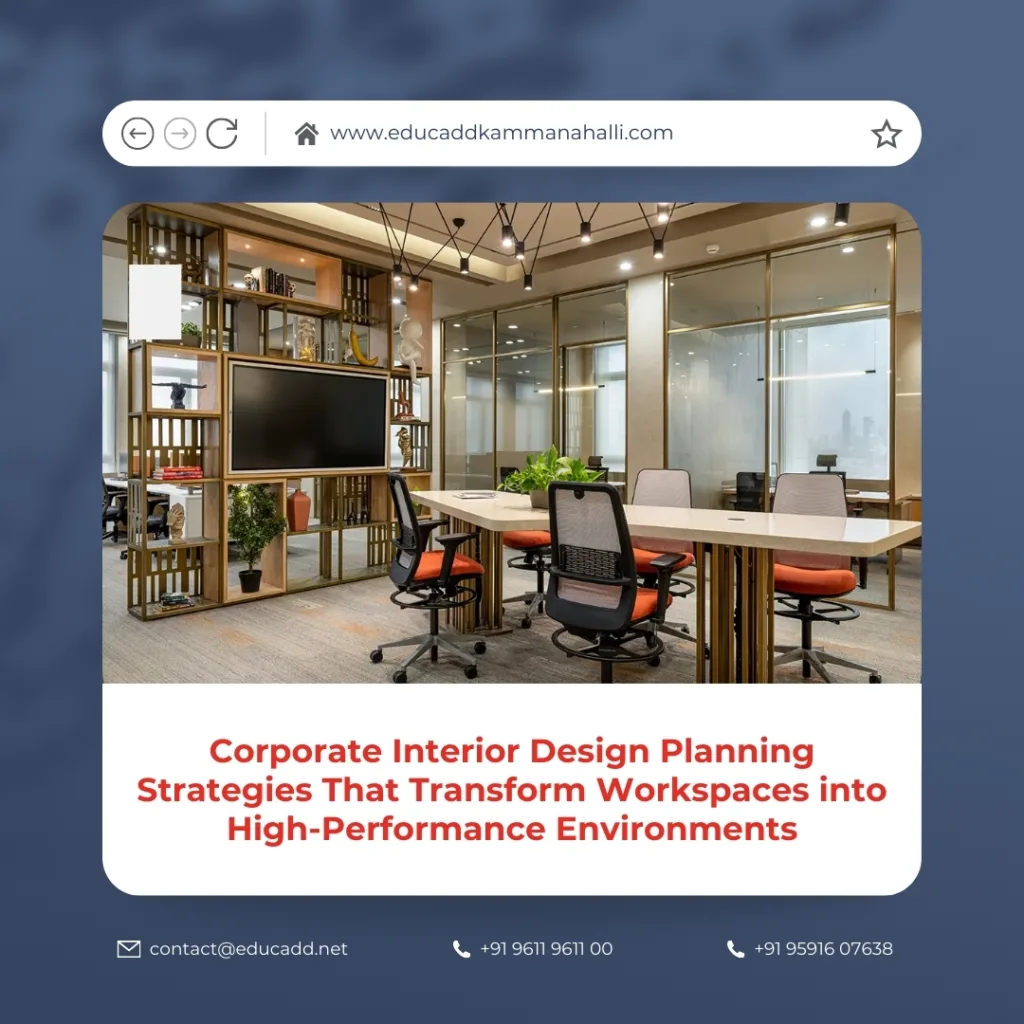
Corporate Interior Design Strategies
This comprehensive guide explores Corporate Interior Design Planning Strategies that enable organizations to design intelligent, flexible, and future-ready workspaces. It covers essential planning principles, layout optimization, design psychology, brand integration, sustainability approaches, lighting systems, furniture planning, technology infrastructure, safety compliance, cost management, and post-implementation evaluation.
By applying these strategies, businesses can create professional environments that encourage innovation, maximize performance, and support long-term growth.
1. Understanding Organizational Needs and Workplace Goals
Successful Corporate Interior Design Strategies begin with a clear understanding of business objectives and employee requirements. Every organization operates differently, so interior planning must reflect workflow patterns, team structures, and operational priorities.
Designers and decision-makers should evaluate how employees interact with their environment and identify challenges that limit productivity. A detailed needs assessment prevents costly redesigns and ensures that space supports daily activities.
Key evaluation areas include:
• Nature of work performed by each department
• Level of collaboration required between teams
• Requirement for private offices versus open spaces
• Frequency of client visits and meetings
• Storage needs for documents and equipment
• Technology usage and infrastructure demands
• Employee comfort expectations
Workplace goals also shape Corporate Interior Design Planning Strategies. A technology startup may prioritize collaborative zones and creative lounges, while a law firm may require privacy and formal meeting rooms.
Important workplace goals to define:
• Improving employee productivity
• Encouraging teamwork and communication
• Reinforcing brand identity
• Supporting employee wellness
• Enabling future expansion
• Optimizing space efficiency
Clear goal setting creates a strong design foundation and ensures that planning decisions align with business growth strategies.
2. Space Planning and Layout Optimization
Space planning forms the backbone of effective Corporate Interior Design Strategies. It determines how efficiently an organization utilizes available space while ensuring smooth movement and accessibility.
A well-optimized layout improves workflow and reduces congestion. It also supports better communication between departments without sacrificing privacy where needed.
Popular office layout styles include:
• Open Plan Layout – Encourages collaboration and flexible seating
• Cubicle Layout – Provides personal workspace with moderate privacy
• Private Office Layout – Suitable for senior management and confidential tasks
• Hybrid Layout – Combines open areas with enclosed meeting rooms
• Activity-Based Layout – Provides dedicated zones for specific tasks
Strategic zoning improves navigation and workplace efficiency.
Essential workplace zones:
• Focus zones for individual work
• Collaboration zones for teamwork
• Informal discussion areas
• Meeting and conference rooms
• Reception and waiting areas
• Breakout and refreshment spaces
Traffic flow must remain smooth between departments. Designers should avoid narrow pathways and cluttered corridors. Efficient layouts reduce distractions and support operational continuity.
3. Balancing Functionality with Aesthetic Appeal
Modern Corporate Interior Design Planning Strategies emphasize the balance between practical functionality and visual appeal. An office must look professional while supporting daily operations without friction.
Functional design ensures that employees access resources easily and perform tasks efficiently. Meanwhile, aesthetic design shapes emotional responses and creates a welcoming environment.
Functional planning priorities:
• Logical workstation placement
• Ergonomic furniture selection
• Accessible storage systems
• Adequate meeting facilities
• Noise control mechanisms
Aesthetic planning priorities:
• Harmonious color schemes
• Balanced material combinations
• Professional décor elements
• Visually pleasing lighting
• Clean and organized layouts
A well-designed workspace enhances motivation and reduces stress. When design supports comfort and usability, employee engagement improves significantly.
4. Brand Identity Integration into Workplace Design
Corporate interiors serve as physical representations of a company’s brand identity. Strong Corporate Interior Design Planning Strategies ensure that office environments reflect organizational values, culture, and vision.
Clients and visitors often form first impressions based on office design. A consistent brand environment builds trust and strengthens credibility.
Brand integration techniques include:
• Incorporating brand colors into walls and furnishings
• Displaying company logos in reception areas
• Using branded design elements in meeting rooms
• Showcasing mission statements through wall graphics
• Integrating brand storytelling through design themes
Workspaces that visually align with brand identity foster employee pride and strengthen internal culture. Employees feel more connected to organizational goals when surroundings reflect company values.
5. Employee-Centric and Wellness-Focused Design
Employee well-being plays a crucial role in Corporate Interior Design Strategies. Healthy employees perform better, stay motivated longer, and contribute positively to workplace culture.
Designers must prioritize comfort, ergonomics, and mental wellness while planning office spaces.
Wellness-focused strategies include:
• Ergonomic seating and adjustable desks
• Access to natural daylight
• Indoor plants and green design elements
• Quiet zones for focused work
• Comfortable breakout spaces
Biophilic design improves emotional well-being by connecting employees with natural elements.
Benefits of employee-centric design:
• Reduced workplace stress
• Lower absenteeism
• Improved concentration
• Higher job satisfaction
• Enhanced creativity
When businesses invest in employee comfort, productivity and retention rates increase significantly.
6. Smart Lighting Design for Productivity
Lighting strongly influences mood, alertness, and efficiency. Effective Corporate Interior Design Planning Strategies use layered lighting systems that combine natural and artificial sources.
Poor lighting causes eye strain, fatigue, and reduced concentration. Balanced lighting improves visual comfort and workplace performance.
Key lighting layers include:
• Ambient lighting for general illumination
• Task lighting for focused workstations
• Accent lighting for aesthetic highlights
• Natural daylight through windows and skylights
Smart lighting systems allow brightness adjustments based on work requirements. Warm lighting suits relaxation areas, while cool lighting enhances concentration zones.
Lighting design benefits:
• Improved employee alertness
• Enhanced visual comfort
• Reduced energy consumption
• Elevated office aesthetics
Proper lighting creates an inviting atmosphere and supports employee efficiency.
7. Flexible Furniture and Modular Workspaces
Flexibility remains a priority in modern Corporate Interior Design Planning Strategies. Businesses evolve rapidly, so workspaces must adapt to changing workforce sizes and operational models.
Modular furniture allows companies to reconfigure layouts easily without major renovations.
Flexible design elements include:
• Adjustable desks and chairs
• Movable partitions
• Modular workstations
• Multi-purpose meeting tables
• Stackable seating options
Adaptable workspaces support hybrid work models and dynamic team collaborations.
Advantages of modular setups:
• Easy layout reconfiguration
• Cost savings during expansion
• Improved space efficiency
• Better team collaboration
Flexible environments help organizations remain agile and prepared for future changes.
8. Acoustic Planning and Noise Management
Noise distractions reduce productivity and concentration. Smart Corporate Interior Design Planning Strategies include acoustic solutions that create balanced sound environments.
Offices must minimize disruptive noise while maintaining open communication where needed.
Effective acoustic solutions include:
• Sound-absorbing ceiling panels
• Acoustic wall partitions
• Carpeted flooring for noise reduction
• Enclosed meeting pods
• White noise systems
Strategic material selection also helps reduce echo and reverberation.
Benefits of noise control:
• Improved focus levels
• Enhanced speech clarity
• Reduced employee stress
• Better meeting privacy
Acoustically balanced offices foster comfortable and productive work environments.
9. Technology Integration and Smart Infrastructure
Modern offices depend on seamless technology integration. Corporate Interior Design Planning Strategies must accommodate digital tools, communication systems, and future technological upgrades.
Poor infrastructure planning leads to cable clutter and operational inefficiencies.
Key technology considerations include:
• Structured cabling systems
• High-speed internet connectivity
• Smart conference room setups
• Wireless charging stations
• Interactive presentation displays
Smart offices also incorporate automation systems for lighting, climate control, and security.
Benefits of technology-enabled design:
• Enhanced communication efficiency
• Reduced operational downtime
• Improved meeting experiences
• Streamlined workflow processes
Technology-friendly environments support innovation and modern business operations.
10. Sustainable and Eco-Friendly Office Planning
Sustainability has become central to Corporate Interior Design Planning Strategies. Eco-friendly workplaces reduce environmental impact while improving brand reputation.
Green design minimizes energy consumption and promotes healthier indoor environments.
Sustainable design practices include:
• Energy-efficient lighting systems
• Recycled and low-VOC materials
• Smart HVAC systems
• Water-efficient fixtures
• Indoor plants for air purification
Organizations also adopt sustainable furniture made from recycled materials.
Benefits of sustainable planning:
• Reduced operational costs
• Healthier indoor air quality
• Positive corporate image
• Compliance with environmental standards
Eco-friendly offices demonstrate corporate responsibility and long-term commitment to sustainability.
11. Safety Compliance and Risk Management
Workplace safety remains essential in Corporate Interior Design Planning Strategies. Office environments must comply with building codes and occupational safety standards.
Proper planning reduces risks and protects employees and visitors.
Critical safety elements include:
• Fire safety systems and alarms
• Emergency exit pathways
• Slip-resistant flooring
• Proper electrical installations
• Adequate ventilation systems
Ergonomic planning also prevents workplace injuries.
Safety planning benefits:
• Reduced accident risks
• Legal compliance
• Improved employee confidence
• Business continuity protection
Safe work environments ensure smooth operations and legal protection.
12. Budget Planning and Cost Optimization
Effective budgeting ensures that Corporate Interior Design Planning Strategies remain financially feasible. Cost planning must balance quality, durability, and aesthetics.
Businesses should prioritize long-term value instead of short-term savings.
Budget planning steps include:
• Estimating project scope and requirements
• Prioritizing essential design elements
• Comparing vendor quotations
• Allocating contingency funds
• Monitoring expenses regularly
Investing in durable materials reduces maintenance costs over time.
Cost optimization strategies include:
• Phased implementation
• Modular furniture investments
• Energy-efficient systems
• Vendor negotiation
Financial planning prevents overspending and ensures maximum return on investment.
13. Project Management and Execution Strategy
Strong project management ensures successful implementation of Corporate Interior Design Planning Strategies. Poor coordination causes delays, budget overruns, and design inconsistencies.
A structured execution plan keeps projects on schedule.
Key execution stages include:
• Concept development
• Design approval
• Material procurement
• Construction and installation
• Quality inspections
Regular stakeholder communication prevents misunderstandings.
Project management benefits:
• Timely completion
• Quality assurance
• Budget control
• Smooth workflow coordination
Efficient execution transforms design concepts into functional workspaces.
14. Post-Implementation Evaluation and Future Upgrades
Corporate Interior Design Planning Strategies do not end after project completion. Continuous evaluation ensures that workplace design meets evolving business needs.
Post-occupancy assessments identify improvement areas.
Evaluation methods include:
• Employee feedback surveys
• Space utilization analysis
• Energy consumption monitoring
• Workflow efficiency reviews
Organizations should plan periodic upgrades to maintain relevance.
Future-ready strategies include:
• Flexible expansion planning
• Technology infrastructure upgrades
• Furniture reconfiguration options
• Sustainable material replacements
Ongoing improvements keep workplaces modern, efficient, and competitive.
Conclusion
Effective Corporate Interior Design Strategies enable organizations to create workplaces that combine functionality, aesthetics, flexibility, and sustainability. Strategic planning improves employee productivity, strengthens brand identity, optimizes space usage, and enhances overall workplace experience.
Businesses that prioritize thoughtful design gain long-term operational advantages and higher employee satisfaction. From space planning and ergonomic furniture to smart technology integration and sustainable practices, each element contributes to a cohesive and high-performance work environment.
A well-designed corporate space is more than an office. It becomes a strategic asset that supports innovation, collaboration, and business growth. Organizations that invest in intelligent planning today build adaptable workplaces ready to meet the demands of tomorrow.

