
Design Your Future: AutoCAD Civil Course with Placement for a High-Growth Engineering Career
In today’s fast-evolving infrastructure landscape, technical skills alone are no longer enough to build a successful engineering career. Companies are actively seeking professionals who can combine practical knowledge with industry-ready software expertise. This is where an AutoCAD Civil Course Placement becomes a powerful stepping stone. It not only equips learners with essential design skills but also bridges the gap between education and employment.
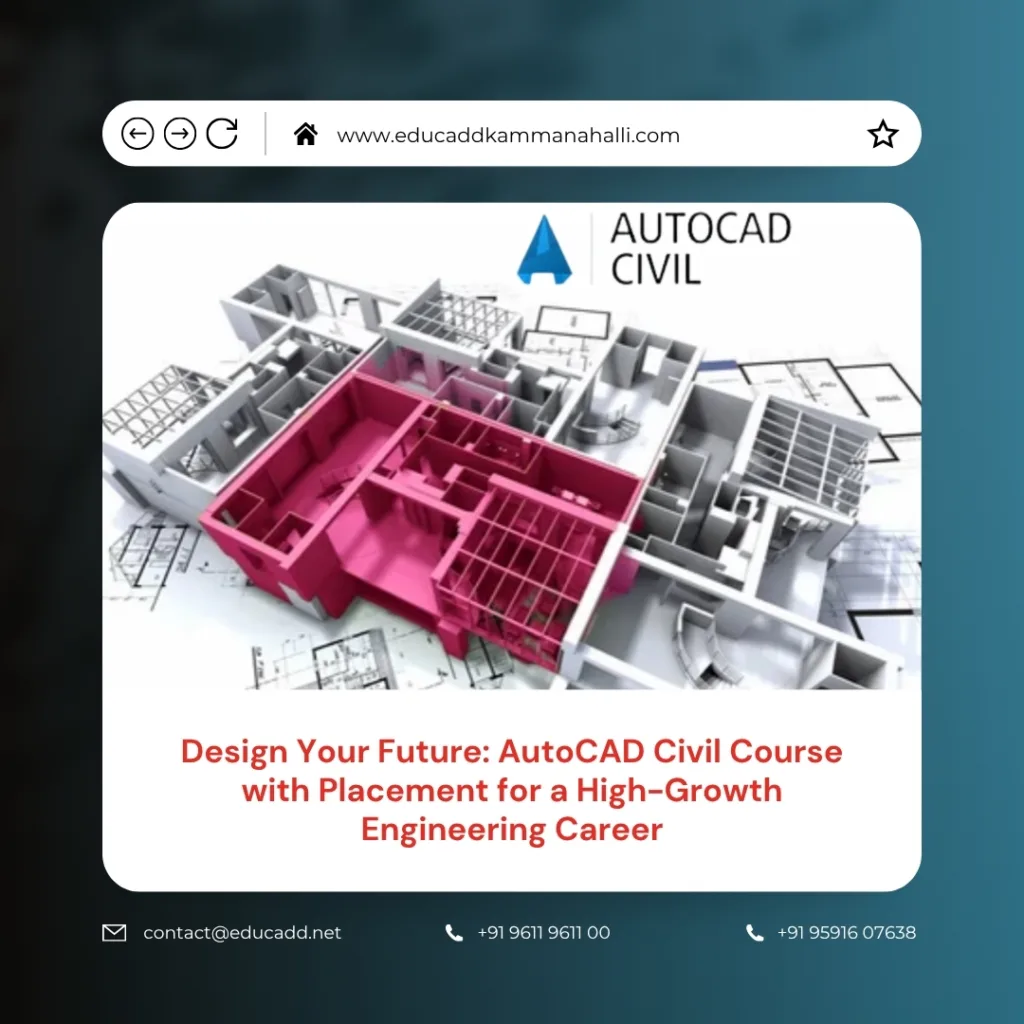
AutoCAD Civil Course Placement
As urban development accelerates and smart cities become a priority, the demand for skilled civil design professionals continues to rise. Whether you are a student, diploma holder, or working professional, enrolling in a structured course with placement support can transform your career path. This blog explores everything you need to know—from course benefits and curriculum to career opportunities and industry relevance—helping you make an informed decision.
1. Understanding the Importance of AutoCAD Civil in Modern Engineering
AutoCAD Civil has become a fundamental tool in the civil engineering domain. It allows engineers to create precise designs, analyze layouts, and manage infrastructure projects effectively. Unlike traditional drafting methods, it offers speed, accuracy, and flexibility.
Today, most construction and infrastructure companies rely heavily on digital tools. Therefore, learning AutoCAD Civil ensures that you stay relevant in a competitive job market. Moreover, the software supports road design, land development, and drainage systems, making it highly versatile.
2. What Makes an AutoCAD Civil Course with Placement Valuable
A standard course may teach you software basics, but a placement-oriented program goes much further. It focuses on practical skills, real-time projects, and interview preparation. As a result, learners are job-ready from day one.
Additionally, placement support reduces the stress of job searching. Institutes often have tie-ups with construction firms, consultancies, and design companies. This increases your chances of securing a role quickly after completing the course.
3. Course Curriculum Designed for Industry Needs
The curriculum of an AutoCAD Civil course with placement is carefully structured to meet industry standards. It starts with fundamental concepts and gradually moves to advanced applications.
You will typically learn topics such as:
- 2D drafting and detailing
- Site layout planning
- Road and highway design basics
- Contour mapping and land surveying
These modules ensure that students gain both theoretical knowledge and practical exposure, which is essential for real-world applications.
4. Hands-On Training for Practical Expertise
Practical learning plays a crucial role in mastering AutoCAD Civil. Most institutes emphasize hands-on training through live projects and case studies. This approach helps learners understand real project challenges.
Instead of just learning commands, students work on assignments that simulate actual engineering tasks. Consequently, they develop confidence and problem-solving skills, which are highly valued by employers.
5. Placement Assistance: A Key Career Advantage
One of the biggest benefits of enrolling in an AutoCAD Civil course with placement is dedicated career support. This includes resume building, mock interviews, and job referrals.
Institutes often guide students through the entire hiring process. They also conduct workshops to improve communication and technical presentation skills. As a result, candidates become more confident and industry-ready.
6. Who Should Enroll in This Course
This course is ideal for a wide range of learners. Whether you are starting your career or looking to upgrade your skills, it offers immense value.
- Civil engineering students seeking practical exposure
- Diploma holders aiming for better job opportunities
Additionally, working professionals can also benefit by enhancing their technical expertise and exploring higher-paying roles.
7. Career Opportunities After Completing the Course
Completing an AutoCAD Civil course with placement opens doors to multiple career paths. The construction and infrastructure sectors are continuously expanding, creating a steady demand for skilled professionals.
You can explore roles such as:
- Civil CAD Designer
- Site Engineer
- Draftsman
- Project Coordinator
Each of these roles offers growth potential and opportunities to work on large-scale projects.
8. Salary Expectations and Growth Potential
Salary packages vary based on experience, location, and skill level. However, even freshers can expect competitive entry-level salaries.
With experience and additional certifications, professionals can significantly increase their earnings. Moreover, those who specialize in advanced design tools often secure higher-paying positions in reputed organizations.
9. Importance of Certification in Career Advancement
Certification adds credibility to your skill set. Employers often prefer candidates who have completed recognized training programs.
An AutoCAD Civil course with placement not only provides certification but also validates your practical knowledge. This gives you an edge over other candidates during job interviews.
10. Learning Environment and Expert Guidance
A good training institute offers a supportive learning environment. Experienced trainers provide personalized attention and mentorship throughout the course.
Furthermore, interactive sessions and doubt-clearing classes ensure that students fully understand each concept. This enhances learning efficiency and overall performance.
11. Role of Technology in Civil Design Training
Technology continues to reshape the construction industry. AutoCAD Civil integrates advanced features that simplify complex design processes.
By learning these tools, students gain exposure to modern engineering practices. This prepares them for real-world challenges and helps them adapt to evolving industry trends.
12. How to Choose the Right Training Institute
Selecting the right institute is crucial for your success. You should consider factors such as course content, trainer expertise, and placement record.
Additionally, check for student reviews and industry recognition. A well-established institute with strong placement support can make a significant difference in your career journey.
13. Tips to Succeed in an AutoCAD Civil Course
Success in this course requires dedication and consistent practice. Simply attending classes is not enough; active participation is essential.
Focus on understanding concepts rather than memorizing commands. Practice regularly and work on real-world projects whenever possible. This approach will help you build strong technical skills.
14. Future Scope of AutoCAD Civil Professionals
The future of civil engineering looks promising, especially with the rise of smart infrastructure and sustainable development. Skilled AutoCAD professionals will continue to be in high demand.
As cities expand and new projects emerge, the need for efficient design solutions will grow. Therefore, investing in an AutoCAD Civil course with placement can lead to long-term career stability and growth.
Conclusion
Choosing an AutoCAD Civil Course Placement is more than just enrolling in a training program—it is a strategic career decision. It equips you with industry-relevant skills, provides hands-on experience, and offers valuable placement support. In a competitive job market, these advantages can set you apart and accelerate your professional growth.
By gaining expertise in AutoCAD Civil, you position yourself at the forefront of modern engineering practices. Whether you aim to secure your first job or advance in your current role, this course can open doors to exciting opportunities. With the right training, dedication, and guidance, you can build a successful and rewarding career in the ever-growing field of civil engineering.

