
Master the Art of Spaces: Your Complete Guide to an Advanced Interior Design Course in Bangalore
Interior design has evolved into a powerful blend of creativity, technology, and functionality. In a rapidly urbanizing city like Bangalore, the demand for skilled interior designers is growing at an impressive pace. Whether it’s residential spaces, corporate offices, or luxury hospitality projects, every environment today requires thoughtful design that balances aesthetics and usability. An Advanced Interior Design Course Bangalore offers aspiring designers the opportunity to build expertise, gain industry exposure, and develop a professional edge.
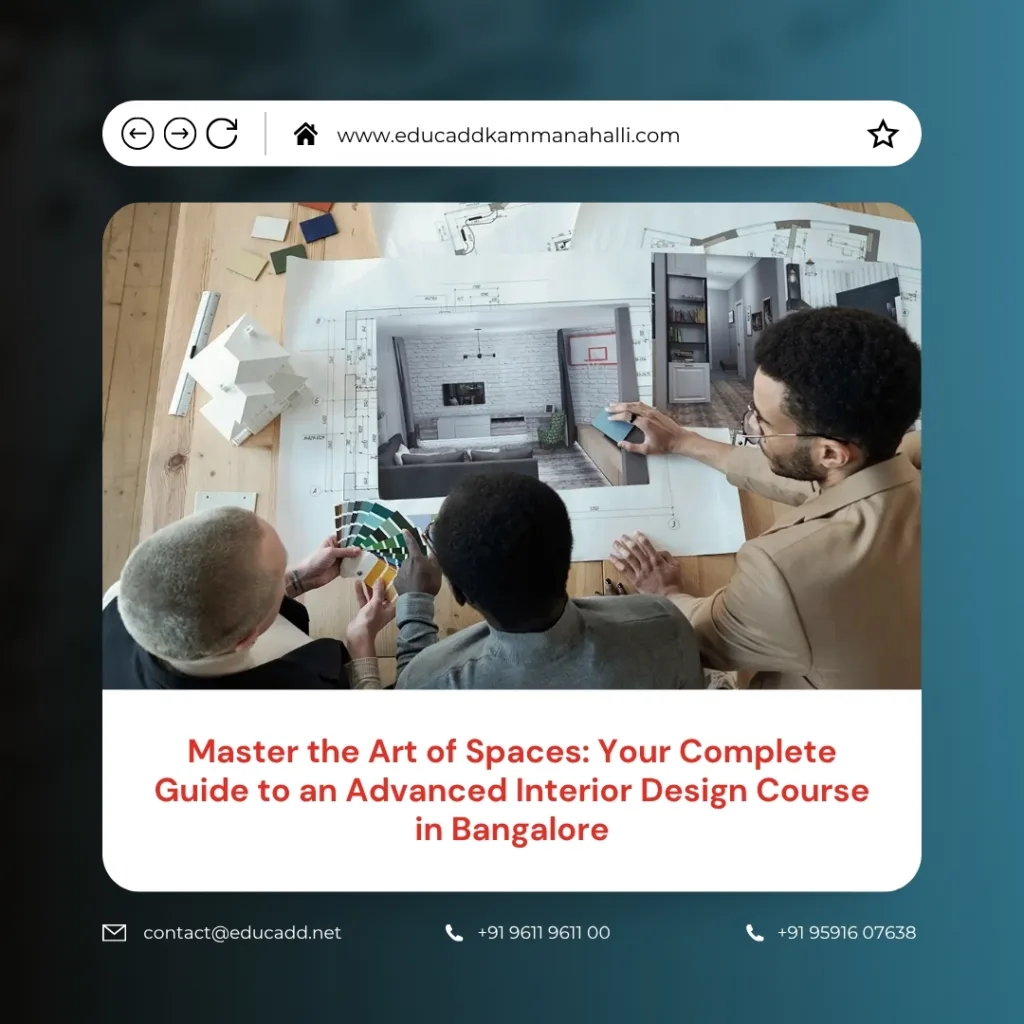
Advanced Interior Design Course Bangalore
This guide explores everything you need to know—from course structure and career prospects to skills and industry trends—helping you make an informed decision about your future in interior design.
1. Why Interior Design Is a Promising Career in Bangalore
Bangalore has become a hub for innovation, startups, and real estate development. As a result, the demand for interior designers has significantly increased. Modern clients are no longer satisfied with basic layouts; they seek personalized, stylish, and functional spaces.
With the rise of smart homes and co-working environments, interior designers are expected to deliver more than just visual appeal. They must integrate technology, sustainability, and comfort into every project. Therefore, enrolling in an advanced course allows you to stay competitive and relevant in this dynamic market.
2. What Makes an Advanced Interior Design Course Different
An advanced course goes beyond basic design principles. It focuses on in-depth knowledge, hands-on training, and real-world applications. Students are introduced to advanced tools, materials, and concepts that prepare them for complex projects.
Unlike beginner programs, advanced courses emphasize practical exposure. You will work on live projects, case studies, and design simulations. This approach ensures that you gain both theoretical understanding and practical confidence.
3. Key Modules Covered in the Course
The curriculum of an advanced interior design course is carefully structured to cover all essential aspects of the field. Students are trained in both creative and technical areas to ensure well-rounded development.
Some of the core modules include space planning, color theory, lighting design, furniture design, and sustainable design practices. Additionally, students learn about building materials, construction techniques, and project management, which are crucial for executing real-world projects effectively.
4. Importance of Software Training in Interior Design
Technology plays a crucial role in modern interior design. Advanced courses provide training in industry-standard software that helps designers visualize and present their ideas effectively.
Students learn tools like AutoCAD, SketchUp, 3ds Max, and rendering software. These tools enable designers to create accurate floor plans, 3D models, and realistic visualizations. As a result, clients can better understand the design concepts before implementation.
5. Skills You Will Develop During the Course
An advanced interior design course focuses on building both technical and soft skills. These skills are essential for succeeding in a competitive industry.
- Creative thinking and problem-solving abilities
- Strong communication and client-handling skills
In addition, students develop attention to detail, time management, and project coordination skills. These competencies help designers handle multiple projects efficiently while maintaining quality standards.
6. Practical Exposure and Real-World Projects
One of the biggest advantages of enrolling in an advanced course is the opportunity to work on real-world projects. Practical exposure helps students understand industry challenges and expectations.
During the course, students often participate in internships, workshops, and site visits. These experiences provide valuable insights into construction processes, material selection, and client interactions. Consequently, students graduate with confidence and industry readiness.
7. Understanding Space Planning and Layout Design
Space planning is the foundation of interior design. It involves organizing spaces efficiently to ensure functionality and comfort. Advanced courses teach students how to analyze spaces and create optimal layouts.
Designers learn how to balance aesthetics with practicality. They also understand how to utilize available space effectively, especially in urban environments where space is often limited. This skill is crucial for delivering successful design solutions.
8. Role of Color, Lighting, and Materials
Color, lighting, and materials play a significant role in defining the mood and functionality of a space. Advanced courses provide in-depth knowledge of how these elements interact.
Students learn how to choose color palettes that enhance the ambiance of a room. They also explore different lighting techniques to create visual interest and improve usability. Furthermore, knowledge of materials helps designers select options that are durable, sustainable, and cost-effective.
9. Sustainable and Eco-Friendly Design Practices
Sustainability has become a major focus in interior design. Clients are increasingly looking for eco-friendly solutions that reduce environmental impact.
Advanced courses teach students how to incorporate sustainable materials, energy-efficient lighting, and eco-friendly construction methods. Designers also learn how to create spaces that promote health and well-being. As a result, they contribute to a more sustainable future.
10. Career Opportunities After Completing the Course
An advanced interior design course opens up a wide range of career opportunities. Graduates can work in various sectors, including residential, commercial, retail, and hospitality design.
- Interior designer or design consultant
- Space planner or project manager
Additionally, students can explore roles in furniture design, set design, and exhibition design. Some may even choose to start their own design firms or work as freelancers, offering customized solutions to clients.
11. Freelancing and Entrepreneurship Opportunities
Bangalore’s vibrant market provides excellent opportunities for freelance interior designers. With the right skills and portfolio, you can attract clients and build a successful career independently.
Advanced courses often include modules on business development and client management. These lessons help students understand pricing strategies, marketing techniques, and project execution. As a result, they are well-prepared to start their own ventures.
12. Importance of Portfolio Development
A strong portfolio is essential for showcasing your skills and attracting potential clients or employers. Advanced courses emphasize portfolio development as a key component of training.
Students work on multiple projects and document their designs professionally. A well-curated portfolio highlights creativity, technical expertise, and problem-solving abilities. It serves as a powerful tool for career growth and job opportunities.
13. Choosing the Right Institute in Bangalore
Selecting the right institute is a crucial step in your learning journey. You should consider factors such as faculty expertise, course curriculum, infrastructure, and placement support.
It is also important to check whether the institute offers practical training, industry exposure, and certification. A well-established institute with a strong reputation can significantly enhance your learning experience and career prospects.
14. Future Trends in Interior Design
Interior design is constantly evolving, influenced by technology, lifestyle changes, and global trends. Advanced courses keep students updated with the latest developments in the industry.
Trends such as smart homes, minimalistic designs, and multifunctional spaces are gaining popularity. Designers are also focusing on wellness-oriented spaces that promote mental and physical well-being. Staying updated with these trends ensures long-term success in the field.
Conclusion
An Advanced Interior Design Course Bangalore is more than just a learning program—it is a gateway to a creative and rewarding career. With the right training, you can transform your passion for design into a professional skill that meets industry demands.
From mastering design principles and software tools to gaining practical exposure and building a strong portfolio, the course equips you with everything needed to succeed. As Bangalore continues to grow as a design and innovation hub, the opportunities for skilled interior designers will only expand.
If you are ready to explore your creative potential and build a future in interior design, enrolling in an advanced course is a step in the right direction.

