
Transform Spaces with Creativity: Why a Professional Interior Styling Course Can Shape Your Future
Professional Interior Styling Course has become one of the fastest-growing creative professions in today’s design-driven world. Modern homes, offices, hotels, cafés, and commercial spaces now demand stylish interiors that combine beauty, comfort, and functionality. As a result, skilled interior stylists are in high demand across industries. People no longer focus only on construction and furniture. Instead, they look for complete visual harmony that creates a memorable experience inside every space.
A Professional Interior Styling Course helps students understand the art of transforming ordinary environments into visually stunning interiors. The course develops creative thinking, practical styling skills, color coordination techniques, furniture arrangement knowledge, and modern space planning abilities. Moreover, it prepares learners for real-world projects and Professional Interior Styling Course in the booming interior design industry.
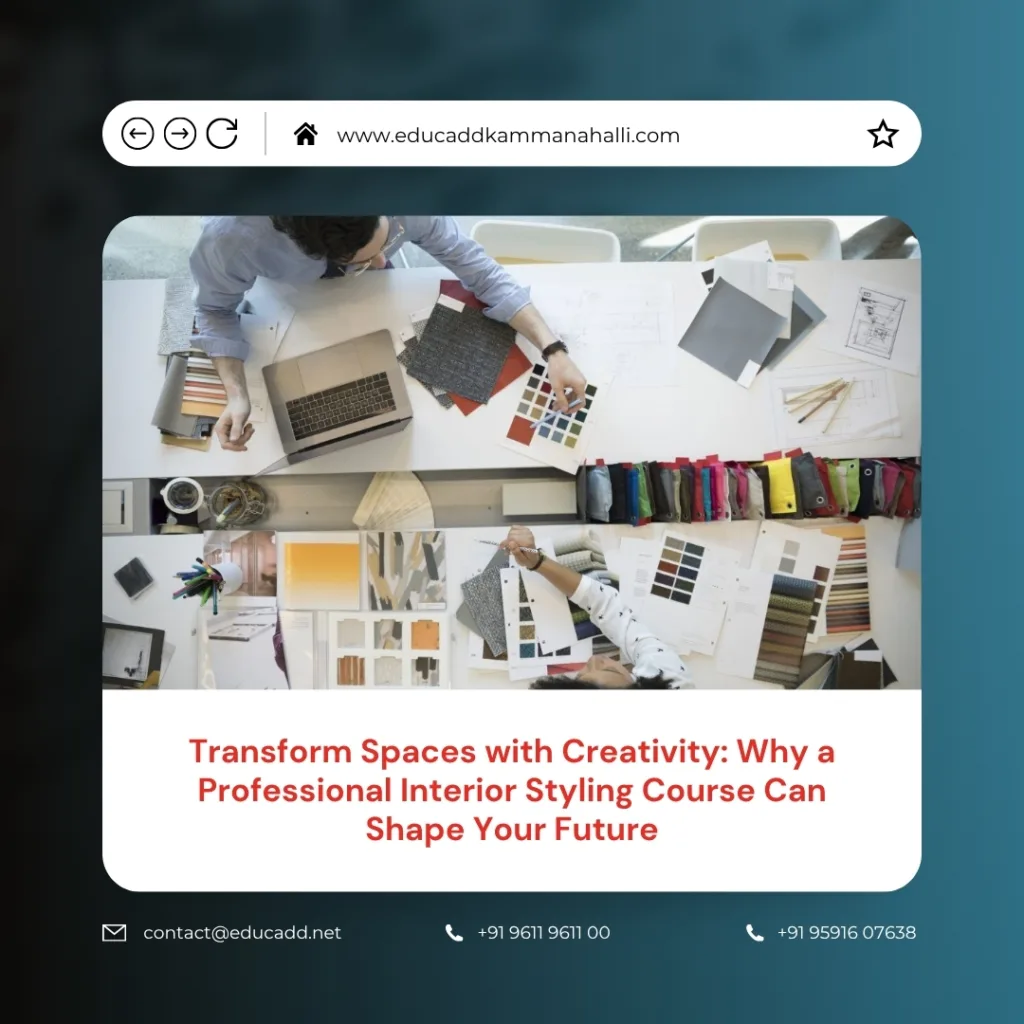
Professional Interior Styling Course
Today, interior styling is not limited to luxury homes. Retail stores, restaurants, corporate offices, studios, event spaces, and even small apartments require expert styling solutions. Therefore, learning Professional Interior Styling Course can open the door to multiple career opportunities. Students gain technical knowledge along with artistic confidence, which helps them create elegant and functional interiors for different clients.
This blog explores how a professional interior styling course builds creativity, improves technical skills, and creates exciting career possibilities for aspiring designers.
Understanding the Importance of Interior Styling
Interior styling focuses on enhancing the visual appearance and atmosphere of a space. Unlike basic decoration, styling involves careful planning of colors, textures, lighting, furniture, accessories, and layouts. Every element must work together to create balance and elegance.
Professional interior stylists understand how to make spaces attractive while maintaining comfort and practicality. They study design principles and learn how to combine aesthetics with functionality. As trends continue to evolve, clients expect modern and personalized interiors that reflect their lifestyle and personality.
The demand for professional stylists has increased because people now value well-designed spaces more than ever before. Beautiful interiors improve mood, productivity, and overall living experiences. Consequently, businesses and homeowners invest heavily in stylish interiors that leave lasting impressions.
Why Interior Styling Has Become a Popular Career
The interior design industry has experienced tremendous growth in recent years. Urban development, luxury housing projects, and commercial expansion have increased the need for professional interior stylists. Additionally, social media platforms have influenced people to create visually appealing interiors for homes and businesses.
Many young professionals choose interior styling because it combines creativity with practical work. Every project offers a chance to create something unique and inspiring. Unlike traditional desk jobs, interior styling allows professionals to work on diverse projects and interact with different clients.
Furthermore, freelance opportunities in this field continue to grow rapidly. Skilled stylists can start independent businesses, collaborate with architects, or work with furniture brands and real estate companies. This flexibility makes interior styling an exciting and rewarding profession.
Building Creative Vision Through Professional Training
Creativity plays a major role in interior styling. However, raw talent alone cannot guarantee professional success. A structured interior styling course helps students channel their creativity in the right direction. The training teaches them how to analyze spaces, understand client preferences, and apply design principles effectively.
Students learn how colors influence emotions and how textures add depth to interiors. They also study furniture placement techniques that improve space utilization and visual appeal. As they practice styling concepts, their confidence grows naturally.
Professional training also encourages experimentation with modern design styles. Learners explore minimalist, contemporary, industrial, Scandinavian, and luxury interiors. This exposure helps them develop a strong creative identity while adapting to current market trends.
Learning Space Planning and Layout Techniques
Space planning forms the foundation of successful interior styling. Even the most beautiful furniture and décor cannot improve a poorly planned room. Therefore, professional courses focus heavily on layout planning and spatial arrangement techniques.
Students learn how to optimize small spaces and create functional interiors without compromising style. They understand traffic flow, furniture proportions, and room balance. Moreover, they study how lighting and natural elements influence interior layouts.
Key skills taught in space planning include:
- Understanding furniture positioning for maximum functionality
- Creating visually balanced layouts for different room sizes
These techniques help students design interiors that feel spacious, organized, and comfortable.
The Role of Color Psychology in Interior Styling
Colors strongly affect emotions, energy, and mood inside a space. Professional interior styling courses teach students how to use color psychology effectively. Different shades create different experiences, and understanding this concept helps stylists make better design decisions.
Warm colors create comfort and energy, while cool tones provide calmness and relaxation. Neutral palettes add sophistication, whereas bold colors create dramatic visual impact. Interior stylists must know how to balance these elements according to client needs.
Courses also teach students how to combine wall colors, furniture tones, fabrics, and decorative accessories harmoniously. As a result, they develop the ability to create interiors that feel both attractive and emotionally engaging.
Understanding Furniture and Décor Styling
Furniture and décor elements define the personality of a space. A Professional Interior Styling Course teaches students how to select and arrange these elements effectively. They learn how different furniture styles complement specific interiors and how accessories enhance overall aesthetics.
Students gain knowledge about materials, textures, fabrics, and decorative accents. Additionally, they study how lighting fixtures, rugs, artwork, mirrors, and plants contribute to interior beauty.
Important décor styling concepts include:
- Choosing accessories that enhance visual harmony
- Balancing textures and patterns for elegant interiors
Through practical assignments, learners understand how every detail contributes to the final appearance of a room.
Mastering Lighting Techniques for Stylish Interiors
Lighting plays a critical role in interior styling because it directly influences mood and ambiance. Poor lighting can reduce the beauty of even the most expensive interiors. Therefore, professional training includes detailed lessons on lighting concepts and applications.
Students learn about natural lighting, ambient lighting, accent lighting, and task lighting. They understand how different lighting layers create depth and visual interest. Moreover, they explore how lighting affects colors, textures, and furniture presentation.
Modern interior styling also emphasizes energy-efficient lighting solutions. As sustainability becomes more important, stylists must create eco-friendly interiors that maintain elegance and functionality.
Exploring Modern Interior Design Trends
Interior trends continue to evolve with changing lifestyles and technologies. A professional interior styling course keeps students updated with modern design movements and industry innovations. This knowledge helps them remain competitive in the professional market.
Students explore current trends such as sustainable interiors, smart homes, biophilic design, multifunctional furniture, and minimalist aesthetics. They also study how global design influences shape contemporary interiors.
Understanding trends allows stylists to create fresh and innovative concepts for clients. However, professional training also teaches the importance of timeless design principles that maintain long-term appeal.
Practical Training and Real-World Experience
One of the biggest advantages of a professional interior styling course is practical exposure. Students work on real projects, design exercises, and styling assignments that improve their technical abilities and problem-solving skills.
Practical sessions help learners understand client requirements, project execution, and budget management. They also gain experience in presenting design concepts professionally. This hands-on learning prepares students for real industry challenges.
Many institutes also organize workshops, industry visits, and live project opportunities. Such experiences improve confidence and help students build strong portfolios before entering the professional world.
Career Opportunities After Completing the Course
A professional interior styling course opens the door to multiple career opportunities across various industries. Graduates can work independently or join established design firms and architectural companies.
Popular career options include interior stylist, residential designer, commercial space stylist, furniture consultant, visual merchandiser, set designer, and décor consultant. Additionally, students can specialize in luxury interiors, hospitality design, retail styling, or event décor.
The growing real estate and hospitality sectors continue to create strong demand for skilled interior professionals. Consequently, talented stylists often enjoy attractive salaries and long-term career growth.
Freelancing and Entrepreneurship in Interior Styling
Many interior styling professionals choose freelancing because it offers creative freedom and flexible working opportunities. A professional course helps students understand how to manage projects, communicate with clients, and build personal brands.
Freelancers can work on home makeovers, office styling projects, café interiors, studio setups, and event décor assignments. Over time, they can establish their own interior styling businesses and expand their professional network.
Social media platforms also provide excellent opportunities for freelance stylists to showcase portfolios and attract clients. Therefore, interior styling has become one of the most accessible creative businesses for aspiring entrepreneurs.
Importance of Communication and Client Handling Skills
Technical knowledge alone cannot guarantee success in interior styling. Professionals must communicate effectively with clients to understand their vision and expectations. Interior styling courses help students improve presentation and communication skills.
Learners understand how to explain design ideas clearly and professionally. They also learn how to handle client feedback, project revisions, and budget discussions confidently. Strong communication builds trust and helps maintain long-term professional relationships.
Additionally, teamwork plays a major role in interior projects. Stylists often collaborate with architects, contractors, carpenters, and suppliers. Therefore, professional communication becomes essential for smooth project execution.
Technology and Software Skills in Interior Styling
Modern interior styling increasingly depends on digital tools and visualization software. Professional courses introduce students to design software that helps them create layouts, mood boards, and realistic presentations.
Students often learn tools like AutoCAD, SketchUp, Photoshop, and 3D visualization software. These technologies help designers present concepts professionally and improve project accuracy.
Digital presentations also help clients understand design ideas more clearly before execution begins. Consequently, technology skills have become essential for every modern interior stylist aiming for professional success.
How Professional Training Builds Industry Confidence
Confidence is one of the most valuable qualities for interior styling professionals. A structured course helps students develop confidence through continuous learning, practical projects, and industry exposure.
As learners complete assignments and presentations, they become more comfortable handling design challenges independently. They understand how to manage deadlines, coordinate with vendors, and deliver professional-quality work.
Moreover, industry-oriented training prepares students for competitive job markets. They gain knowledge about current standards, client expectations, and professional ethics. This preparation allows them to enter the industry with confidence and strong technical foundations.
Conclusion
A Professional Interior Styling Course offers far more than creative knowledge. It builds technical expertise, practical understanding, communication abilities, and industry confidence that shape successful careers. In today’s design-focused world, stylish and functional interiors have become essential for homes, offices, and commercial spaces. Therefore, skilled interior stylists continue to enjoy growing demand and exciting career opportunities.
The course helps students transform their passion for creativity into a rewarding profession. From space planning and color psychology to furniture styling and modern design trends, every aspect of training contributes to professional growth. Moreover, practical exposure and software knowledge prepare learners for real-world challenges and industry expectations.
Whether someone dreams of working with luxury homes, commercial projects, retail spaces, or freelance design assignments, professional interior styling training provides the right foundation for long-term success. With creativity, dedication, and proper education, aspiring stylists can create beautiful spaces that inspire people and transform everyday environments into extraordinary experiences.

