
Chatbots and Conversational Marketing: The Smart Way to Build Customer Relationships in the Digital Age
The digital marketing world changes faster than ever before. Customers no longer want to wait for replies, long email chains, or delayed customer support. Instead, they expect quick responses, personalized communication, and seamless interactions across every platform. Because of this shift, businesses now focus more on real-time engagement strategies that improve customer experience and increase conversions. Among all modern tools, Chatbots Conversational Marketing Strategy stand out as one of the most powerful solutions for businesses of every size.
Chatbots Conversational Marketing Strategy help brands communicate with customers instantly. These technologies create interactive experiences that guide users through the buying journey while solving problems in real time. Today, companies use chatbots on websites, social media platforms, messaging apps, and mobile applications to improve customer engagement and reduce response time. Moreover, conversational marketing allows brands to collect valuable customer insights and build stronger relationships through personalized communication.
As artificial intelligence continues to evolve, chatbots have become smarter and more human-like. They can answer questions, recommend products, schedule appointments, and even handle payments. Consequently, businesses can save time, reduce operational costs, and provide better customer service without increasing manpower. In addition, conversational marketing strategies help businesses generate leads, nurture prospects, and boost sales more effectively than traditional marketing methods.
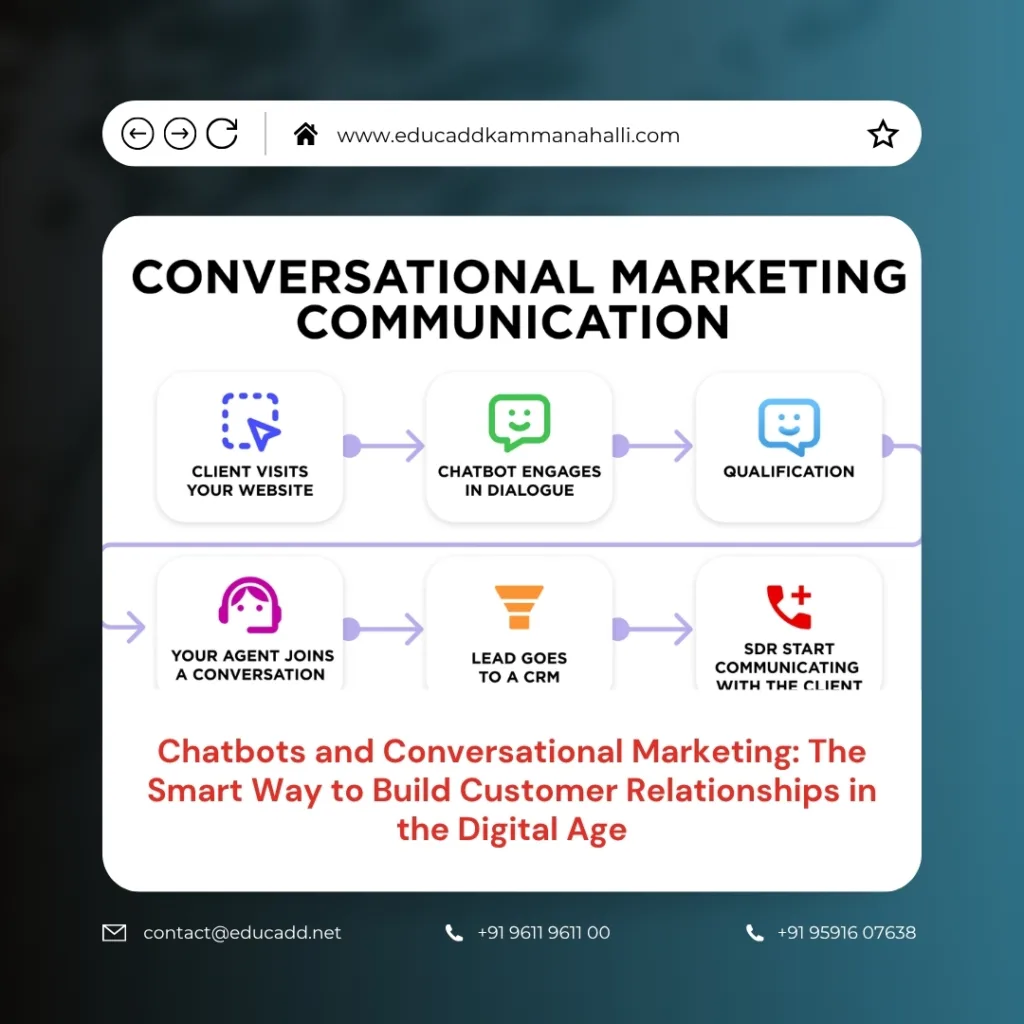
Chatbots Conversational Marketing Strategy
This blog explains how Chatbots Conversational Marketing Strategy transform modern business communication. It also explores their benefits, working methods, implementation strategies, challenges, and future trends. By understanding these concepts, businesses can create stronger customer relationships and stay competitive in today’s fast-moving digital marketplace.
Understanding Chatbots and Their Role in Digital Marketing
Chatbots are software applications designed to simulate human conversation. They use artificial intelligence, machine learning, and natural language processing to interact with users through text or voice communication. Businesses integrate these tools into websites, social media pages, messaging applications, and customer support systems to automate communication processes.
Modern chatbots can perform various tasks without human assistance. They answer frequently asked questions, provide product information, process orders, and guide customers through sales funnels. As a result, businesses can offer 24/7 customer support while maintaining consistent communication quality. Furthermore, customers receive instant responses, which increases satisfaction and improves user experience.
In digital marketing, chatbots act as virtual assistants that help businesses connect with potential customers at the right moment. They engage visitors immediately after they land on a website and encourage them to continue interacting with the brand. Therefore, businesses can reduce bounce rates and improve lead conversion opportunities significantly.
Another important advantage of chatbots involves data collection. These systems gather customer preferences, buying behavior, and interaction patterns. Marketers then use this information to personalize campaigns and improve future marketing strategies. Consequently, businesses can create highly targeted communication that delivers better results.
What Is Chatbots Conversational Marketing Strategy and Why Does It Matter?
Chatbots Conversational Marketing Strategy refers to a customer-focused marketing approach that uses real-time conversations to engage audiences. Unlike traditional marketing methods, conversational marketing creates two-way communication between businesses and customers. This strategy helps brands build trust, answer questions instantly, and guide users toward purchasing decisions.
Today’s customers expect personalized experiences. They do not want generic advertisements or delayed responses. Instead, they prefer direct interactions that feel natural and helpful. Conversational marketing addresses this need by using chatbots, live chat systems, messaging apps, and social media communication tools.
Moreover, conversational marketing shortens the customer journey. Traditional sales processes often involve multiple steps and delayed communication. However, conversational marketing allows customers to get information immediately. As a result, businesses can convert leads faster and reduce customer frustration.
This strategy also improves customer engagement because conversations feel more interactive and human. Customers appreciate brands that respond quickly and understand their needs. Consequently, businesses can build long-term relationships and improve customer loyalty.
Some key benefits of conversational marketing include:
- Faster customer response times
- Improved lead generation and customer retention
Additionally, conversational marketing helps businesses understand customer pain points more effectively. By analyzing conversations, marketers can identify common concerns and improve products or services accordingly.
How Chatbots Improve Customer Experience
Customer experience plays a major role in business success. A positive experience increases customer loyalty, encourages repeat purchases, and improves brand reputation. Chatbots contribute significantly to this process by providing quick, efficient, and personalized communication.
One of the biggest frustrations customers face involves waiting for responses. Traditional customer support systems often require customers to wait several hours or even days for assistance. However, chatbots solve this problem by offering immediate replies at any time of day. Therefore, customers receive support whenever they need it.
In addition, chatbots can handle multiple conversations simultaneously. Human agents often struggle to manage high customer volumes during busy periods. Conversely, chatbots can interact with thousands of users without reducing response quality. Consequently, businesses maintain smooth communication even during peak traffic times.
Personalization also improves customer experience. Advanced chatbots analyze user behavior and preferences to provide customized recommendations. For example, an eCommerce chatbot may suggest products based on previous purchases or browsing history. This personalized interaction increases customer satisfaction and boosts sales opportunities.
Furthermore, chatbots simplify navigation and reduce confusion. They guide users through websites, recommend relevant pages, and assist with transactions. As a result, customers complete actions faster and enjoy smoother digital experiences.
The Connection Between AI and Conversational Marketing
Artificial intelligence has transformed conversational marketing dramatically. Earlier chatbots relied on simple rule-based systems that could answer only basic questions. However, modern AI-powered chatbots understand context, recognize intent, and learn from interactions over time.
Natural language processing enables chatbots to interpret human language more accurately. Instead of responding to exact keywords, they understand sentence meaning and conversational tone. Consequently, interactions feel more natural and engaging for users.
Machine learning further enhances chatbot performance by analyzing past conversations and improving future responses. The more interactions a chatbot handles, the smarter it becomes. Therefore, businesses can continuously improve customer engagement quality without manual adjustments.
AI also supports predictive communication strategies. By analyzing customer behavior, chatbots can anticipate user needs and provide proactive recommendations. For instance, a chatbot may remind customers about abandoned shopping carts or suggest relevant services based on browsing activity.
Another major advantage involves multilingual communication. AI-powered chatbots can communicate in multiple languages, helping businesses serve global audiences more effectively. Consequently, companies can expand internationally while maintaining high-quality customer support.
Lead Generation Through Conversational Marketing Strategies
Generating high-quality leads remains one of the biggest goals for marketers. Conversational marketing strategies make this process more efficient by engaging users instantly and guiding them toward conversion actions.
Traditional lead generation methods often rely on static forms and delayed follow-ups. Unfortunately, many users abandon forms before completing them. Conversational marketing solves this issue by creating interactive conversations that feel more engaging and less intimidating.
For example, chatbots can ask users simple questions one step at a time instead of displaying long forms. This conversational approach increases participation rates and improves data collection quality. As a result, businesses capture more qualified leads.
Chatbots also help businesses identify customer intent quickly. They analyze responses and determine whether a user is ready to purchase, needs more information, or requires customer support. Consequently, sales teams can prioritize high-value prospects more effectively.
Additionally, conversational marketing supports lead nurturing. Businesses can use automated messaging sequences to educate prospects, share product recommendations, and encourage future engagement. This ongoing communication keeps brands connected with potential customers throughout the buying process.
Some effective conversational lead generation techniques include:
- Interactive quizzes and product recommendation chats
- Automated follow-up messages and appointment scheduling
These methods help businesses improve conversion rates while creating more personalized customer experiences.
Social Media and Messaging Apps in Conversational Marketing
Social media platforms have become essential communication channels for businesses worldwide. Customers spend significant time on platforms like Facebook, Instagram, WhatsApp, and Telegram. Therefore, businesses increasingly use conversational marketing strategies within these platforms to reach audiences more effectively.
Messaging apps create direct and personal communication opportunities. Unlike traditional advertisements, conversational messaging feels more natural and interactive. Customers can ask questions, request recommendations, and receive instant support without leaving their preferred platform.
Chatbots integrated with social media platforms improve customer engagement substantially. For instance, businesses can automate responses to common inquiries on Facebook Messenger or WhatsApp Business. Consequently, customers receive immediate assistance while businesses reduce workload for support teams.
Social media conversational marketing also supports personalized promotions. Chatbots can recommend products based on customer interests and previous interactions. This targeted communication increases engagement rates and encourages purchases.
Furthermore, messaging platforms enable businesses to send reminders, updates, and promotional offers directly to customers. Since messaging apps have high open rates, conversational marketing campaigns often achieve better performance compared to traditional email marketing strategies.
The Importance of Personalization in Chatbot Communication
Personalization has become a critical factor in successful marketing campaigns. Customers expect businesses to understand their needs and deliver relevant experiences. Chatbots support this expectation by using customer data to create personalized interactions.
Modern chatbots analyze browsing behavior, purchase history, and customer preferences. Using this information, they provide tailored recommendations and responses. As a result, customers feel more valued and understood during interactions.
Personalized chatbot communication improves engagement because users receive information that matches their interests. For example, an online learning platform may recommend courses based on a student’s previous searches or completed programs. Consequently, users are more likely to continue interacting with the brand.
Moreover, personalization strengthens customer relationships. Customers appreciate brands that remember their preferences and communicate in a relevant manner. Therefore, businesses can increase customer loyalty and improve retention rates.
Another advantage involves higher conversion rates. Personalized recommendations encourage customers to make purchasing decisions faster because suggested products align closely with their interests and needs.
Chatbots in E-Commerce and Online Shopping
E-commerce businesses benefit greatly from chatbot technology and conversational marketing strategies. Online shoppers often need assistance during the purchasing process. Chatbots provide instant support that helps customers make informed buying decisions quickly.
Product recommendation systems represent one of the most valuable chatbot features in e-commerce. Chatbots analyze customer preferences and suggest products that match their interests. Consequently, businesses increase upselling and cross-selling opportunities.
Chatbots also assist customers during checkout processes. They answer shipping questions, explain payment methods, and resolve transaction issues instantly. Therefore, businesses reduce cart abandonment rates and improve customer satisfaction.
Another major advantage involves post-purchase support. Chatbots can provide order tracking information, handle return requests, and gather customer feedback automatically. This ongoing communication strengthens customer trust and improves brand reputation.
Additionally, e-commerce chatbots help businesses manage large customer volumes during sales events and holiday seasons. Since chatbots operate continuously, companies maintain efficient customer support even during peak shopping periods.
Building Customer Trust Through Conversational Communication
Trust remains one of the most important elements in customer relationships. Businesses that communicate honestly, quickly, and effectively often gain stronger customer loyalty. Conversational marketing strategies help build trust by creating transparent and responsive communication experiences.
Customers value brands that answer questions promptly and provide accurate information. Chatbots contribute to this process by delivering consistent responses and reducing waiting times. Consequently, users feel more confident when interacting with businesses online.
Transparency also improves trust. Conversational marketing allows businesses to explain products, pricing, and policies clearly through direct communication. Therefore, customers can make informed decisions without confusion.
Furthermore, conversational interactions feel more human compared to traditional advertising methods. Even automated chatbots can create friendly and engaging experiences that strengthen emotional connections with customers.
Businesses that combine chatbot automation with human support achieve the best results. Customers appreciate knowing they can reach a human representative when necessary. This balance improves reliability and enhances overall customer confidence.
Challenges Businesses Face With Chatbot Implementation
Although chatbots offer numerous advantages, businesses also face several challenges during implementation. Understanding these challenges helps companies create more effective conversational marketing strategies.
One common issue involves poor chatbot design. If chatbots provide irrelevant answers or fail to understand customer intent, users become frustrated quickly. Therefore, businesses must invest in proper chatbot training and testing before deployment.
Another challenge involves balancing automation with human interaction. While automation improves efficiency, customers sometimes prefer speaking with human representatives for complex issues. Consequently, businesses should create smooth transitions between chatbots and live support agents.
Privacy concerns also play a major role in conversational marketing. Customers share personal information during interactions, so businesses must protect data carefully. Strong security measures and transparent privacy policies help maintain customer trust.
Additionally, maintaining conversational quality requires continuous improvement. Businesses must analyze chatbot performance regularly and update responses based on customer feedback. Without ongoing optimization, chatbot effectiveness may decline over time.
Measuring the Success of Conversational Marketing Campaigns
Businesses must track performance metrics to evaluate the effectiveness of conversational marketing strategies. Measuring results helps marketers identify strengths, weaknesses, and improvement opportunities.
One important metric involves response time. Faster responses generally improve customer satisfaction and increase engagement levels. Businesses should monitor how quickly chatbots handle customer inquiries.
Conversion rates also provide valuable insights. Marketers analyze how many conversations lead to purchases, sign-ups, or other desired actions. High conversion rates indicate successful conversational marketing performance.
Customer satisfaction scores help businesses understand user experience quality. Surveys and feedback forms reveal whether customers find chatbot interactions helpful and enjoyable.
Engagement metrics such as click-through rates, conversation duration, and return interactions also measure campaign effectiveness. These indicators show how actively customers interact with conversational marketing systems.
Furthermore, businesses should track lead quality and customer retention rates. Strong conversational marketing strategies often produce more qualified leads and improve long-term customer loyalty.
Future Trends in Chatbots and Conversational Marketing
The future of conversational marketing looks highly promising as technology continues to evolve. Businesses increasingly invest in artificial intelligence and automation tools to improve customer communication experiences.
Voice-based chatbots represent one major trend. Smart assistants like Alexa and Google Assistant have increased consumer interest in voice interactions. Consequently, businesses are developing voice-enabled conversational marketing strategies to reach audiences more effectively.
Another growing trend involves hyper-personalization. Future chatbots will use advanced AI algorithms to deliver even more customized experiences based on real-time customer behavior and preferences.
Emotion recognition technology may also transform chatbot communication. Advanced systems could analyze tone, sentiment, and emotional cues to respond more empathetically during conversations.
Additionally, conversational commerce will continue expanding. Customers increasingly prefer purchasing products directly through messaging apps and chat interfaces. Therefore, businesses will integrate payment systems and shopping features into conversational platforms more frequently.
The integration of augmented reality and conversational marketing may also create immersive customer experiences in the future.
Why Small Businesses Should Invest in Conversational Marketing
Many small businesses assume conversational marketing works only for large corporations. However, chatbots and conversational marketing strategies provide significant benefits for small businesses as well.
Small businesses often struggle with limited staff and resources. Chatbots help solve this issue by automating customer communication and reducing workload. Consequently, businesses can provide better support without hiring large teams.
Conversational marketing also helps small businesses compete with larger brands. Fast response times and personalized communication improve customer experience and strengthen brand image.
Moreover, chatbot tools have become more affordable and accessible. Many platforms now offer simple chatbot builders that require minimal technical knowledge. Therefore, small businesses can implement conversational marketing strategies without major investments.
Local businesses can especially benefit from messaging-based customer engagement. Customers often prefer quick communication through WhatsApp or social media platforms when contacting local brands.
By adopting conversational marketing early, small businesses can improve customer satisfaction, increase sales opportunities, and build stronger relationships with audiences.
Conclusion
Chatbots Conversational Marketing Strategy have transformed the way businesses communicate with customers in the digital era. Modern consumers expect fast, personalized, and convenient interactions across every platform. Consequently, businesses that adopt conversational marketing gain a significant competitive advantage.
Chatbots improve customer experience by providing instant responses, personalized recommendations, and continuous support. At the same time, conversational marketing strategies create stronger customer relationships through real-time engagement and interactive communication. These technologies not only improve lead generation and sales performance but also strengthen customer trust and loyalty.
Although challenges such as privacy concerns and chatbot optimization exist, the benefits greatly outweigh the limitations when businesses implement these systems correctly. Furthermore, advancements in artificial intelligence continue making conversational tools smarter, more efficient, and more human-like.
As digital communication evolves, conversational marketing will become even more important for businesses of every size. Companies that invest in chatbot technology today position themselves for long-term success in an increasingly customer-focused marketplace. By embracing conversational communication strategies, businesses can create meaningful customer experiences, improve operational efficiency, and drive sustainable growth in the modern digital world.

