
Transform Creative Vision into Professional Spaces with an Advanced Interior Design Training Program
Interior design has evolved into one of the fastest-growing creative and technical professions in today’s world. Every residential project, commercial office, retail outlet, hospitality space, and luxury property now demands professionals who can blend creativity with functionality. It demands technical knowledge, software expertise, project management skills, and a strong understanding of current design trends. An Advanced Interior Design Training provides aspiring designers and working professionals with the practical knowledge required to excel in this industry. Instead of focusing only on theoretical concepts, this program emphasizes hands-on learning, real-world projects, and industry-standard software that employers expect candidates to know.
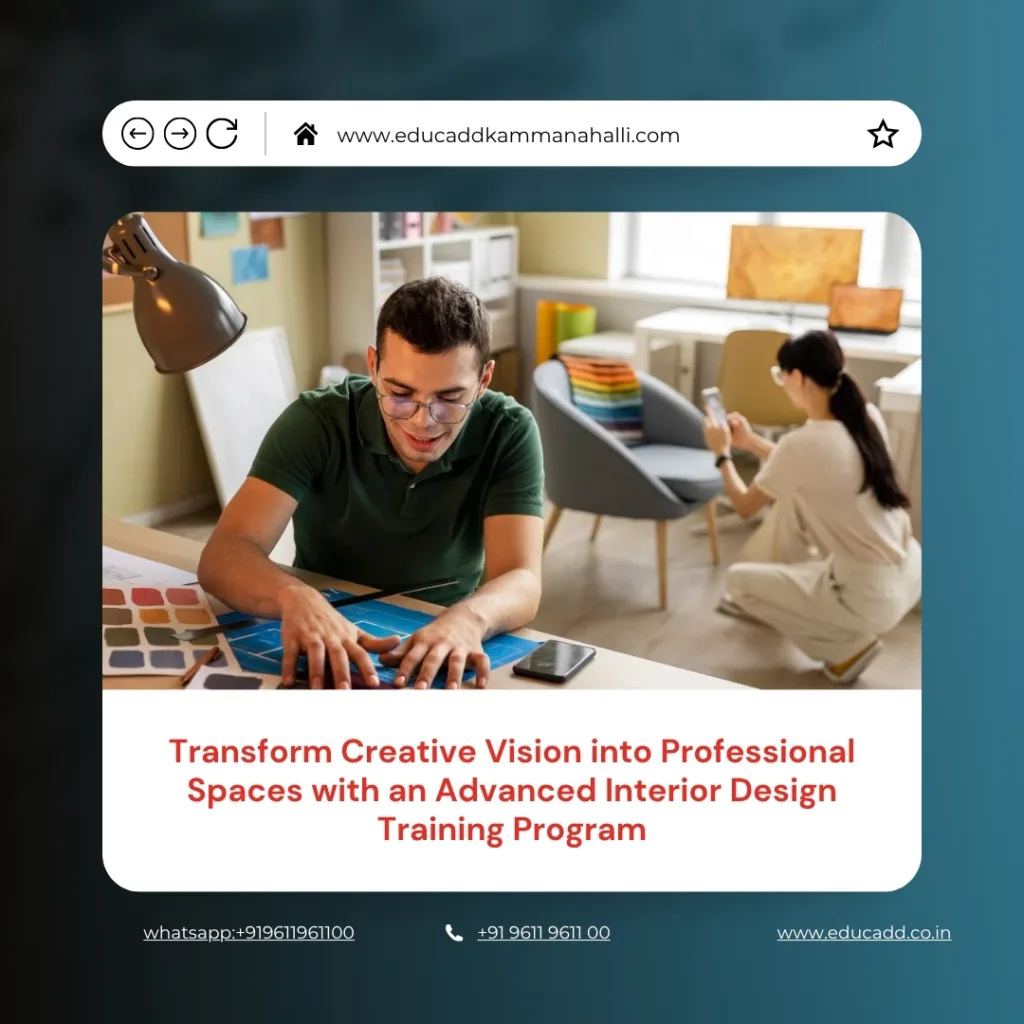
Advanced Interior Design Training
Whether someone wants to work with architectural firms, interior design studios, construction companies, or establish an independent practice, advanced training builds the confidence and expertise needed for long-term success. With structured learning, expert mentorship, and portfolio development, learners can prepare themselves for exciting career opportunities while staying updated with the latest innovations in interior design.
Build a Strong Foundation in Interior Design Principles
Every successful designer begins with a thorough understanding of design fundamentals. Before creating sophisticated interiors, students must learn the principles that influence every successful space. These include balance, proportion, rhythm, harmony, contrast, emphasis, scale, texture, and color psychology. An Advanced Interior Design Training strengthens these core concepts while helping learners understand how they apply in practical projects.
Students also study spatial planning, circulation patterns, furniture layouts, lighting arrangements, and human ergonomics. These concepts enable designers to create interiors that are aesthetically pleasing while remaining comfortable and functional. Instead of relying on assumptions, learners make informed design decisions that improve user experience. As a result, they develop confidence in handling projects of varying complexity across residential, commercial, and hospitality sectors.
Master Industry-Standard Interior Design Software
Technology has transformed interior design significantly over the past decade. Modern designers now rely on advanced software to communicate their ideas accurately and professionally. An Advanced Interior Design Training introduces learners to industry-leading tools that simplify every stage of the design process.
Students gain practical experience with AutoCAD for drafting, SketchUp for 3D modeling, 3ds Max for realistic visualization, V-Ray for rendering, Photoshop for presentations, and other visualization tools. Learning these applications enables designers to create precise floor plans, attractive interior perspectives, and immersive walkthroughs. Employers actively seek professionals with software proficiency because digital design has become an essential part of every modern interior project. Consequently, software expertise significantly improves employability and professional efficiency.
Develop Practical Skills Through Live Design Projects
Theoretical knowledge alone cannot prepare students for the challenges of professional interior design. Practical exposure bridges the gap between classroom learning and industry expectations. Therefore, an Advanced Interior Design Training focuses extensively on real-world projects that simulate actual client requirements.
Students work on residential apartments, luxury villas, office interiors, retail stores, restaurants, hotels, and commercial spaces. Throughout these assignments, they prepare concept boards, furniture layouts, lighting plans, ceiling designs, material selections, and complete presentation drawings. They also learn how to manage project timelines and coordinate multiple design elements simultaneously. This practical experience strengthens problem-solving abilities while building confidence in handling client expectations from concept development to final presentation.
Understand Space Planning and Functional Design
Effective space planning forms the backbone of every successful interior project. Beautiful interiors lose their value if they fail to provide comfort and functionality. An Advanced Interior Design Training teaches students how to maximize available space while maintaining visual appeal.
Learners understand zoning techniques, furniture placement strategies, storage optimization, circulation paths, accessibility standards, and ergonomic principles. They also analyze how lighting, ventilation, and furniture dimensions influence daily usability. These practical insights help designers create interiors that meet client requirements while enhancing comfort. Functional planning ultimately distinguishes professional designers from beginners because clients value spaces that perform efficiently alongside attractive aesthetics.
Learn Modern Materials, Finishes, and Sustainable Design
Interior design materials continue to evolve with technological advancements and environmental awareness. Today’s clients expect designers to recommend stylish, durable, and sustainable materials. An Advanced Interior Design Training provides detailed knowledge of flooring options, wall finishes, ceiling systems, furniture materials, fabrics, decorative elements, and lighting products.
Students also explore eco-friendly materials, energy-efficient lighting, recycled products, green building concepts, and sustainable design practices. They understand how material selection affects maintenance, durability, cost, and environmental impact. This knowledge enables designers to create responsible interiors that align with modern sustainability goals while satisfying client preferences and project budgets.
Enhance Creativity Through Concept Development
Creativity remains one of the most valuable qualities in interior design. However, creativity becomes more effective when supported by structured design thinking. An Advanced Interior Design Training encourages students to transform abstract ideas into practical design concepts using systematic planning techniques.
Learners create mood boards, color palettes, inspiration collections, furniture themes, material samples, and visual storytelling presentations. They study contemporary, modern, minimalist, industrial, Scandinavian, traditional, and luxury design styles. By understanding diverse aesthetics, students develop versatile design approaches that accommodate various client tastes. Consequently, they become capable of delivering unique interiors that balance creativity with functionality.
Strengthen Presentation and Client Communication Skills
Excellent design ideas require effective presentation to gain client approval. Therefore, communication skills play an equally important role in interior design careers. An Advanced Interior Design Training teaches students how to present concepts professionally using visual aids, digital presentations, rendered images, and detailed design documentation.
Students practice explaining layouts, material selections, color combinations, furniture arrangements, lighting concepts, and project timelines clearly. They also learn how to understand client requirements, handle design revisions, negotiate expectations, and provide professional consultations. Strong communication skills increase client confidence and contribute significantly to successful project execution throughout every stage of the design process.
Gain Knowledge of Interior Construction and Execution
Designing attractive interiors represents only one part of the profession. Successful designers must also understand construction methods and site execution. An Advanced Interior Design Training Program introduces learners to practical construction knowledge that supports effective project implementation.
Students study false ceiling installations, partition systems, flooring techniques, electrical layouts, plumbing coordination, modular furniture installation, lighting fixtures, and finishing procedures. They also understand how different construction activities interact during project execution. This technical awareness enables designers to collaborate effectively with contractors, architects, engineers, and vendors while ensuring quality throughout construction.
Build an Impressive Professional Portfolio
Employers and clients often evaluate designers based on their portfolios rather than academic qualifications alone. Therefore, portfolio development remains an essential component of an Advanced Interior Design Training. Throughout the course, students compile high-quality projects that demonstrate their design capabilities.
Their portfolios include floor plans, furniture layouts, ceiling plans, electrical layouts, rendered perspectives, 3D visualizations, material boards, and complete project presentations. Every assignment showcases creativity, technical proficiency, and problem-solving ability. A professionally designed portfolio significantly improves interview performance and creates strong first impressions when approaching potential employers or independent clients.
Prepare for Diverse Career Opportunities
The demand for qualified interior designers continues to grow across multiple industries. Completing an Advanced Interior Design Training Program opens doors to numerous rewarding career paths that offer long-term professional growth.
Graduates can pursue roles such as Interior Designer, Residential Designer, Commercial Interior Designer, Space Planner, Furniture Designer, Kitchen Designer, Lighting Consultant, CAD Designer, 3D Visualization Artist, Project Coordinator, Design Consultant, or Interior Stylist. Many professionals also establish their own interior design studios and consultancy firms after gaining industry experience. The diversity of career opportunities makes interior design an attractive profession for creative individuals seeking both artistic satisfaction and financial stability.
Stay Updated with Emerging Design Trends
The interior design industry changes continuously as new materials, technologies, lifestyles, and client preferences emerge. Professional designers must stay informed to remain competitive. An Advanced Interior Design Training Program introduces learners to the latest trends shaping contemporary interiors.
Students explore smart home integration, modular furniture systems, flexible workspaces, wellness-focused interiors, biophilic design, sustainable architecture, minimalist aesthetics, multifunctional furniture, and digital visualization technologies. Keeping pace with these developments enables designers to deliver innovative solutions that meet evolving market demands. Continuous learning ultimately enhances career longevity and professional relevance.
Develop Confidence Through Expert Guidance
Learning from experienced industry professionals significantly accelerates professional development. An Advanced Interior Design Training Program provides mentorship from qualified instructors who share practical knowledge gained through real projects. Their guidance helps students understand industry expectations, avoid common design mistakes, and improve technical accuracy.
Regular design reviews, constructive feedback, practical workshops, and interactive discussions encourage continuous improvement. Students receive personalized support while refining their creativity and technical skills. As their confidence grows, they become better prepared to handle interviews, client meetings, and complex design challenges independently. Expert mentorship ultimately transforms aspiring learners into capable design professionals ready for successful careers.
Create a Future-Proof Career in Interior Design
Interior design continues to expand alongside urbanization, real estate development, commercial infrastructure, and luxury living. Every new building requires thoughtfully designed interiors that enhance comfort, functionality, and aesthetics. Consequently, skilled professionals remain in high demand across residential, corporate, retail, hospitality, and healthcare sectors.
An Advanced Interior Design Training Program equips learners with the comprehensive knowledge required to adapt to changing industry demands. By combining creativity, technical expertise, software proficiency, construction knowledge, and practical experience, students develop a competitive advantage in today’s dynamic job market. Continuous skill enhancement also ensures long-term career growth, better earning potential, and opportunities to work on prestigious projects worldwide.
Conclusion
Choosing an Advanced Interior Design Training Program is an investment in creativity, technical excellence, and professional growth. The program equips learners with essential design principles, advanced software skills, practical project experience, construction knowledge, portfolio development, and industry exposure needed to succeed in the competitive world of interior design. With expert guidance and hands-on learning, aspiring designers gain the confidence to transform ideas into functional and visually stunning spaces. As the demand for skilled interior designers continues to rise, completing an advanced training program provides the foundation for a rewarding career filled with innovation, creativity, and endless opportunities for professional success.

