
Master the Art of Interior Design and Space Planning: Build Creative Spaces That Inspire Every Day
Interior spaces have the power to influence emotions, productivity, comfort, and lifestyle. From modern homes and luxury apartments to offices, retail outlets, hotels, and healthcare facilities, every well-designed space begins with thoughtful planning and creative execution. An Interior Design Space Planning Course helps aspiring designers understand how to combine creativity with technical knowledge to create functional and visually appealing environments. Today, the demand for skilled interior designers continues to grow because people value smart, sustainable, and aesthetically pleasing interiors.
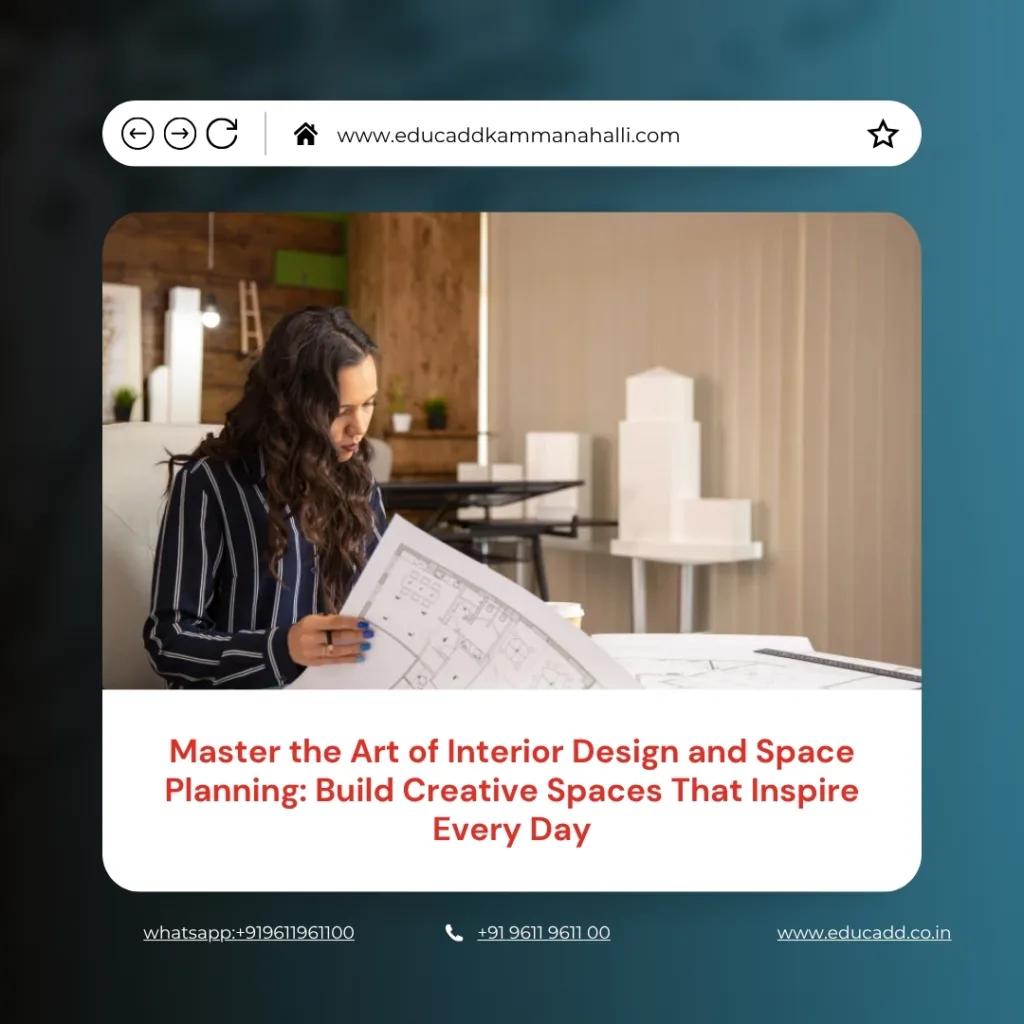
Interior Design Space Planning
As industries expand and construction projects increase, professionals with expertise in interior design and space planning enjoy exciting career opportunities across residential, commercial, and industrial sectors. Therefore, learning professional design principles has become one of the smartest career decisions for creative individuals who want to transform ideas into reality.
Understanding the Importance of Interior Design and Space Planning
Interior design is much more than selecting colors, furniture, and decorations. It is the process of designing interior environments that improve functionality while maintaining beauty and comfort. At the same time, space planning ensures that every square foot of a room serves a purpose without compromising movement or usability.
An Interior Design Space Planning Course teaches students how to evaluate layouts, optimize floor plans, arrange furniture efficiently, and create balanced interiors that meet client expectations. Instead of relying only on artistic instincts, students learn professional techniques that combine design principles with practical applications. As a result, they develop the ability to solve complex design challenges while delivering attractive and efficient spaces.
Developing Strong Design Fundamentals
Every successful interior designer begins with a solid understanding of design fundamentals. These principles include balance, proportion, rhythm, harmony, contrast, scale, emphasis, and unity. Without mastering these concepts, creating visually pleasing interiors becomes difficult.
An Interior Design Space Planning Course introduces these essential design elements through practical assignments and real-world examples. Students gradually learn how each principle influences interior environments. Moreover, they understand how lighting, textures, materials, and finishes contribute to the overall appearance of a space. This strong foundation allows future designers to confidently create interiors that satisfy both functional and aesthetic requirements.
Learning Professional Space Planning Techniques
Effective space planning forms the backbone of successful interior design projects. Every room must support movement, comfort, accessibility, and functionality while maintaining visual appeal. Poor planning often results in wasted space, uncomfortable layouts, and inefficient designs.
During an Interior Design Space Planning, students study circulation patterns, zoning concepts, furniture placement, storage planning, and ergonomic standards. Furthermore, they learn how to maximize small spaces while maintaining openness and convenience. These practical skills enable designers to transform limited areas into highly functional environments that meet the needs of modern living and working spaces.
Mastering Color Theory, Materials, and Lighting Design
Color, materials, and lighting significantly influence the atmosphere of any interior. Every design decision affects how occupants experience a space. Therefore, professional designers carefully select combinations that enhance mood, comfort, and usability.
An Interior Design Space Planning provides detailed knowledge about color psychology, material selection, flooring options, wall finishes, ceiling treatments, textiles, and decorative elements. Additionally, students understand natural lighting, artificial lighting, layered illumination, and energy-efficient lighting systems. By combining these aspects effectively, designers create interiors that are visually appealing while remaining practical and sustainable.
Building Expertise in Furniture Planning and Interior Styling
Furniture selection involves much more than choosing attractive pieces. Every item should complement the available space, support user activities, and maintain proper proportions. Likewise, accessories and styling elements complete the overall design concept.
An Interior Design Space Planning trains students to prepare furniture layouts, select suitable furnishings, coordinate decorative accessories, and achieve balanced compositions. Furthermore, they learn how to incorporate textures, artwork, curtains, rugs, plants, and decorative lighting into cohesive interior themes. Consequently, students develop the confidence to create professional interiors that reflect client preferences while maintaining design consistency.
Understanding Residential and Commercial Interior Design
Residential and commercial interiors differ significantly in terms of functionality, user expectations, regulations, and design objectives. Homes prioritize comfort and personalization, whereas offices, hotels, hospitals, and retail spaces require efficiency, branding, and operational performance.
An Interior Design and Space Planning Course exposes students to both residential and commercial design projects. They understand client requirements, building standards, accessibility guidelines, and workflow optimization. Moreover, they explore different design styles suitable for various industries. This broad exposure increases career flexibility and prepares graduates to work on diverse projects across multiple sectors.
Gaining Practical Experience with Interior Design Software
Technology has completely transformed the interior design industry. Today, clients expect realistic visualizations before construction begins. Therefore, digital design skills have become essential for every professional interior designer.
An Interior Design and Space Planning Course introduces students to industry-standard software for drafting, 3D visualization, rendering, and presentation. They create detailed floor plans, furniture layouts, ceiling designs, elevations, and realistic walkthroughs. In addition, students learn how to prepare professional presentations that communicate design concepts clearly. These technical skills improve project accuracy while increasing employability in leading design firms.
Exploring Sustainable and Eco-Friendly Interior Design
Sustainability has become a major priority in modern construction and interior design. Clients increasingly seek environmentally responsible solutions that reduce energy consumption and promote healthier indoor environments.
An Interior Design and Space Planning Course teaches sustainable design practices, eco-friendly materials, energy-efficient lighting, water conservation techniques, and environmentally conscious space planning. Furthermore, students understand how green interiors improve occupant well-being while reducing environmental impact. As sustainability continues to shape the construction industry, designers with green design knowledge remain highly valuable in the global job market.
Strengthening Communication and Client Management Skills
Technical knowledge alone cannot guarantee success in interior design. Professionals must also communicate effectively with clients, contractors, architects, suppliers, and project managers. Strong interpersonal skills help designers understand client expectations while ensuring smooth project execution.
An Interior Design and Space Planning Course develops presentation skills, client consultation techniques, design proposal preparation, budgeting, and project coordination. Moreover, students learn how to handle revisions, resolve design challenges, and maintain professional relationships throughout every project stage. These communication abilities contribute significantly to long-term career growth and client satisfaction.
Understanding Construction Details and Building Services
Interior designers regularly collaborate with architects and engineers during project execution. Therefore, they require knowledge of construction methods, structural considerations, electrical layouts, plumbing systems, HVAC planning, and safety regulations.
An Interior Design and Space Planning Course introduces essential construction concepts that help designers coordinate effectively with multidisciplinary teams. Students also learn about false ceilings, partitions, modular furniture, flooring installation, wall treatments, and finishing techniques. This practical understanding allows designers to create interiors that are both beautiful and technically feasible.
Building an Impressive Professional Portfolio
Employers and clients often evaluate designers based on the quality of their portfolios rather than academic qualifications alone. A strong portfolio demonstrates creativity, technical expertise, problem-solving ability, and design versatility.
An Interior Design and Space Planning Course encourages students to develop professional portfolios featuring residential, commercial, hospitality, office, and retail design projects. Additionally, students showcase conceptual sketches, technical drawings, 3D renderings, mood boards, and completed visualizations. As a result, graduates possess compelling portfolios that significantly improve their chances of securing rewarding employment opportunities.
Career Opportunities After Completing the Course
The growing construction and real estate industries continue to create excellent career prospects for interior designers. Skilled professionals are needed across architecture firms, interior design studios, construction companies, furniture manufacturers, retail organizations, hospitality businesses, and real estate developers.
After completing an Interior Design and Space Planning Course, graduates may pursue careers as interior designers, space planners, furniture consultants, residential designers, commercial designers, exhibition designers, lighting consultants, design coordinators, project managers, visual merchandisers, or freelance interior consultants. Furthermore, entrepreneurial individuals can establish their own design studios and build successful businesses serving residential and commercial clients.
Why Practical Training Makes the Biggest Difference
While theoretical knowledge provides an excellent foundation, practical experience transforms students into confident professionals. Working on real projects enables learners to apply classroom concepts while developing critical thinking and creative problem-solving skills.
An Interior Design Space Planning emphasizes hands-on learning through live projects, studio exercises, software practice, client simulations, and portfolio development. Moreover, students receive guidance from experienced professionals who share valuable industry insights. This combination of practical exposure and expert mentorship prepares graduates to confidently enter the competitive interior design industry with job-ready skills.
Conclusion
Interior design is a rewarding profession that blends creativity, technical expertise, innovation, and practical problem-solving into one exciting career. Every successful project begins with careful planning, thoughtful design decisions, and a clear understanding of how people interact with spaces. An Interior Design Space Planning Course equips aspiring designers with the knowledge, confidence, and practical skills required to create inspiring interiors that balance functionality with beauty. As urban development, commercial expansion, and modern lifestyle trends continue to evolve, the demand for qualified interior designers will only increase. Therefore, enrolling in an Interior Design and Space Planning Course is an excellent step toward building a successful, fulfilling, and future-ready career in the dynamic world of interior design.

