
Master Highway Design Skills and Build a Future in Modern Infrastructure
Modern transportation depends on well-planned highways that connect cities, support businesses, and improve everyday travel. Behind every efficient highway lies careful planning, accurate design, advanced software, and strong engineering knowledge. This is where a Highway Design Skills Course can create valuable opportunities for aspiring civil engineers, graduates, and infrastructure professionals. The right training helps learners understand roadway geometry, alignment, intersections, drainage, traffic considerations, and design standards.
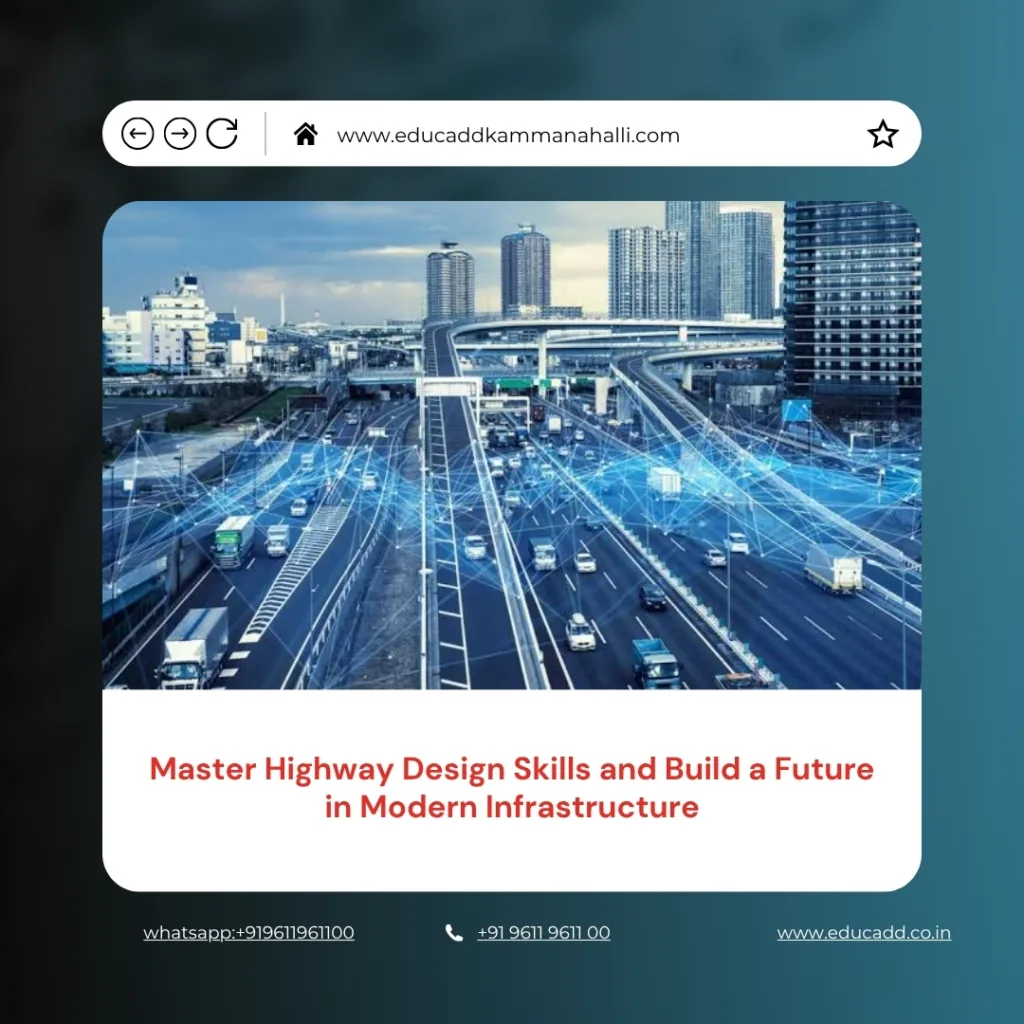
Highway Design Skills Course
Moreover, practical training allows students to transform theoretical concepts into professional designs. As infrastructure projects continue to grow, skilled highway designers remain important across construction, consulting, transportation, and engineering sectors.
Why Highway Design Skills Matter Today
Highway projects require more than basic civil engineering knowledge. Designers must consider safety, traffic movement, terrain, drainage, environmental factors, and construction requirements before developing a final design. Therefore, professionals need a structured understanding of the complete roadway design process. A Highway Design Skills Course introduces learners to these essential concepts through a systematic approach.
Students can learn how different design elements work together to create functional transportation networks. Furthermore, this knowledge can help them develop confidence when working on academic projects or professional assignments. Strong highway design skills can also improve career readiness for those planning to enter the infrastructure industry.
Learn the Fundamentals of Highway Planning
A strong foundation is essential for successful highway design. Training generally begins with important concepts such as road classification, traffic requirements, route selection, terrain analysis, and geometric design principles. Learners can understand how engineers evaluate different routes before selecting a suitable alignment. In addition, they explore factors that influence road width, gradients, curves, sight distance, and intersections.
These fundamentals help students understand why specific design decisions are made. Instead of simply learning software commands, students can develop engineering reasoning. As a result, they become better prepared to handle practical highway design challenges with greater accuracy and confidence.
Develop Expertise in Road Alignment Design
Road alignment is one of the most important aspects of highway development. It determines how a roadway travels across different terrain while maintaining safety, comfort, and efficiency. During a Highway Design Skills Course, learners can explore horizontal and vertical alignment concepts in detail. They may work with curves, tangents, gradients, transition sections, and profile designs.
Practical exercises can help students understand how alignment decisions affect construction and vehicle movement. Moreover, learners can practice creating and modifying roadway layouts using industry-relevant tools. This combination of engineering principles and practical application makes alignment design easier to understand and prepares students for real project requirements.
Understand Geometric Design Principles
Geometric design directly influences the safety and usability of a highway. Designers need to establish suitable lane widths, curve dimensions, gradients, shoulders, medians, and sight distances based on project requirements. A structured Highway Design Skills Course can introduce these principles through practical examples and design exercises. Students can learn how different parameters interact with one another during the design process. They also gain an understanding of how road geometry affects driver behavior and overall traffic movement.
Additionally, studying geometric design helps learners identify common design issues before they become construction problems. This knowledge is valuable for anyone interested in transportation and infrastructure engineering.
Gain Practical Software Skills
Modern highway projects rely heavily on specialized engineering and design software. Learning these tools can help professionals create accurate drawings, profiles, alignments, surfaces, and roadway models. A practical Highway Design Skills Course should therefore include hands-on software training rather than focusing only on theoretical concepts. Students can practice developing designs, editing project elements, preparing layouts, and reviewing design information.
Step by step exercises also make complex workflows easier to understand. Furthermore, software skills can improve productivity because professionals can manage detailed design tasks more efficiently. Familiarity with industry tools can also strengthen a candidate’s profile when applying for entry-level engineering and design positions.
Explore Terrain and Surface Modeling
Highway development often takes place across challenging terrain. Hills, valleys, existing roads, buildings, and natural features can influence the final roadway alignment. Consequently, understanding terrain and surface data is an important part of professional highway design. Students can learn how to work with existing ground information and develop suitable roadway proposals.
A Highway Design Skills Course can provide practical exposure to surface creation, elevation analysis, profiles, and terrain-based design decisions. These skills help learners understand how a proposed road interacts with its surroundings. In addition, surface modeling can support more accurate planning and reduce potential design conflicts during later project stages.
Understand Drainage and Roadside Considerations
Effective drainage is essential for maintaining highway quality and safety. Poor water management can damage pavement, weaken road structures, and create dangerous driving conditions. For this reason, highway designers must consider drainage requirements while developing roadway plans. Training can introduce learners to basic roadside drainage concepts and how they relate to highway geometry.
Students can also understand the importance of slopes, channels, culverts, and water flow during planning. Although drainage design may require specialized expertise on larger projects, a good Highway Design Skills Course helps learners recognize key considerations. This broader understanding supports better coordination with other engineering disciplines.
Improve Knowledge of Intersections and Traffic Flow
Intersections require careful planning because several traffic movements meet within a limited space. Designers must consider visibility, turning movements, lane arrangements, pedestrian requirements, and traffic volume. Practical highway training can help students understand how intersection layouts influence safety and traffic efficiency. They can examine different intersection configurations and identify suitable design approaches for specific situations.
Furthermore, learners can develop an appreciation for traffic flow and movement patterns. By combining transportation principles with practical design exercises, students become more capable of creating layouts that support smoother vehicle movement. These skills can prove valuable when working on urban roads, highways, and transportation development projects.
Build Industry-Ready Project Experience
Employers often look for candidates who can apply their knowledge to practical engineering tasks. Classroom theory alone may not provide enough confidence for handling actual project workflows. Therefore, project-based learning can make a significant difference. During a Highway Design Skills Course, learners can work on practical assignments that simulate professional roadway projects. They may develop alignments, profiles, cross-sections, layouts, and other project components. Such exercises help students understand how individual tasks connect within a larger project. Moreover, project experience gives learners opportunities to identify mistakes, improve their designs, and develop a more professional approach to problem-solving.
Learn to Follow Design Standards
Highway design must follow established engineering standards and project requirements. These standards help maintain consistency, safety, and quality across transportation projects. Students need to understand how design criteria influence roadway geometry and other project decisions. Training can introduce learners to relevant standards and demonstrate how engineers apply them during design development. Instead of memorizing every requirement, students can learn how to identify and use the correct criteria for a specific project.
This approach encourages better decision-making and reduces errors. Additionally, understanding standards can help professionals communicate more effectively with project managers, consultants, contractors, and other engineering teams.
Develop Skills for Multiple Career Opportunities
Highway design knowledge can open doors to several roles within the civil engineering and infrastructure sector. Depending on their education and experience, learners can explore opportunities such as highway design engineer, civil CAD designer, transportation design professional, infrastructure drafter, or junior roadway engineer. A Highway Design Course can provide an additional skill set for civil engineering graduates who want to specialize in transportation projects.
It can also benefit working professionals who want to strengthen their design capabilities. As infrastructure development continues, professionals with practical design and software knowledge can position themselves for a wider range of career opportunities.
Choose Training with Practical Learning
Not every training program offers the same learning experience. Before selecting a course, students should examine the syllabus, software coverage, practical assignments, trainer expertise, and project exposure. A quality Highway Design Course should balance engineering theory with hands-on practice. Learners should have opportunities to create designs, review their work, correct errors, and understand professional workflows.
Additionally, guidance from experienced trainers can make complicated concepts easier to grasp. Certification can add value, but practical ability should remain a major priority. Choosing training based on learning outcomes rather than certification alone can lead to stronger long-term career benefits.
Prepare for a Strong Future in Infrastructure
The infrastructure industry continues to evolve with growing transportation needs, urban expansion, and major development projects. As a result, highway design professionals need technical knowledge, software proficiency, and the ability to adapt to changing project requirements. Learning highway design can provide a strong starting point for professionals who want to participate in transportation development. With consistent practice, learners can improve their technical accuracy and design confidence. They can also build a portfolio of practical projects that demonstrates their capabilities to potential employers. Therefore, investing in specialized training can be a valuable step toward developing a focused civil engineering career.
Conclusion
Choosing the right Highway Design Skills Course can help transform civil engineering knowledge into practical, industry-relevant skills. From route planning and geometric design to alignment, terrain modeling, intersections, drainage, and professional software, comprehensive training can provide a strong foundation for roadway design. More importantly, hands-on projects can help learners develop the confidence needed to approach real engineering challenges.
Whether you are a civil engineering graduate, an aspiring designer, or a professional looking to expand your technical skills, highway design training can support your career growth. With the right knowledge and continuous practice, you can contribute to safer roads, efficient transportation systems, and the infrastructure of tomorrow.

